
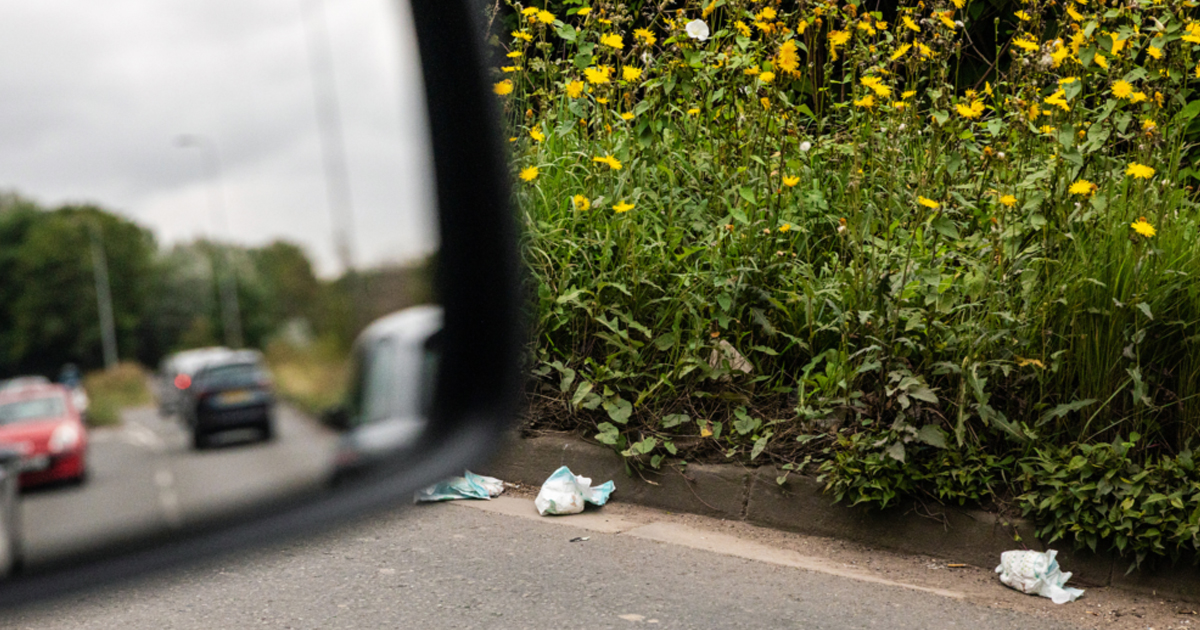
Motorists across Wales are being urged to take their rubbish home after new research revealed litter is present on almost every major road in the country.
Data collected by Keep Wales Tidy shows that rubbish was found on 98.8% of A and B roads in Wales, highlighting the growing environmental impact of roadside litter.
## Cigarette butts and food packaging among most common litter
The surveys found that smoking-related waste, particularly cigarette butts, appeared on 88.1% of main roads.
Packaging from snacks, drinks and takeaway food was also widespread, reflecting the environmental impact of ‘on-the-go’ consumption.
According to the findings:
• Confectionery packaging was recorded on 80.7% of major roads
• Drinks litter appeared on 72.1% of roads
• Fast-food packaging was found on 67% of surveyed roads
The data was gathered during roadside surveys carried out between April and December 2025.
The research used the Geospatial Litter Analysis (GLAN) method, a monitoring system developed by Keep Wales Tidy to track litter levels and wider environmental quality.
GLAN surveys are conducted in public spaces such as streets, car parks, green areas and coastal bathing waters. The system replaced the previous LEAMS monitoring method that had been used from 2007 to 2024.
For the latest study, researchers analysed locations within 10 metres of A and B roads across Wales, excluding motorways and smaller C roads.
In response to the findings, a new public awareness campaign supported by the Welsh Government is encouraging drivers to take responsibility for their waste and “drive your litter home”.
Environmental groups warn that roadside rubbish harms wildlife, pollutes waterways and creates safety risks for workers responsible for clearing debris.
Owen Derbyshire, chief executive of Keep Wales Tidy, said the findings were embarrassing and avoidable.
“Loving Wales is basically in my job description, but even I feel embarrassed by the state of our roadsides. There is simply no excuse for throwing litter from a vehicle. It is lazy, unnecessary, and completely avoidable.”
He added that motorists must take responsibility for their own waste.
“Roadside litter is not a new problem, but this latest data shows just how widespread it has become. Every motorist needs to take responsibility. Litter in your vehicle belongs to you. Drive it home and dispose of it properly.”