
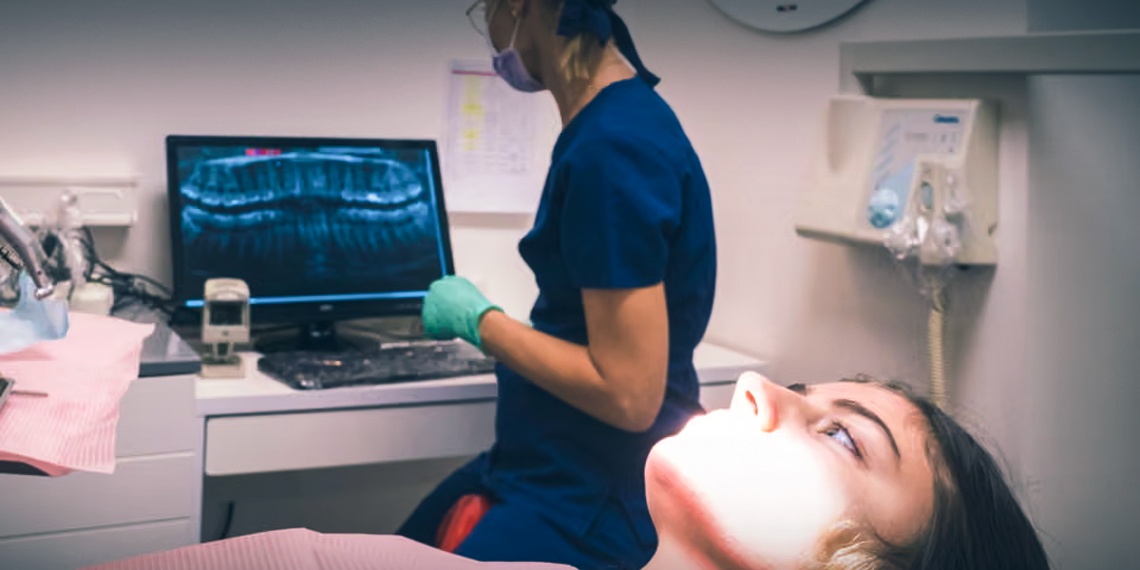
A sharp private dentistry England surge is reshaping access to dental treatment, with nearly one in three people now relying on private services as shortages of NHS appointments continue to worsen.
New research from Healthwatch England shows that the proportion of patients turning to private dental care increased from 22% in 2023 to 32% by the end of last year. The watchdog warns that growing reliance on paid treatment is creating a system in which many people can only access dental care if they pay for it privately.
The situation is particularly severe for lower-income households, many of whom say they are being forced to pay for basic procedures such as fillings or extractions because they cannot find an NHS dentist.
Health advocates say the private dentistry England surge highlights a deepening crisis in NHS dental care and raises concerns that a two-tier healthcare system is emerging.
Shortage of NHS dentists drives patients to private care
Healthwatch England said the rising use of private dental services is primarily driven by limited availability of NHS appointments.
Patients across England have reported difficulty registering with NHS dental practices or securing timely treatment.
As a result, increasing numbers of people are seeking private care despite the significantly higher costs.
The watchdog warned that dental care is gradually becoming a “one-tier” system for many patients where the only option is private treatment.
Rebecca Curtayne, acting head of policy, public affairs and research at Healthwatch England, said the findings highlight serious access problems.
“Our findings are a warning that for some people there’s only one-tier dental care – private,” she said.
Curtayne added that the shortage of NHS appointments disproportionately affects vulnerable groups.
Financial pressure hits low-income households
The private dentistry England surge has had a particularly strong impact on people already struggling financially.
Healthwatch data shows that the proportion of financially vulnerable individuals using private dentistry has nearly doubled in recent years, rising from 14% to 27%.
Many of these patients face what the watchdog described as a “double penalty”.
Private dental treatments often cost far more than NHS services. For example, a dental check-up that costs £27.40 through the NHS may cost around £64 privately.
In addition, many people who are eligible for free NHS dental care – including low-income patients, pregnant women and new mothers – are unable to access it simply because NHS dentists are unavailable.
As a result, some patients either pay for private care or go without treatment entirely.
Healthwatch survey highlights patient struggles
The findings come from a representative survey conducted by Healthwatch England involving 2,593 adults across the country.
The research was carried out in October and November last year as part of the organisation’s annual report examining patient experiences of healthcare services.
Healthwatch has urged ministers to address the access crisis by introducing a right for patients to see an NHS dentist similar to the entitlement people have to register with a GP practice.
The organisation currently serves as the statutory patient champion for the NHS in England, although it is expected to be abolished under planned NHS restructuring led by Health Secretary Wes Streeting.
Patient groups warn of a two-tier dental system
Health campaigners say the shift toward private dentistry signals a deeper structural failure in NHS dental services.
Rachel Power, chief executive of the Patients Association, said the findings demonstrate that NHS dentistry is becoming increasingly inaccessible.
“This report is yet further damning evidence on the state of NHS dentistry,” she said.
Power warned that the lack of affordable dental treatment has serious consequences for public health.
“This isn’t just about the cost of dentistry. The lack of affordable dental care harms physical health, leaves people in ongoing, sometimes agonising pain, and can take a heavy toll on mental and emotional wellbeing.”
She added that if the trend continues, the NHS dental service may effectively exist “in name only” for many patients.
Competition watchdog investigates private dental market
Concerns about rising reliance on private dentistry have also drawn regulatory attention.
The Competition and Markets Authority (CMA) recently launched an investigation into the UK’s £8.4bn private dental market.
The review aims to determine whether the market is functioning fairly and transparently for consumers.
Sarah Cardell, chief executive of the CMA, said the regulator is concerned that patients may lack clear information about treatment options, pricing and their rights.
“Going to the dentist is an important part of health and wellbeing,” she said.
“For some, turning to private dentistry is a choice – but for many a necessity.”
The CMA estimates that about one in five people in the UK currently use private dental services, although Healthwatch’s data suggests the figure in England may be significantly higher.
Private dental prices rising rapidly
The regulator’s investigation will also examine price increases across private dental services.
Recent data shows that the cost of an initial dental consultation rose by approximately 23% between 2022 and 2024, reaching around £80.
Routine dental check-ups increased by about 14% over the same period to roughly £55.
These rising costs have increased concerns that private dentistry may become unaffordable for many households.
Dentists cite funding issues within NHS system
Dentists say the underlying cause of the crisis is inadequate NHS funding for dental treatments.
According to the British Dental Association (BDA), the current NHS dental contract pays practices so little for some procedures that dentists effectively operate at a loss when delivering those treatments.
Practices must therefore subsidise NHS services using revenue from private patients.
The BDA estimates that dentists cross-subsidise NHS treatments by approximately £400m each year.
Eddie Crouch, chair of the association, said the funding gap is contributing to higher private prices.
“Government has a responsibility to properly fund NHS care to prevent people being forced into private treatment,” he said.
Dentists returning unused NHS funding
Further evidence of the pressures facing NHS dentistry emerged recently when the BBC reported that dentists in England had returned £936m of allocated NHS funding over the past two years.
The returned money reflects contracts where dentists were unable to complete the required amount of NHS work due to staffing shortages, limited capacity or financial constraints.
Government promises reforms to NHS dentistry
The Department of Health and Social Care acknowledged that NHS dental services face significant challenges.
A spokesperson said the government had inherited a system that had been under strain for more than a decade.
Officials say steps are being taken to improve access to care, including delivering an additional 1.8 million treatments during the first seven months of the current programme.
The government also plans to reform the NHS dental contract to increase the number of patients treated and place greater emphasis on preventive care.
Ministers say these changes are intended to address the private dentistry England surge and prevent dental care from becoming accessible only to those who can afford private treatment.