
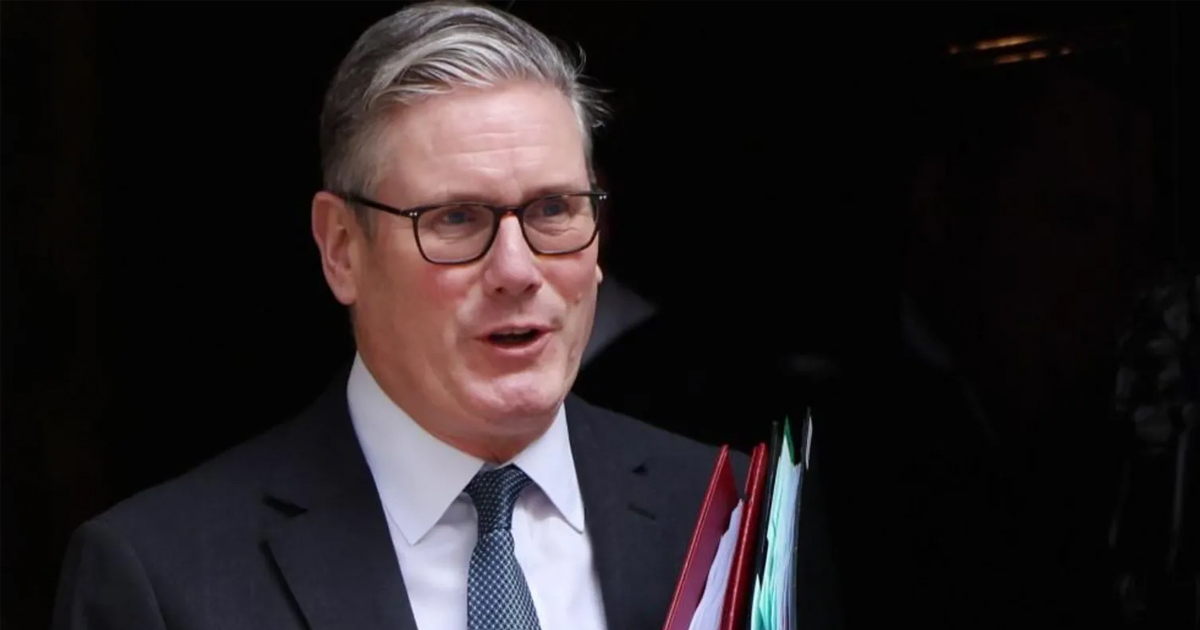
The fuel duty rise UK review has become a key political issue as Prime Minister Sir Keir Starmer confirmed the government will reassess the planned tax increase on petrol and diesel if rising energy prices linked to the Middle East conflict continue.
Fuel duty is currently frozen until September, when the government plans to begin phasing out a temporary 5p-per-litre cut introduced during the global energy crisis triggered by Russia’s invasion of Ukraine.
However, the fuel duty rise UK review could reshape those plans as geopolitical tensions involving Iran, the United States and Israel continue to push oil prices higher and increase uncertainty in global energy markets.
The prime minister told MPs that ministers will monitor developments closely before making a final decision on whether the increase should proceed.
Government to reassess fuel duty increase
During Prime Minister’s Questions in the House of Commons, Sir Keir Starmer confirmed the government would keep the fuel duty policy under review as the situation in the Middle East evolves.
He emphasised that the current freeze on fuel duty will remain in place until September.
But he also acknowledged that rising global tensions could influence future decisions about fuel taxation.
“Fuel duty is frozen until September,” Starmer told MPs.
“In light of what’s happening in Iran, of course we will look carefully at the situation.”
The comments signal that ministers are considering the potential economic impact of higher energy prices on UK households.
Opposition parties press government to cancel increase
The fuel duty rise UK review comes amid mounting pressure from opposition parties demanding that the government scrap the planned tax increase altogether.
Conservative leader Kemi Badenoch used Prime Minister’s Questions to challenge Starmer on whether the rise would be abandoned.
She predicted that the government would eventually be forced to reverse its policy.
Badenoch argued that increasing fuel duty would worsen financial pressures on drivers and families already dealing with high living costs.
She accused the government of planning the first increase in fuel duty in more than a decade.
Conservatives highlight previous fuel duty policies
Badenoch defended the Conservative government’s record on fuel duty during the exchange.
She noted that previous administrations had repeatedly frozen the tax and introduced the 5p reduction in 2022 during the global energy crisis.
That measure was originally introduced by then chancellor Rishi Sunak in response to rising oil prices after Russia launched its full-scale invasion of Ukraine.
The cut was initially expected to last for one year but has since been extended multiple times.
Starmer criticises Conservative foreign policy stance
During the parliamentary debate, Starmer responded by highlighting differences in approach between the government and opposition regarding the Middle East conflict.
He suggested that the best strategy for addressing rising fuel prices involves diplomatic efforts to reduce tensions in the region.
Starmer said the government is working with international partners to help stabilise the situation and limit economic disruption.
The prime minister also criticised the opposition’s shifting position on whether the UK should support military action against Iran.
Chancellor highlights volatile energy markets
Chancellor Rachel Reeves has also indicated that the government is monitoring energy prices closely.
Speaking earlier in the week, she told MPs that global oil markets remain highly volatile due to the conflict in the Middle East.
Reeves said it was too early to predict where petrol prices might be by September.
She emphasised that government policy should not react prematurely to short-term fluctuations in global markets.
“It is much too early to guess where petrol prices will be in September,” she told the Treasury Committee.
Reeves added that she is cautious about spending public funds on measures that could be addressed through market adjustments.
MPs raise concerns about rising living costs
Several MPs pressed the government to clarify whether motorists will face higher fuel costs later this year.
Conservative MP Graham Stuart asked the prime minister to provide a clear answer on whether the fuel duty increase would go ahead.
Stuart argued that a rise in the tax could increase financial pressure on households already facing higher living costs.
He told the Commons that motorists in his Beverley and Holderness constituency were concerned about the impact of rising fuel prices.
Government emphasises energy price protections
The fuel duty rise UK review also coincides with wider concerns about energy costs for households.
Liberal Democrat leader Sir Ed Davey asked the government for assurances that energy bills would not rise sharply in the coming months.
Starmer responded by highlighting the existing energy price cap designed to protect consumers.
He said the cap remains in place until the end of June and provides households with some protection from sudden increases in energy bills.
The prime minister also said the government is working closely with energy companies and international partners to stabilise prices.
Fuel duty policy and economic pressures
Fuel duty is a major source of government revenue in the UK and plays an important role in fiscal policy.
At the same time, changes to fuel taxation can have immediate effects on the cost of living because fuel prices influence transport and supply costs across the economy.
Successive governments have often chosen to freeze fuel duty increases during periods of economic pressure.
The planned removal of the 5p reduction from September would mark the first significant adjustment to the tax in many years.
Fuel duty and global energy shocks
The fuel duty rise UK review reflects the complex relationship between domestic tax policy and global energy markets.
The original reduction in fuel duty was introduced in 2022 when oil prices surged following Russia’s invasion of Ukraine.
That crisis pushed global energy prices to record levels and triggered widespread cost-of-living pressures across Europe.
Today’s debate has emerged as a new geopolitical conflict threatens to create similar disruptions.
The Strait of Hormuz, a key shipping route for global oil supplies, has become a focal point of tensions involving Iran.
Because the UK relies heavily on imported energy, any disruption to global oil markets can quickly affect petrol and diesel prices.
As ministers continue to assess the situation, the outcome of the fuel duty rise UK review is likely to remain a major issue in the political debate over living costs and economic policy.