
London’s Metropolitan Police has confirmed it will resume arrests of individuals suspected of supporting Palestine Action, despite an ongoing legal dispute over the group’s proscription under UK anti-terror legislation.
In a statement issued on Wednesday, the force said it had “revised” its enforcement approach after previously indicating that arrests were unlikely following a High Court ruling which found the ban unlawful.
The Met clarified that its earlier response had been an “interim position”, noting that the government’s appeal could take months to conclude.
Deputy Assistant Commissioner James Harman said: “While the high court has found the proscription of Palestine Action to be unlawful, it has confirmed the impact of that judgment will not take effect until the government’s appeal has been considered which could take many months.
“That means it is still a criminal offence to support Palestine Action. We must enforce the law as it is at the time, not as it might be at a future date. We must do that consistently and without fear or favour.”
The appeal by Home Secretary Shabana Mahmood is scheduled to be heard at the Court of Appeal on 28 and 29 April, with the ban remaining in force until a final decision is reached.
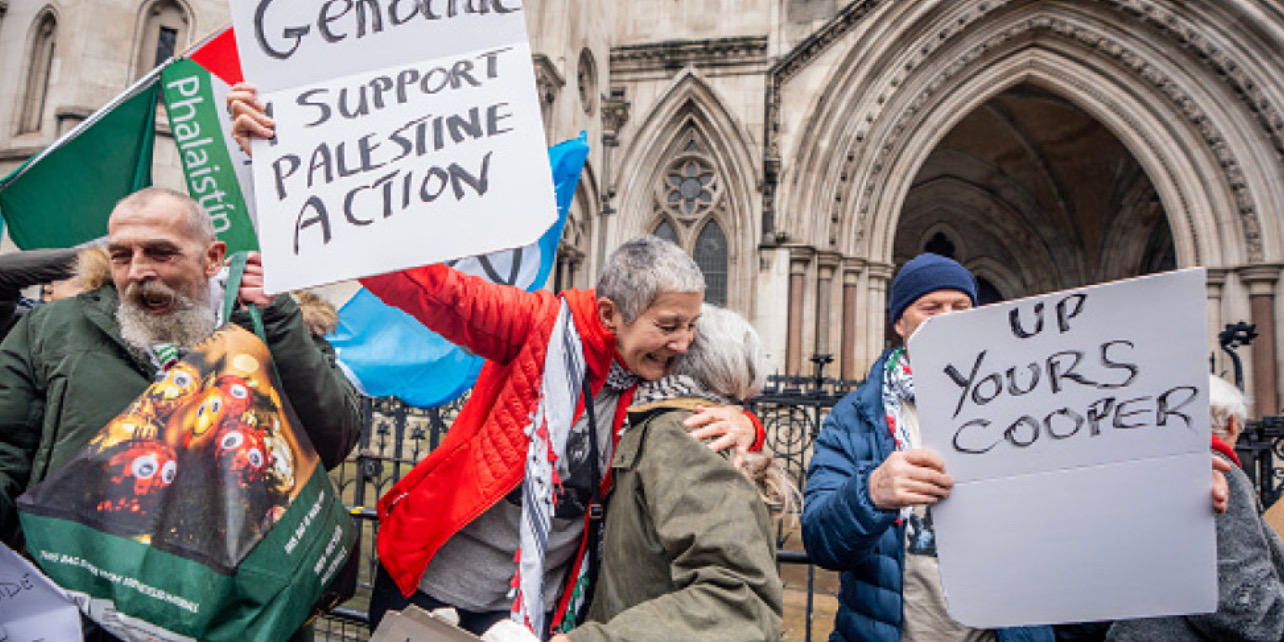
Harman explained that officers were initially required to make rapid decisions following the High Court ruling, particularly as demonstrators outside the court openly expressed support for the group while uncertainty remained over whether the government would be granted permission to appeal.
He added: “Having now considered our position in light of that decision, taking into account all the circumstances, we have determined that while Palestine Action remains proscribed and support for it remains unlawful under the Terrorism Act, we must continue to enforce the law and this is likely to involve the arrest of those committing offences.”
More than 2,700 people have reportedly been arrested since Palestine Action was designated a “terrorist organisation” by the UK government last year.
Demonstrations organised by Defend Our Juries have seen participants display signs reading: “I oppose genocide, I support Palestine Action”.
However, legal proceedings involving hundreds of those charged have been paused amid the ongoing court challenge. Earlier this month, Chief Magistrate Paul Goldspring confirmed that cases would be delayed until after the appeal is heard.
Defend Our Juries has warned that the crackdown is having wider consequences, claiming thousands have faced disruption to their daily lives, with at least 16 people reportedly losing their jobs after attending protests.
Under UK proscription laws, membership of or support for Palestine Action is a criminal offence carrying a maximum sentence of 14 years in prison.
The group, founded in 2020, campaigns against companies linked to Israel’s arms industry and has carried out direct actions targeting facilities associated with Elbit Systems, as well as sites such as RAF Brize Norton.
Recent protests have continued despite the legal uncertainty. In Bristol, activists blockaded a factory linked to Elbit, halting operations after around 60 demonstrators formed a human chain.
A spokesperson for the local campaign group Disarm Bristol said: “In January, Elbit was denied a £2 billion contract with the Ministry of Defence. In February, the high court ruled the proscription of Palestine Action unlawful on two grounds. Most of our brothers and sisters, imprisoned for resisting genocide, have been granted bail and able to return to their loved ones. These victories are symptoms of a bigger shift.”