
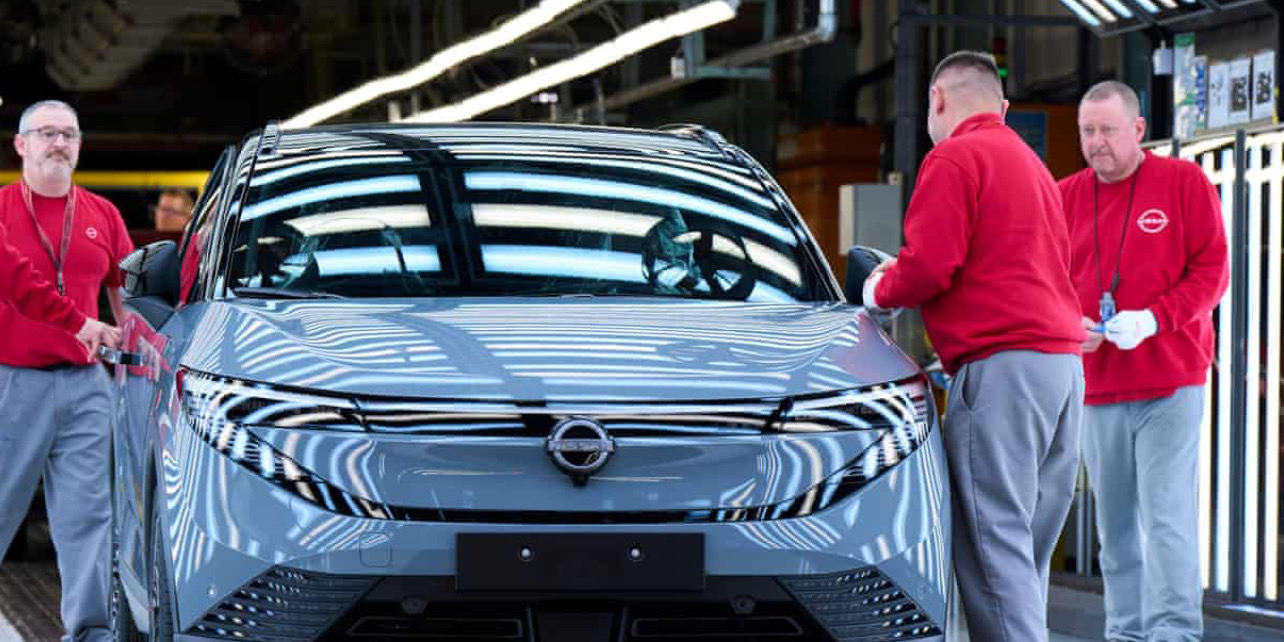
UK car production recorded a sharp decline in February, raising fresh concerns about the health of the automotive sector even before the full impact of escalating global tensions was felt.
Figures released by the Society of Motor Manufacturers and Traders show that vehicle output fell by 17 per cent compared with the same month in 2025, driven largely by a steep drop in exports.
Industry leaders have warned that the situation is likely to deteriorate further, as geopolitical instability and rising energy prices place additional strain on manufacturers and consumer demand.
The UK automotive industry relies heavily on overseas markets, exporting around 81 per cent of vehicles produced domestically. While exports to the European Union saw a modest 5 per cent increase, shipments to the United States fell by 34 per cent and exports to China plunged by 66 per cent.
This contributed to an overall export decline of 12 per cent, reflecting weakening demand in key global markets.
Pressure has intensified in China, where domestic manufacturers are gaining ground, as well as in the US, where tariffs introduced by Donald Trump continue to impact international trade.
Mike Hawes, chief executive of the SMMT, described the downturn as deeply concerning, stating: “Another decline for UK vehicle production and exports is extremely worrying, given these figures pre-date the crisis in the Middle East.”
He added: “While the sector has made efforts to build resilience into its logistics and supply chains post-Covid, the conflict adds further strain.”
The industry is bracing for further disruption, as rising energy costs and supply chain instability linked to the Middle East conflict are expected to hit production and demand in the coming months.
Production of electric and hybrid vehicles also declined, falling by 3 per cent to 26,629 units, although these models still accounted for around 40 per cent of total output.
The downturn comes amid longer-term structural challenges. UK vehicle production fell to its lowest level since 1952 last year, excluding the pandemic period, highlighting ongoing difficulties within the sector.
This trend stands in contrast to the ambitions of the Labour Party, which has set a target of producing 1.3 million vehicles annually by 2035—nearly double the 764,715 cars and vans manufactured in 2025.
Further uncertainty surrounds proposed European “Made in Europe” rules, which could affect UK manufacturers if the country is not granted full participation.
Japanese carmaker Nissan has warned that such measures could jeopardise operations at its Sunderland plant, the UK’s largest car factory, employing around 6,000 people.
The facility has the capacity to produce 600,000 vehicles annually, though current output remains well below that level due to subdued demand.
The SMMT urged closer cooperation between governments, stating: “Governments must work together to extend full, trusted partner status to the UK automotive sector to ensure choice and affordability for consumers, particularly of zero emission vehicles, on both sides of the Channel.”
Wider industry challenges are also emerging. Volkswagen recently announced plans to cut 50,000 jobs over the coming decade, citing declining sales in China and ongoing trade pressures.
Emily Sawicz, an analyst at RSM, warned that the sector is approaching a critical point, describing it as being at “crisis point”. She added that geopolitical tensions would further increase costs and disrupt supply chains for key materials such as aluminium.