
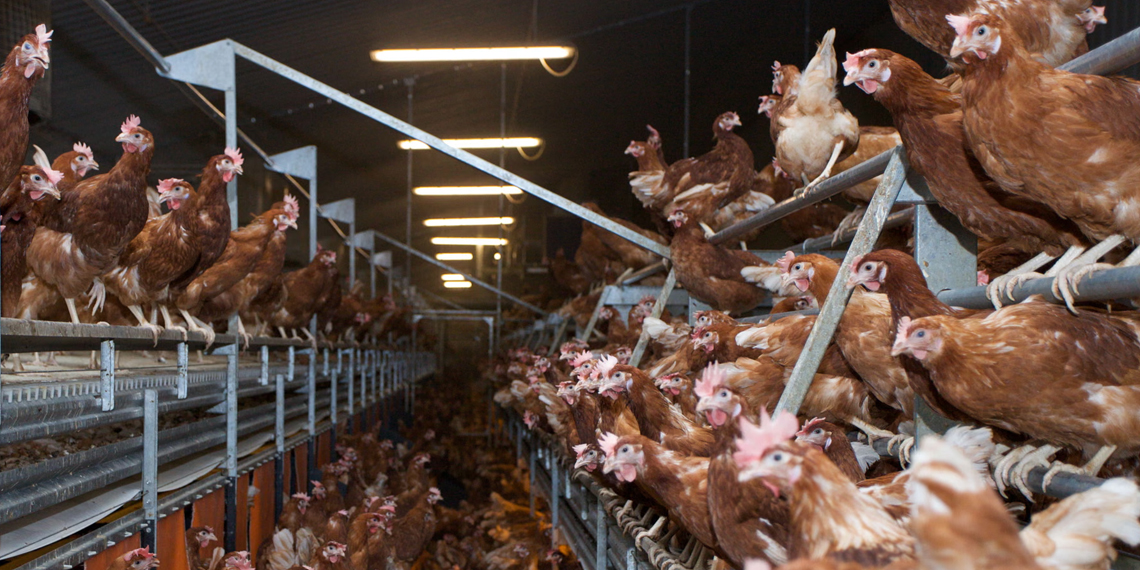
New research has identified major ammonia pollution hotspots across parts of the UK with high concentrations of intensive pig and poultry farming, raising fresh concerns over air quality, public health and environmental damage.
A newly published map shows the most severe levels of ammonia emissions are concentrated in Lincolnshire, Norfolk and Herefordshire, areas known for dense clusters of factory-style livestock units.
The findings come from research by Compassion in World Farming (CiWF) and Sustain, which say intensive animal farming is a key driver of harmful air pollution across rural communities.
Ammonia is a gas largely produced by livestock waste and agricultural fertilisers. In the UK, agriculture accounts for around 89% of total ammonia emissions, making it the dominant source of this type of pollution.
Researchers say emissions are particularly high in regions with large numbers of industrial-scale poultry and pig farms, where thousands of animals are kept in confined conditions.
Once released into the atmosphere, ammonia reacts with other pollutants to form fine particulate matter (PM2.5), which is widely recognised as one of the most dangerous forms of air pollution.
Health experts have linked long-term exposure to PM2.5 with serious conditions including heart disease, stroke, asthma and other respiratory illnesses.
The Committee on the Medical Effects of Air Pollutants (COMEAP) has previously estimated that exposure to human-made PM2.5 in the UK is associated with tens of thousands of premature deaths annually.
Medical professionals warn that communities living near intensive livestock units are at particular risk due to repeated exposure to emissions.
Dr Amir Khan said ammonia pollution from intensive farming is often underestimated despite its significant impact on public health.
He highlighted the risks posed by fine particulate pollution, particularly for vulnerable groups such as children, the elderly and those with pre-existing respiratory conditions.
Beyond air quality, ammonia emissions also contribute to soil acidification and water pollution. Excess nitrogen deposited into the environment can damage ecosystems and harm biodiversity.
Rivers such as the Wye and Severn have already experienced pollution issues linked to high levels of agricultural runoff, particularly from large poultry operations.
Campaigners say waste from intensive chicken farming contains high levels of phosphates, which can deplete oxygen in waterways and harm aquatic life.
Residents living near large-scale poultry units have reported significant disruption from ammonia emissions.
One Lincolnshire resident described experiencing breathing difficulties, eye irritation and chest tightness during periods when nearby poultry sheds are cleaned out, with effects sometimes lasting several days.
They said the pollution forces them to stay indoors and limits their ability to use outdoor spaces, particularly for those with asthma or other respiratory conditions.
Environmental groups are urging the government to reconsider planning policies that could make it easier to expand intensive livestock farming in the UK.
They argue that increasing the scale of factory farming risks worsening ammonia pollution, harming both public health and the natural environment.
Compassion in World Farming and Sustain are calling for stricter controls on industrial livestock units and a shift towards more sustainable farming practices.
Anthony Field, representing Compassion in World Farming UK, said intensive farming systems are a major source of ammonia pollution and environmental damage.
He warned that the current model places pressure on animals, communities and ecosystems, and called for urgent reform to reduce emissions and improve air quality.
The findings come amid ongoing debate over how the UK should balance food production with environmental protection and public health.
With ammonia emissions still heavily concentrated in intensive farming regions, campaigners say stronger regulation will be essential to reduce pollution hotspots and protect rural communities in the years ahead.