
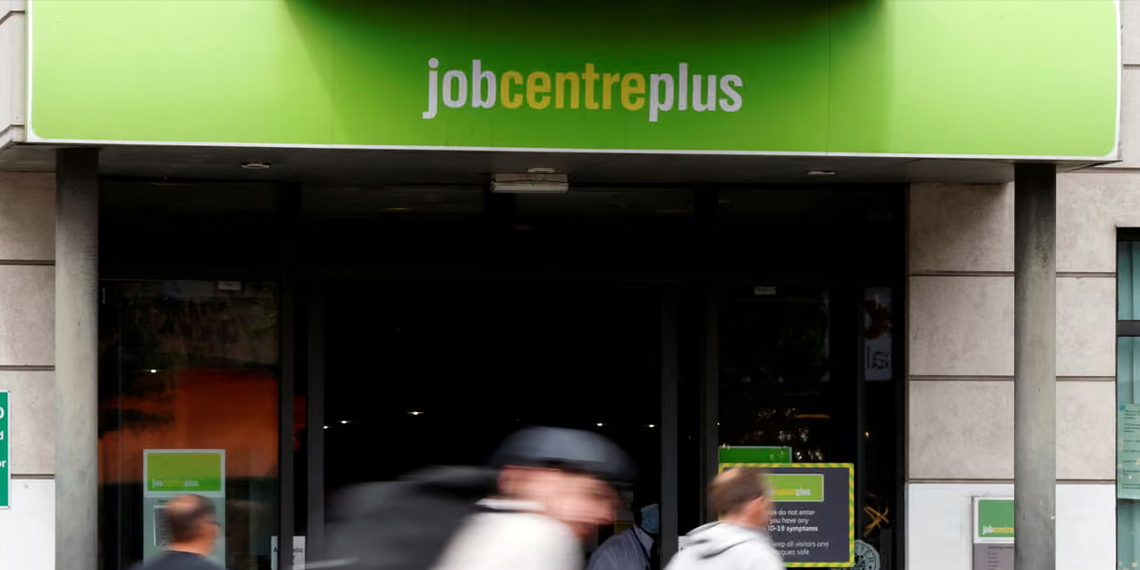
UK unemployment has unexpectedly climbed to 5% while wage growth slowed sharply, according to new official figures showing the growing economic impact of the Iran war on British businesses and workers.
Data released by the Office for National Statistics revealed unemployment increased in the three months to March, rising from 4.9% in February despite economists expecting the rate to remain unchanged.
The figures mark one of the clearest signs yet that rising energy costs and global economic uncertainty linked to the Middle East conflict are beginning to hit the UK labour market.
More recent tax data also showed a sharp fall in the number of payrolled employees during April, with employment dropping by 100,000 after a decline of 28,000 in March.
The April fall was significantly worse than expected and represented the steepest monthly decline since records began in 2014 outside the pandemic period.
Job vacancies also continued to weaken, falling by 28,000 to 705,000 between February and April — the lowest level recorded in five years.
Suren Thiru, chief economist at the Institute of Chartered Accountants in England and Wales, warned the figures point to growing strain across the labour market.
“These figures signal a growing distress within the UK’s labour market as soaring labour costs and the fallout from the Iran war drive more businesses to reduce recruitment and limit pay awards,” he said.
“The continued fall in job vacancies is a worrying sign of the strength of the labour market as it suggests that demand for staff is deteriorating quickly amid global headwinds and the growing financial squeeze on firms.”
Wage growth also continued to slow.
Excluding bonuses, average earnings rose by 3.4% in the three months to March, down from 3.6% previously and marking the slowest pay growth since late 2020.
After accounting for inflation, real wages increased by just 0.3%.
Including bonuses, wages rose by 4.1%.
Yael Selfin warned workers may soon face declining living standards as inflation accelerates faster than pay growth.
“Workers are likely to face a period of declining real pay, as headline inflation is set to outpace earnings, driven by higher energy and food prices,” she said.
The Resolution Foundation also described the outlook for wages as “bleak”.
“With the war set to push up inflation over the coming months, pay packets are set to start shrinking in real terms for the fourth time in less than two decades,” the think tank said.
The Iran war began on 28 February, making this the first full month of labour market data reflecting the impact of rising oil and gas prices after disruption to global energy supplies through the Strait of Hormuz.
Young people appeared to be among the hardest hit by the slowdown.
The unemployment rate for 18 to 24-year-olds rose to 14.7% in the three months to March — the highest level since 2014.
Separate research from the Institute for Fiscal Studies found only half of people aged 16 to 24 were in payrolled employment by the end of 2025.
Researchers linked the trend to rising employment costs, the growing use of artificial intelligence and worsening mental health among younger workers.
Cabinet minister Pat McFadden acknowledged the impact of the Middle East conflict on the economy.
“We know the conflict in the Middle East is casting a shadow on the labour market … boosting opportunity and tackling youth unemployment in every area remains our priority,” he said.
Despite the weaker jobs data, recent figures showed the UK economy still grew by 0.3% in March and by 0.6% during the first quarter of the year.
The stronger-than-expected growth prompted the International Monetary Fund to upgrade its UK growth forecast for 2026 from 0.8% to 1%.
However, the Bank of England expects unemployment to rise further to 5.1% later this year and potentially exceed 5.5% by 2027 if economic pressures continue.