
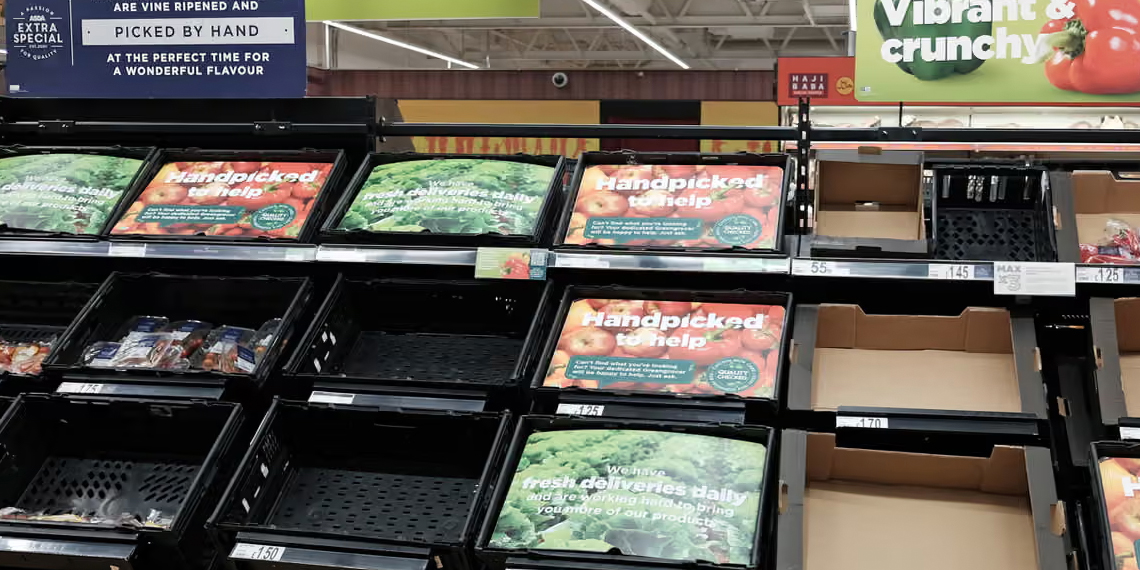
Britain’s supply chains are not properly prepared for major global shocks such as war with Russia, pandemics or severe climate emergencies, according to a new report warning ministers to urgently strengthen national resilience planning.
The report, published by the National Preparedness Commission, said the UK is falling behind several European countries in preparing for worst-case scenarios and stockpiling critical supplies.
Experts also warned that changes in the United States under Donald Trump’s “America First” policies have made Britain’s traditionally close ally a less reliable partner during international crises.
The findings come amid growing concern over the impact of conflict in the Middle East on fuel prices, food costs and supply chains across Britain.
The report was launched privately at Westminster and focused on how Britain could cope with future emergencies including a possible conflict involving Russia, another pandemic or disruption caused by climate change.
Researchers warned the UK lacks sufficient strategic reserves of essential items such as medicines and medical equipment.
“The conversation in government should shift from why we should not stockpile to how and where we might most sensibly do it,” the report said.
“It is easy to forget that during the pandemic the UK benefited from medicines that had been stockpiled to pre-empt disrupted supplies on leaving the EU.”
The report found that while medicine suppliers for hospitals are expected to maintain at least eight weeks of reserve stock, compliance remains inconsistent.
It also warned that pharmacies supplying primary healthcare services are not subject to the same requirements.
According to the report, the government currently has no plans to create a national list of critical medicines or strategically stockpile key medical supplies for civilian emergencies.
Existing stockpiles are mainly intended to support military personnel in the event of chemical, biological, radiological or nuclear attacks.
The report urged ministers to adopt more ambitious planning strategies similar to those being developed across parts of Europe as geopolitical tensions continue to rise.
Concerns over Britain’s preparedness have intensified in recent months due to instability in global energy markets and fears that conflict overseas could rapidly disrupt food, fuel and medicine supplies in the UK.
The government recently asked supermarkets to consider freezing the prices of some essential goods following sharp rises linked to tensions in the Middle East.