
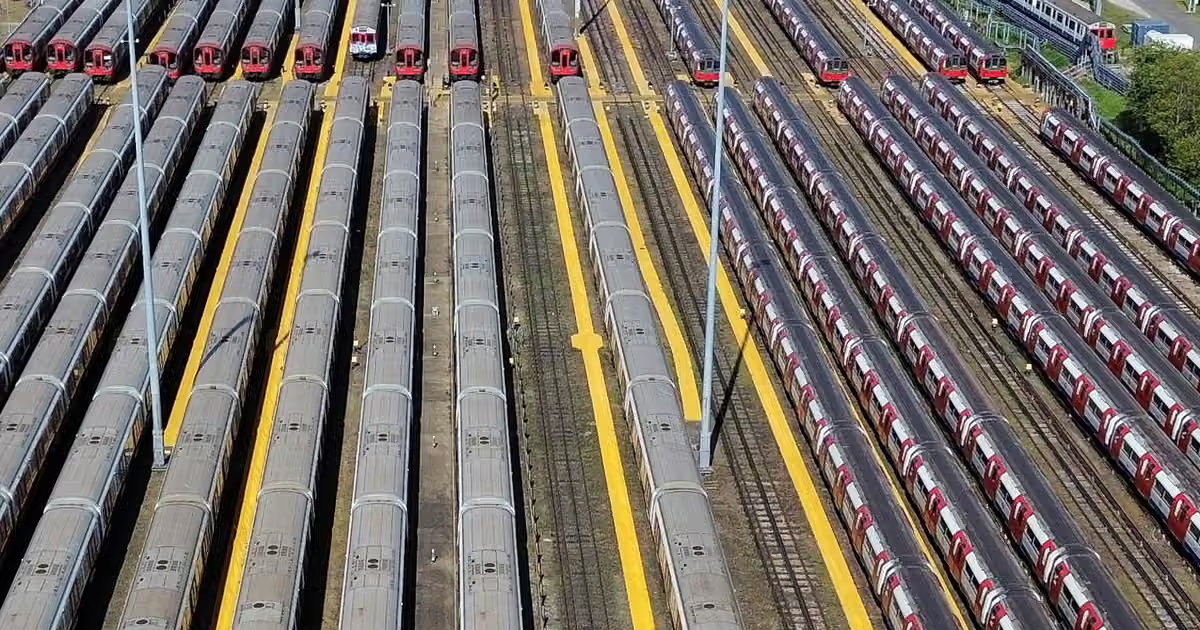
A major strike on the London Underground will go ahead this week after last-minute negotiations failed to resolve a dispute between transport workers and Transport for London.
Around half of Tube drivers are expected to take part in industrial action on Tuesday, with a second 24-hour strike scheduled for Thursday, causing significant disruption across the capital.
The dispute centres on proposals to introduce a voluntary four-day working week for Tube drivers.
Despite hopes that talks hosted by Acas could produce a breakthrough, discussions between TfL and the National Union of Rail, Maritime and Transport Workers ended without an agreement.
Transport for London said it aims to operate around half of Underground services during the strikes, although several routes will be severely affected.
No service is expected on the Circle and Piccadilly lines, while sections of the Metropolitan and Central lines will also face major disruptions. Other operating services are likely to start later and finish earlier than normal.
Meanwhile, the Elizabeth line, London Overground and Docklands Light Railway are expected to run normally.
The impact has been limited because members of Associated Society of Locomotive Engineers and Firemen, who make up a slight majority of Tube drivers, have accepted the proposed working arrangements and will not participate in the strike.
The RMT said the action is necessary because of concerns over fatigue, shift patterns and safety.
A union spokesperson said: “Despite our best efforts in ACAS talks, TfL have failed to provide assurances on our members deeply held concerns around fatigue, reduced flexibility, shift lengths and the impact these proposals could have in a safety-critical role like tube driving.”
“We remain available for meaningful talks, but strike action tomorrow will now go ahead.”
TfL criticised the decision to continue with industrial action despite assurances that the four-day week would remain voluntary.
A spokesperson for TfL said: “It is bitterly disappointing that despite five hours of meetings with the RMT at ACAS and repeated assurances that the four-day working week proposals will remain voluntary, RMT has chosen to continue with its disruptive strike action.”
Claire Mann said employees who do not wish to adopt the new arrangements can remain on their existing five-day schedules.
“The completely voluntary four-day week has been designed to improve work-life balance,” she said.
Business groups have warned that the threat of strikes is already affecting London’s economy, with cancelled bookings and disrupted travel plans impacting businesses across the city.
The strikes will begin at 12:01am on Tuesday and Thursday, with commuters advised to check travel updates before setting off.