
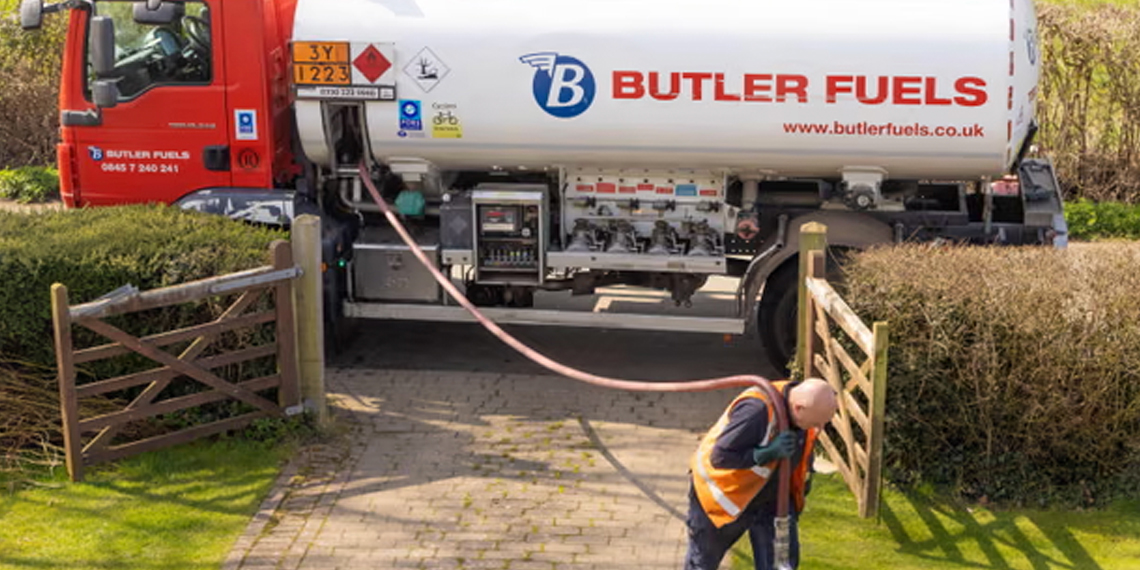
Rural communities across Britain could face significant fuel disruption if escalating tensions in the Middle East continue to strain global energy markets, with the Organisation for Economic Co-operation and Development warning that potential UK diesel shortages may disproportionately affect remote and agricultural regions.
In its latest economic outlook, the Organisation for Economic Co-operation and Development (OECD) cautioned that continued instability linked to the conflict involving Iran could disrupt supplies of key energy products, intensify inflationary pressures and weaken economic activity across the United Kingdom.
The warning comes amid growing international concern over the economic consequences of prolonged geopolitical instability in the Gulf region, a strategically critical corridor for global oil and fuel distribution.
OECD Warns Rural Areas Face Greater Fuel Supply Risks
According to the OECD, localised shortages of diesel represent one of the most immediate risks facing the UK economy should energy supply chains deteriorate further.
The organisation stated that rural areas would be especially vulnerable due to their heavy dependence on diesel-powered transport, agricultural machinery and domestic fuel distribution networks.
“Localised shortages of diesel could weigh on activity, especially in rural areas,” the OECD said in its assessment.
The warning is likely to heighten concerns among farming communities, logistics operators and rural businesses already grappling with elevated operational costs following months of energy market volatility.
Diesel remains central to economic activity in many parts of rural Britain, where public transport infrastructure is often limited and agriculture relies heavily on fuel-intensive equipment and supply chains.
Concerns Over Jet Fuel and Trade Disruption
The OECD also highlighted risks associated with low jet fuel reserves, warning that further supply pressures could affect high-value sectors of the economy, including pharmaceuticals, aviation and tourism.
The organisation said shortages could disrupt industries dependent on rapid international transport links and air freight logistics.
The UK’s pharmaceutical sector, which relies extensively on time-sensitive supply chains, was identified as particularly exposed to prolonged fuel instability.
The warning arrives as ministers face criticism over delays in implementing sanctions targeting jet fuel refined from Russian crude oil, a move some analysts believe reflects government concerns over maintaining stable domestic fuel supplies.
Rising Energy Costs Add Pressure to UK Economy
The conflict has already contributed to sharp increases in the cost of energy products, including domestic heating oil and fertilisers.
Earlier this year, Chancellor Rachel Reeves intervened to support rural households dependent on heating oil after prices surged in the wake of escalating tensions in the Middle East.
The OECD warned that rising fertiliser prices could create additional pressure on food production costs, ultimately contributing to higher consumer prices across the UK economy.
Agricultural businesses are considered especially exposed due to their reliance on fuel, fertiliser and imported agricultural inputs, all of which remain highly sensitive to global energy market fluctuations.
The organisation expects UK inflation to average 3.7% during 2026, with inflation projected to peak in the third quarter before gradually easing next year.
However, inflation is still expected to remain above the Bank of England’s long-term target, settling at approximately 2.4%.
Economic Growth Outlook Improves Slightly
Despite the risks, the OECD modestly upgraded its UK growth forecast for this year, predicting economic expansion of 0.9%, compared with the 0.7% projection issued in March.
The organisation said government spending measures are expected to provide short-term support for economic activity.
However, prospects for 2027 were downgraded slightly, with expected growth reduced from 1.3% to 1.1%, reflecting uncertainty surrounding global trade conditions, inflationary pressures and geopolitical instability.
The broader international outlook also remains subdued, with the OECD warning that conflict-driven energy disruptions could weaken growth across multiple economies simultaneously.
Bank of England Expected to Hold Steady
Despite elevated inflation forecasts, the OECD does not believe the Bank of England will respond with aggressive interest rate increases.
Instead, it predicts policymakers will tolerate temporarily higher inflation while prioritising support for economic stability and labour market conditions.
The organisation forecasts a quarter-point interest rate reduction to 3.5%, arguing that weakening employment conditions are likely to limit wage growth and reduce the risk of long-term inflation becoming entrenched.
The OECD stated that the Bank of England is expected to “look through” the temporary energy price shock, viewing it as transitory rather than structural.
Recent comments by Andrew Bailey appear to support that position.
The Bank of England governor recently suggested that policymakers should avoid overreacting to temporary external shocks while the broader economy remains fragile.
“Given the context of softness in the real economy and uncertainty around the scale and duration of the shock, tolerating temporarily above-target inflation to provide some support for the real economy is an appropriate way to approach the trade-off,” Bailey said.
Government Defends Economic Strategy
Responding to the OECD report, Chancellor Rachel Reeves acknowledged that the conflict in the Middle East continues to present a significant challenge to the global economy.
However, she emphasised that the UK’s economic outlook had improved compared with earlier forecasts.
“The conflict in the Middle East poses a significant challenge to the world economy,” Reeves said.
“Despite this, the OECD now expects UK inflation to be lower and growth higher than previously thought.”
She defended the government’s economic strategy, arguing that policy stability remains essential during a period of heightened international uncertainty.
Middle East Tensions and Global Energy Markets
Global fuel markets remain highly sensitive to instability involving Iran due to the country’s strategic position near the Strait of Hormuz, one of the world’s most important shipping routes for oil and energy exports.
Any prolonged disruption in the region has the potential to affect fuel availability, transportation costs and inflation levels across Europe and beyond.
The UK’s dependence on imported energy products leaves parts of the economy vulnerable to external shocks, particularly in rural and energy-intensive sectors.
Economists warn that sustained volatility in fuel markets could continue influencing inflation, food production costs and household spending patterns well into next year, even if direct supply disruptions are avoided.