
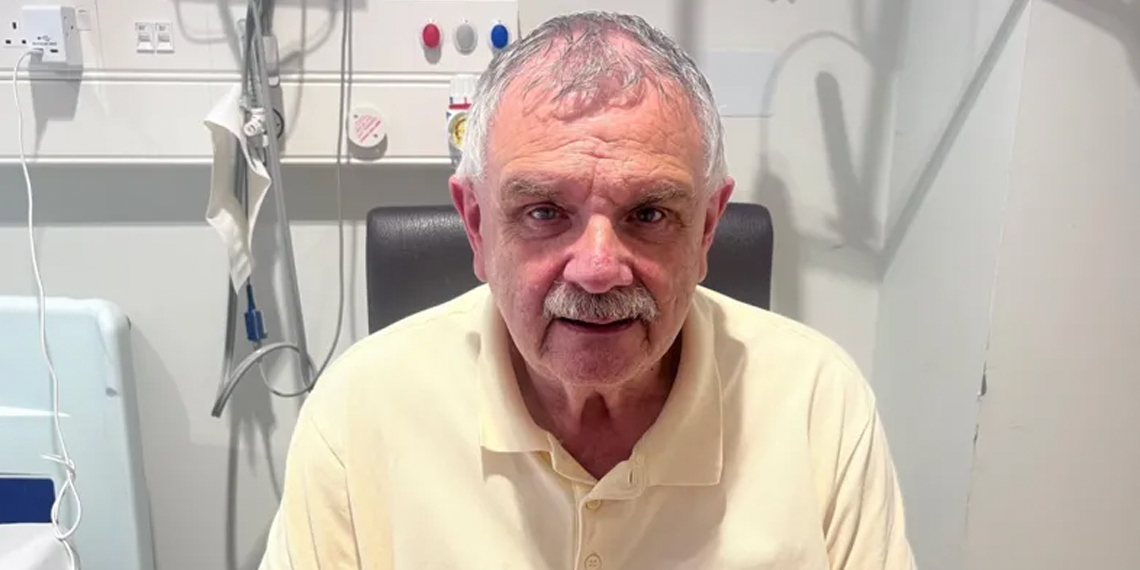
The growing crisis surrounding Northern Ireland knee surgery waiting lists has once again come under scrutiny after a 71-year-old patient revealed he endured more than six years of chronic pain while awaiting a long-delayed knee replacement operation.
Patrick McGonagle, from Strabane, described years of deteriorating mobility, constant discomfort and emotional exhaustion as he remained on a hospital waiting list far longer than originally anticipated.
Initially informed that he could expect to wait approximately two years for a right knee replacement, McGonagle ultimately waited more than six years before finally undergoing surgery last week.
His experience reflects broader concerns regarding record hospital waiting times across Northern Ireland, where thousands of patients continue to face prolonged delays for consultant appointments, diagnostic tests and elective procedures.
Patient Describes Years of Severe Pain and Reduced Mobility
McGonagle said the condition progressively transformed daily life into a constant struggle, affecting his independence, mobility and overall quality of life.
Describing the sensation as “bone rubbing on bone,” he said the pain became increasingly unbearable despite years of medication.
The 71-year-old explained that he had relied on strong painkillers, including Tramadol, for several years in an attempt to manage the worsening condition.
“I’ve been on Tramadol now for five years, so it’s now got to the stage where Tramadol doesn’t work anymore,” he said before undergoing surgery.
The prolonged wait not only affected his physical health but also contributed to anxiety and uncertainty about the future.
“You begin to think to yourself that nobody really cares anymore,” he said.
While awaiting surgery for his right knee, McGonagle’s left knee also deteriorated significantly, meaning further treatment will now be required.
Long Delays Continue to Impact NHS Patients
The case highlights continuing pressure on the healthcare system in Northern Ireland, where waiting lists remain among the longest in the United Kingdom.
McGonagle explained that basic daily activities gradually became increasingly difficult.
Walking long distances, driving and even standing up from a chair became painful challenges that required constant planning and adjustment.
“You pre-plan everything before you go out of the door, so you don’t have to walk any distance,” he said.
“I feel a lot older than I actually am because I’m planning where I’m going to walk and where I’m going to stop.”
The repeated postponement of his surgery compounded the emotional toll.
According to McGonagle, his operation was cancelled twice before finally proceeding successfully.
On one occasion, surgery was cancelled the day before the procedure. On another, he received notification while travelling to the hospital.
He said such cancellations created significant disruption for patients and families who had already arranged transport, recovery support and time away from work or responsibilities.
Stormont Announces Additional Funding for Waiting Lists
The renewed focus on hospital delays follows a recent announcement by the Northern Ireland Executive confirming that £80 million has been ringfenced to help reduce the longest and most critical waiting times across the health service during the next year.
The funding forms part of Stormont’s wider programme for government aimed at addressing mounting healthcare pressures and improving access to treatment.
The initiative comes as hospitals across Northern Ireland continue efforts to reduce extensive backlogs that intensified following the COVID-19 pandemic and years of workforce shortages and infrastructure strain.
Healthcare officials say additional resources are being directed towards high-priority cases, diagnostics and elective care services.
Consultant Says Infrastructure and Staffing Remain Key Challenges
Ashok Ramasamy, the trauma and orthopaedic consultant who performed McGonagle’s operation, said many patients currently receiving surgery had initially been placed on waiting lists as far back as 2020 or 2021.
He acknowledged that while waiting list initiatives are increasing surgical activity, capacity constraints remain a major obstacle.
“It’s about what theatre capacity we have, how many patients we can admit, and then how much of a team are working with us,” he said.
Ramasamy noted that healthcare systems require not only surgeons but also physiotherapists, ward staff and operational infrastructure to increase treatment volumes sustainably.
Despite these pressures, he said recent improvements and investment offered encouragement that waiting times could gradually fall if healthcare capacity continues expanding.
Signs of Progress in Northern Ireland Waiting Lists
Recent figures published by the Department of Health indicate modest progress in reducing waiting lists across the region.
For the second consecutive quarter, the number of patients awaiting a first consultant-led outpatient appointment declined.
By the end of March 2026, approximately 510,680 people remained on waiting lists, representing a reduction of more than 16,000 patients compared with the previous quarter and nearly 32,000 fewer than six months earlier.
There were also reductions in inpatient admissions and diagnostic waiting lists.
Separately, year-end results from the Elective Care Framework showed that more than 385,000 assessments, treatments and diagnostic procedures had been delivered during the year.
The Department of Health said the figures reflected progress in addressing long waits, urgent care priorities and backlog clearance programmes.
Health Minister Pledges Further Action
Mike Nesbitt said collective efforts across the healthcare system had produced “significant reductions” in some of the longest waiting times for diagnosis and treatment.
“I am determined that we continue to build on this momentum,” he said.
He acknowledged, however, that demand for healthcare services continues to rise while substantial challenges remain across the sector.
Healthcare leaders have repeatedly warned that sustained investment, workforce expansion and long-term structural reform will be essential if Northern Ireland is to address chronic delays affecting thousands of patients.
For individuals like Patrick McGonagle, the impact of those delays extends far beyond hospital statistics.
Now recovering at home after finally receiving surgery, he said he remains optimistic despite ongoing pain and rehabilitation.
“At this stage, I’m happy I’ve got this length,” he said.
While another operation on his left knee still lies ahead, McGonagle’s experience has become a stark illustration of the human cost associated with prolonged healthcare waiting times across Northern Ireland’s NHS system.