
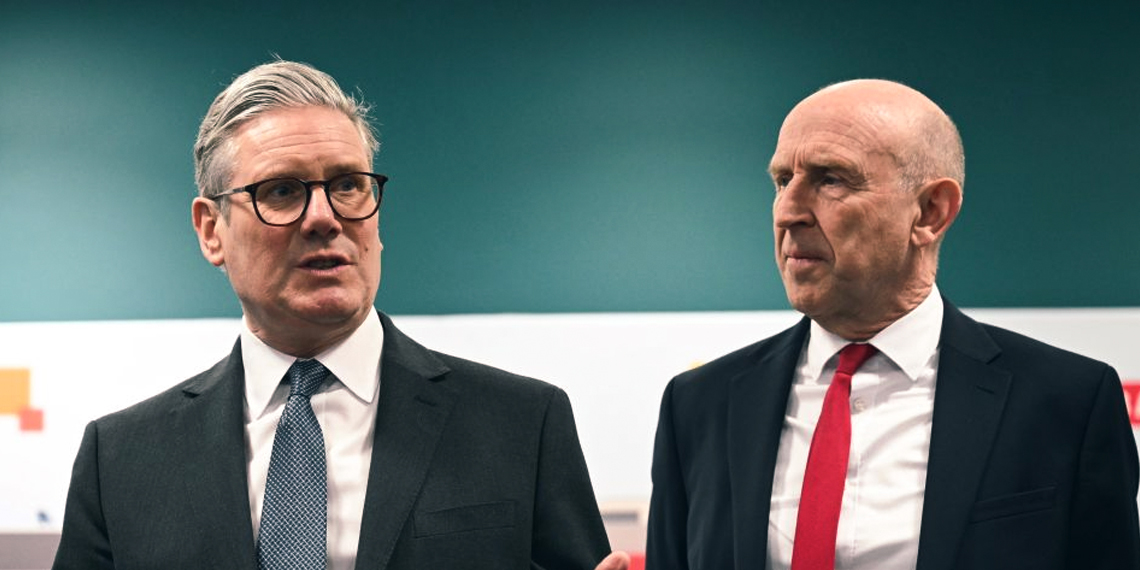
Prime Minister Keir Starmer is facing growing criticism from senior figures within Britain’s defence establishment after a dispute over military spending exposed deep divisions over the country’s security strategy.
The row intensified following the resignations of Defence Secretary John Healey and Armed Forces Minister Al Carns, both of whom argued that the government’s planned defence spending increases do not go far enough to address growing global threats.
The resignations have placed additional pressure on Starmer and Chancellor Rachel Reeves, who remain committed to maintaining strict fiscal rules while facing mounting demands for higher military investment.
For years, Starmer has positioned strong support for NATO and defence spending as a cornerstone of his leadership, presenting Labour as a party committed to national security. However, critics now argue that the government’s proposed Defence Investment Plan falls short of expectations set by both military leaders and NATO allies.
Current plans would raise defence spending to 2.68% of GDP by 2030. Healey had reportedly pushed for a 3% target, while NATO is increasingly encouraging members to move towards 3.5% of GDP on core defence spending and 5% on wider defence and security commitments by 2035.
Critics argue that targets continue to rise faster than government spending plans, creating a growing gap between political promises and military expectations.
The government’s Strategic Defence Review was intended to provide a long-term roadmap for Britain’s security policy. While it highlighted a “new era of threat”, a “NATO first” approach and defence as an “engine for growth”, opponents argue it lacked a detailed strategy explaining how increased spending would address specific security challenges.
Supporters of higher defence spending point to rising global tensions, including Russia’s continued military threat and instability across parts of the Middle East.
However, some analysts argue that the debate is increasingly focused on spending targets rather than strategic outcomes.
According to defence data cited by critics, European NATO members are already projected to spend substantially more on defence than Russia in 2025. They argue the central issue is not simply how much money is spent, but how effectively it is used.
Questions have also been raised over procurement and value for money within the Ministry of Defence. The department’s long-term equipment programme is already facing significant budget pressures, while major projects such as the F-35 fighter jet programme have faced scrutiny over costs and operational dependence on the United States.
The debate reflects a wider disagreement taking place across Europe, where governments are balancing increased defence spending with concerns about economic pressures, public services and fiscal sustainability.
Despite the criticism, Starmer has defended his position, insisting that Britain must strengthen its military capabilities while maintaining stable public finances.
Government allies argue that the Defence Investment Plan is still being finalised and will be published ahead of an upcoming NATO summit, where defence spending is expected to dominate discussions.
The dispute has also sparked debate about the wider impact of higher defence spending on public services. Critics warn that increasing military budgets could place additional pressure on areas such as education, local government, transport, policing and social care if new funding is not identified.
Others argue that greater investment in defence should be linked to industrial strategy, domestic manufacturing and strengthening Britain’s economic resilience.
The controversy comes at a sensitive time for the Prime Minister, with national security becoming an increasingly important political issue. The resignations and growing criticism from within defence circles represent one of the most significant challenges to Starmer’s leadership since entering Downing Street.
As pressure mounts from military leaders, NATO allies and political opponents, the government faces difficult choices over how to balance defence commitments with wider economic priorities.