
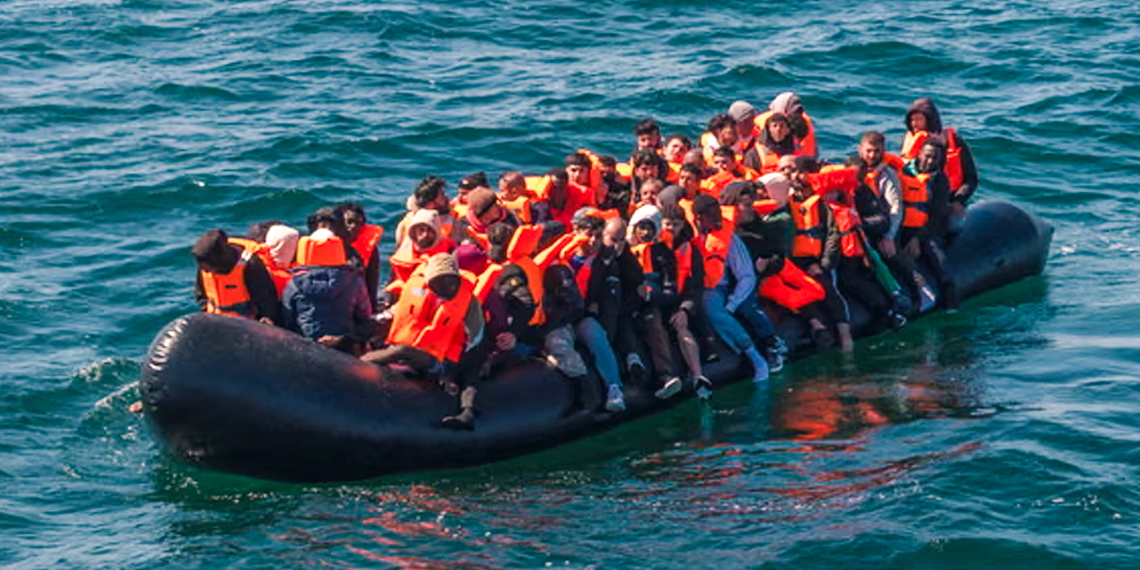
More than 16,000 refugees have been unable to reunite with their immediate family members in the United Kingdom following the suspension of the government’s refugee family reunion pathway, according to new figures released by the Refugee Council. The charity has urged ministers to restore the scheme without delay, warning that thousands of vulnerable women and children remain trapped in conflict zones or are being pushed toward dangerous irregular migration routes due to the prolonged policy suspension.
The refugee family reunion route, which was paused in September last year, previously enabled individuals granted refugee status in the UK to apply for their closest family members—including spouses and children under the age of 18—to join them safely. Although the suspension was initially presented as a temporary measure expected to last until spring, the government has yet to announce when, or if, the pathway will resume.
The continued suspension has sparked growing concern among refugee organizations, legal experts, and humanitarian groups, who argue that the absence of safe legal routes is prolonging family separation and exposing vulnerable people to significant risks.
More Than 16,000 Applications Prevented Since Suspension
Using published Home Office data from the period before the suspension came into force, the Refugee Council estimates that approximately 16,300 people have effectively been prevented from applying for family reunion over the past ten months.
According to the charity’s analysis, the overwhelming majority of those affected are among the most vulnerable members of displaced families. Around 9,273 are believed to be children, while approximately 5,835 are women, representing nearly nine out of every ten people who would normally qualify through the family reunion process.
Humanitarian organizations argue that these figures illustrate the growing humanitarian consequences of maintaining the suspension, particularly as conflicts continue in countries including Sudan, Afghanistan, Iran, and other regions experiencing political instability and armed violence.
Without access to legal reunification channels, many separated families remain stranded in dangerous environments while others may feel compelled to pursue irregular migration routes despite the significant risks involved.
Concerns Grow Over Increased Reliance on Dangerous Migration Routes
The Refugee Council has warned that limiting access to established family reunion mechanisms may unintentionally increase reliance on people-smuggling networks.
Advocates argue that families separated by war, persecution, or political repression often have few realistic alternatives when legal migration options become unavailable. As a result, some refugees may attempt perilous journeys across Europe or the English Channel in hopes of reuniting with relatives already living legally in Britain.
Humanitarian groups emphasize that safe and legal migration pathways have historically reduced the incentive for vulnerable individuals to undertake dangerous crossings, while also enabling governments to manage refugee arrivals in a controlled and orderly manner.
The organization maintains that restoring family reunion provisions would strengthen both humanitarian protection and migration management by offering refugees lawful alternatives to irregular travel.
Government Expands Alternative Safe Routes
While the traditional refugee family reunion pathway remains suspended, the government has introduced alternative legal routes intended to support vulnerable refugees.
Among the newest initiatives is an expanded community sponsorship programme, allowing local communities, charities, faith organizations, and volunteer groups to sponsor refugees by assisting with accommodation, employment opportunities, and long-term integration into British society.
Additional study and employment pathways have also been announced as part of broader immigration reforms designed to create new legal opportunities for eligible refugees.
However, questions remain over whether these programmes can compensate for the suspension of family reunion applications.
Home Office sources have indicated that the original community sponsorship programme brought only around 1,000 refugees to the UK over approximately a decade, largely through family-based cases. Officials also expect the expanded schemes to initially assist only a relatively small number of individuals, potentially in the low hundreds during the early stages of implementation.
Critics argue that these figures fall considerably short of addressing the demand created by the suspended reunion route.
Personal Stories Highlight Human Impact
Behind the statistics are families experiencing prolonged separation and uncertainty.
One Iranian refugee living in London described the emotional toll of being separated from her husband, who remains in Iran under increasingly dangerous circumstances.
She and her two children were granted refugee status after a lengthy asylum process that included an initial refusal before a successful appeal. She believes that if their asylum application had been processed more quickly, her husband would have been able to apply under the family reunion scheme before it was suspended.
The prolonged separation, she said, has left the family living with constant anxiety and uncertainty while her husband remains unable to travel safely to the UK.
Such cases, refugee advocates argue, demonstrate how administrative delays and policy changes can have lasting humanitarian consequences for families already affected by conflict and displacement.
Refugee Council Calls for Immediate Action
Imran Hussain, Director of External Affairs at the Refugee Council, has urged the government to restore the refugee family reunion route alongside the introduction of new legal migration pathways.
He argued that safe and legal routes are essential for protecting vulnerable refugees, particularly women and children fleeing armed conflict, persecution, and humanitarian crises.
According to the charity, allowing families to reunite safely not only protects lives but also supports successful long-term integration by enabling refugees to rebuild stable family units within their new communities.
The organization believes that restoring existing routes while expanding additional legal options would create a more balanced and humane asylum system.
Government Signals Wider Immigration Reforms
The Home Office maintains that broader immigration reforms remain central to its plans for reshaping the UK’s asylum system.
A government spokesperson said forthcoming legislation will reform aspects of asylum and human rights law while strengthening measures designed to prevent abuse of the immigration system.
Officials also confirmed that newly announced safe and legal refugee routes are expected to begin operating during the autumn.
However, under the proposed reforms, family reunion will no longer be granted automatically. Refugees seeking to bring relatives to the UK will instead be required to satisfy stricter eligibility requirements before applications are approved.
The government argues that these changes aim to create what it describes as a fairer and more sustainable asylum framework while maintaining protection for those with genuine humanitarian needs.
As ministers continue implementing immigration reforms, humanitarian organizations are expected to maintain pressure for the restoration of refugee family reunion, arguing that preserving established legal pathways remains essential for protecting vulnerable families and reducing incentives for dangerous irregular migration.