
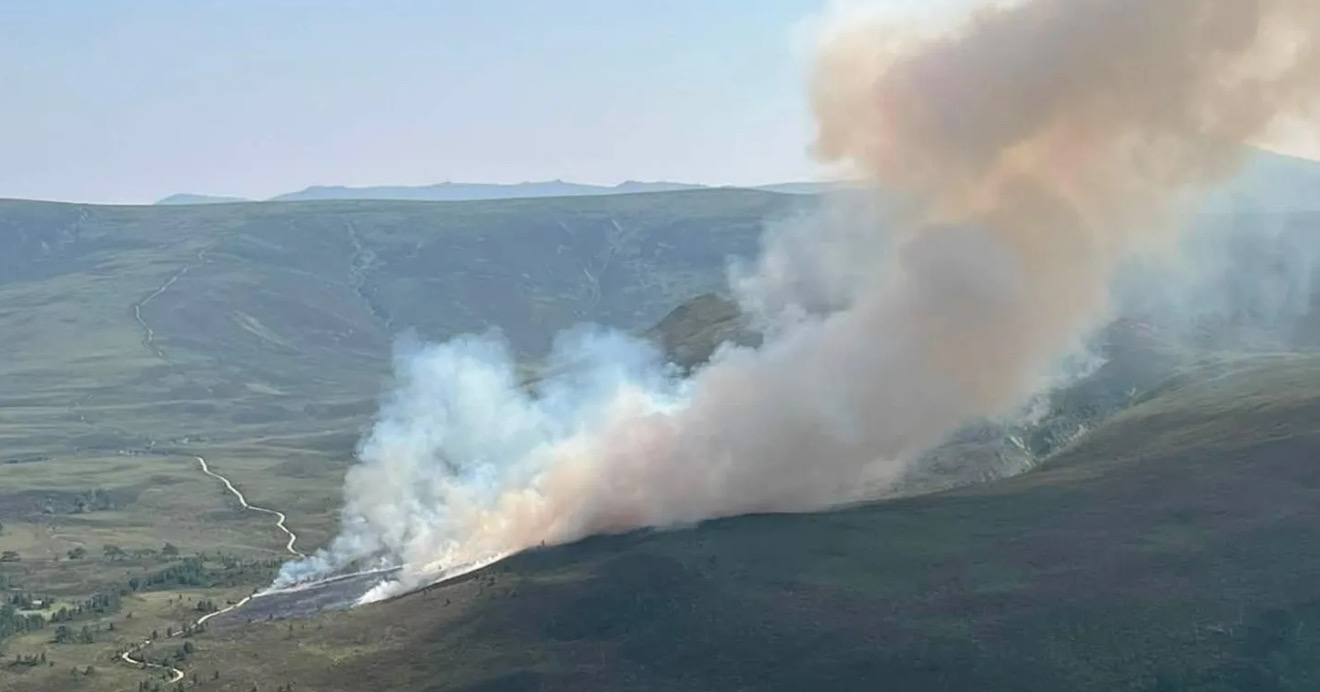
Emergency services have launched a major firefighting operation in the Scottish Highlands after a rapidly spreading wildfire forced residents to evacuate their homes and prompted widespread safety warnings across the Cairngorms National Park. The blaze, which ignited near Ryvoan Bothy on the southern edge of the Loch Garten Nature Reserve, has mobilized firefighters, conservation organizations, land managers and emergency response teams as authorities work to prevent further damage to communities, forests and protected wildlife habitats.
The incident comes during a period of exceptionally dry and warm weather across Scotland, where officials have already issued high wildfire risk alerts covering large parts of the country. Authorities warn that the combination of elevated temperatures, prolonged dry conditions and low humidity has created ideal circumstances for fast-moving wildfires capable of threatening both public safety and environmentally sensitive landscapes.
Emergency Evacuations Ordered as Fire Intensifies
The wildfire was first reported shortly before midday, prompting an immediate response from the Scottish Fire and Rescue Service (SFRS), which deployed specialist wildfire resources to the affected area.
As conditions deteriorated, police officers ordered precautionary evacuations for residents living closest to the advancing flames.
Local resident Duncan Ferguson described the evacuation as an unsettling experience, explaining that police instructed residents to leave their homes while nearby recreational activities initially appeared unaffected.
He noted that despite the seriousness of the situation, traffic continued moving through parts of the area and visitors at nearby facilities remained largely unaware of the rapidly developing emergency during the early stages.
Ferguson also expressed frustration that local communities had previously requested the development of a comprehensive wildfire response strategy several years ago, arguing that stronger preparedness measures could have helped mitigate the current emergency.
Authorities have not reported any injuries or fatalities resulting from the wildfire.
Massive Multi-Agency Firefighting Operation Underway
Firefighters continue working under difficult conditions to contain the blaze as it spreads across woodland and heathland within one of Scotland’s most environmentally important landscapes.
The Royal Society for the Protection of Birds (RSPB), which manages the Loch Garten Nature Reserve, immediately dispatched all available staff to assist emergency operations.
Support has also been provided by neighboring estates and land management organizations, including Wildland Ltd, Rothiemurchus Estate, Dorback Estate, Moray Estate, Seafield Estate and Kinveachy Estate.
Teams have deployed all-terrain vehicles equipped with fogging systems, portable water pumps and specialist wildfire suppression equipment to support frontline firefighting efforts.
According to emergency responders, the fire front extends for approximately one kilometre and continues moving southward into neighboring woodland managed by Forest and Land Scotland.
Authorities are also seeking aerial assistance to assess the wildfire’s progression and improve operational coordination.
However, helicopter resources remain limited due to simultaneous wildfire incidents elsewhere across the United Kingdom.
Wildlife Protection Becomes Major Priority
The wildfire has heightened concern for the Cairngorms National Park’s internationally significant wildlife populations.
Although conservation officials confirmed that the area’s famous breeding ospreys remain outside the immediate danger zone, attention has shifted toward the endangered capercaillie population inhabiting woodland near the fire.
Capercaillies represent one of Britain’s rarest native bird species.
After becoming extinct in Britain during the eighteenth century, the birds were successfully reintroduced to Scotland in the nineteenth century.
Despite encouraging population improvements in recent years, conservationists continue to classify the species as highly vulnerable due to habitat loss, predation and accidental collisions with deer fencing.
Earlier this year, the Scottish Government announced an emergency recovery strategy aimed at strengthening the remaining capercaillie population within the Cairngorms.
Officials remain hopeful that ongoing firefighting efforts will prevent significant damage to these sensitive breeding habitats.
Meanwhile, the osprey population at Loch Garten, one of Scotland’s greatest conservation success stories, is believed to remain unaffected.
The reserve became internationally recognized after hosting the first confirmed breeding pair of ospreys in Britain following the species’ earlier extinction caused by persecution and habitat destruction.
Public Urged to Stay Away From Affected Areas
Emergency services have urged members of the public to avoid the Cairngorms National Park near Aviemore and Glenmore while firefighting operations remain active.
Residents across nearby communities have been advised to keep windows and doors closed if smoke becomes visible or air quality deteriorates.
Officials have also asked hillwalkers, tourists and outdoor enthusiasts to postpone visits to affected areas until emergency operations conclude.
The Cairngorms remain one of Scotland’s busiest outdoor recreation destinations during summer, increasing the importance of maintaining clear access routes for emergency vehicles and firefighting equipment.
Glenmore Outdoor Centre similarly advised visitors not to travel into the affected region while authorities manage the rapidly changing situation.
Conservation Groups Warn of Escalating Wildfire Threat
The Cairngorms National Park Authority described the wildfire as deeply concerning and warned that the incident reflects a broader increase in wildfire risk associated with prolonged periods of hot, dry weather.
Environmental organizations note that Scotland, like many other parts of the United Kingdom, has experienced increasingly frequent periods of elevated wildfire danger in recent years.
These conditions allow vegetation to dry rapidly, enabling even relatively small ignition sources to develop into large-scale fires capable of spreading across extensive forested landscapes.
Conservation experts emphasize that such fires not only threaten local communities but can also cause long-term ecological damage through habitat destruction, biodiversity loss and degraded soil quality.
Wildfire Warning Issued Across Scotland
The ongoing emergency coincides with an official wildfire warning covering central Highland regions together with southern and eastern Scotland.
Meteorologists forecast temperatures approaching 28 degrees Celsius in parts of the Highlands while exceptionally dry conditions are expected to persist throughout much of the week.
The Scottish Fire and Rescue Service has classified wildfire conditions as very high, warning that even small outdoor fires or accidental sparks could ignite significant blazes.
Wildfire Tactical Adviser Kevin Dingwall urged the public to exercise extreme caution while enjoying outdoor activities during the current spell of warm weather.
He stressed that wildfires can devastate homes, natural habitats, agricultural land and wildlife populations within a very short period.
Authorities Call for Public Vigilance
Fire officials continue encouraging residents and visitors to adopt simple precautionary measures that significantly reduce wildfire risk.
Authorities advise against lighting campfires, disposable barbecues or any outdoor flames in vulnerable areas during periods of elevated wildfire danger.
Even discarded cigarettes, improperly extinguished cooking equipment or accidental sparks from machinery can ignite dry vegetation under current weather conditions.
Officials also encourage the public to remain alert for signs of smoke and immediately report suspected wildfires to emergency services.
Sharing official wildfire warnings with family members, tourists and outdoor recreation groups is also considered an important part of reducing wildfire risk.
Extreme Weather Raises Long-Term Concerns
The Highlands wildfire highlights the growing challenges facing emergency responders as increasingly frequent periods of prolonged heat and drought elevate wildfire risks across Scotland and the wider United Kingdom.
Firefighters remain engaged in an extensive containment operation while conservation teams continue monitoring vulnerable wildlife habitats and assessing potential environmental impacts.
With warm temperatures and exceptionally dry conditions forecast to continue, authorities remain on high alert for additional wildfire outbreaks across the country.
Officials emphasize that preventing new ignitions will be critical in limiting further emergencies during the coming days, urging the public to remain vigilant and follow all safety guidance while emergency services work to bring the current wildfire under control.