
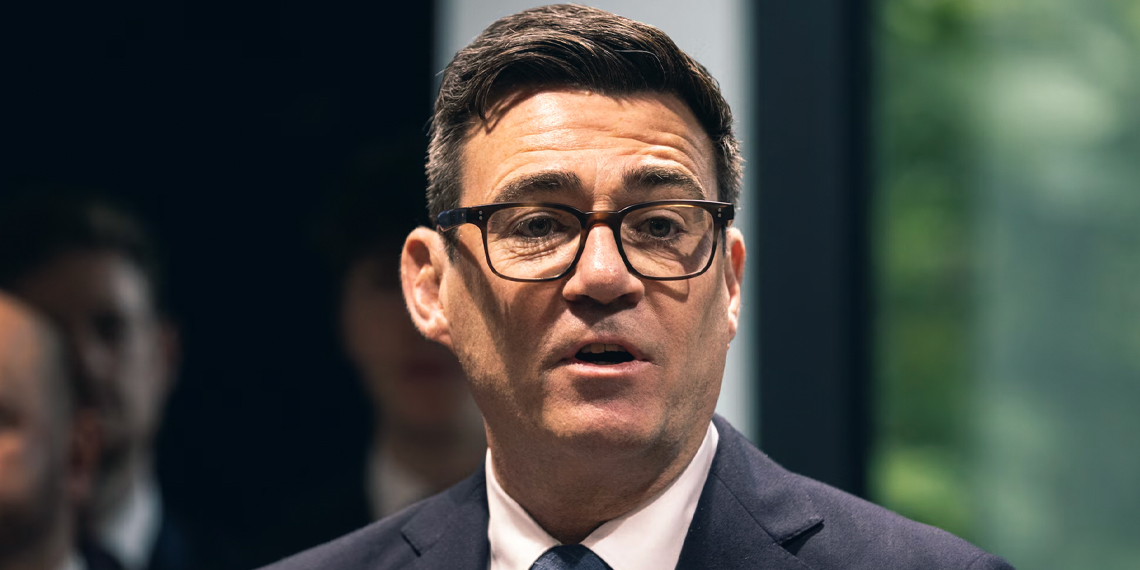
Prime Minister Andy Burnham has warned that the long-term future of the National Health Service depends on comprehensive reform of England’s adult social care system, arguing that the NHS risks becoming unsustainable if successive governments continue to delay structural changes. In his first major broadcast interview since taking office, Burnham pledged to make social care reform one of the defining priorities of his premiership, while also indicating that the government intends to tighten welfare conditions as part of broader efforts to reduce public spending and increase workforce participation.
The Prime Minister’s remarks come ahead of a major policy speech on adult social care and amid renewed political debate over how to finance one of Britain’s most complex and expensive public services. Although Burnham stopped short of unveiling detailed reforms, he confirmed that his government would accelerate work on an independent review of the sector, signaling a determination to move faster than previously planned.
Prime Minister Warns NHS Cannot Function Without Social Care Reform
Burnham argued that the NHS cannot continue to shoulder responsibilities that properly belong within the social care system, warning that hospitals are increasingly overwhelmed by patients whose needs would be better met through community-based care.
According to the Prime Minister, the failure to reform adult social care places mounting pressure on hospitals, increases waiting times, and reduces the NHS’s ability to focus resources on acute medical treatment.
He said the government is committed to delivering substantial changes before the end of its term in office, although he declined to specify whether a completely new social care system would be introduced before the next general election.
Instead, Burnham emphasized that he intends to devote significant political capital to addressing what he described as a broken system that has remained unresolved for decades.
Casey Commission Review To Be Accelerated
Rather than announcing immediate legislative reforms, the Prime Minister confirmed that the government intends to bring forward the work of the Casey Commission, the independent review examining long-term options for adult social care.
The commission, led by Baroness Louise Casey, had originally been expected to publish its final recommendations in 2028. However, Burnham indicated that ministers would accelerate the timetable to speed up policy development and avoid further delays in addressing the growing pressures facing the care sector.
The move reflects the government’s recognition that demographic changes, an ageing population, and rising demand for care services require more urgent action than previously anticipated.
Adult Social Care Remains One Of Britain’s Biggest Policy Challenges
Adult social care provides essential support for older people, individuals with disabilities, and those requiring assistance with everyday activities such as washing, dressing, cooking, and maintaining independent living.
Unlike NHS healthcare services, social care is generally means-tested in England and Northern Ireland. Individuals with savings or assets above specified thresholds are often required to contribute significantly toward their own care costs before becoming eligible for local authority support.
Different funding arrangements operate across Scotland and Wales, creating variations in eligibility and financial support across the United Kingdom.
The current system has faced sustained criticism from healthcare experts, charities, and patient organizations, who argue that many vulnerable individuals struggle to access appropriate care while others face substantial personal financial burdens.
Experts Highlight Financial Pressures On Families
Healthcare policy specialists argue that the existing funding model leaves many families exposed to exceptionally high care costs.
Sarah Woolnough, Chief Executive of the King’s Fund, described the current arrangements as punitive, noting that many individuals either delay seeking care or receive inadequate support because of financial barriers.
She pointed to cases where families spend well over £100,000 on long-term care, placing considerable strain on household finances and reducing financial security for future generations.
Policy experts suggest that future reforms could include making social care free at the point of need, introducing a lifetime cap on personal care costs, or adopting hybrid funding models that combine public and private contributions.
While some of these options would require significant government investment, analysts argue that strengthening social care could ultimately reduce pressure on NHS hospitals and improve overall efficiency across the health system.
Political Debate Intensifies Over Funding
Burnham’s commitment to reform has already triggered political debate over how any new system would be financed.
Conservative Party leader Kemi Badenoch has urged the Prime Minister to rule out tax increases or additional government borrowing to fund changes, arguing that reforms must remain fair to individuals who have spent decades saving for later life.
She warned against policies that could penalize homeowners or individuals who have accumulated savings to fund their retirement.
Meanwhile, Liberal Democrat representatives have called for greater political consensus, arguing that adult social care has suffered from decades of short-term policymaking and repeated delays.
Health and Social Care Committee Chair Layla Moran stressed that meaningful reform will require cross-party cooperation rather than political confrontation, while Liberal Democrat leader Sir Ed Davey emphasized that unpaid family carers should remain central to any future system.
Reform UK has also entered the debate, expressing opposition to proposals that could require families to contribute additional inheritance-related payments toward care costs.
Longstanding Reform Efforts Continue
The challenge of reforming adult social care has repeatedly confronted successive governments over the past two decades.
Burnham himself first proposed a universal care model during his tenure as Health Secretary in 2009, advocating greater public support for long-term care services.
Subsequent proposals, including lifetime spending caps and alternative funding mechanisms, have frequently encountered political resistance due to concerns over affordability and taxation.
Most recently, plans to introduce an £86,000 lifetime cap on individual care costs in England were abandoned, leaving broader structural reform unresolved.
The latest announcement suggests the government intends to revisit these longstanding debates while seeking a more sustainable solution.
Prime Minister Signals Tougher Welfare Conditions
Alongside his comments on social care, Burnham also indicated that the government intends to reform aspects of the welfare system.
The Prime Minister argued that additional support should be provided to help more people enter employment while suggesting that eligibility conditions for certain benefits could become more demanding.
He stressed that many individuals currently receiving benefits have the potential to work if offered appropriate assistance, training, and opportunities.
Rather than attributing rising welfare costs solely to claimants, Burnham argued that previous governments had failed to provide adequate early intervention and employment support, particularly for younger people.
He suggested future reforms would focus on linking financial assistance more closely to participation in employment and skills programmes, while maintaining support for those genuinely unable to work.
Health Reform Expected To Shape Government Agenda
With NHS waiting lists, workforce shortages, and growing demand continuing to dominate Britain’s public policy agenda, social care reform is expected to become one of the defining domestic issues facing Burnham’s administration.
Healthcare experts broadly agree that meaningful improvements in NHS performance cannot be achieved without simultaneously strengthening social care capacity, enabling more patients to receive appropriate support outside hospital settings.
As ministers prepare to accelerate the Casey Commission’s work, expectations are growing that the government will soon outline a comprehensive strategy designed to modernize one of the UK’s most pressing public service challenges while ensuring the long-term sustainability of both the NHS and adult social care.