
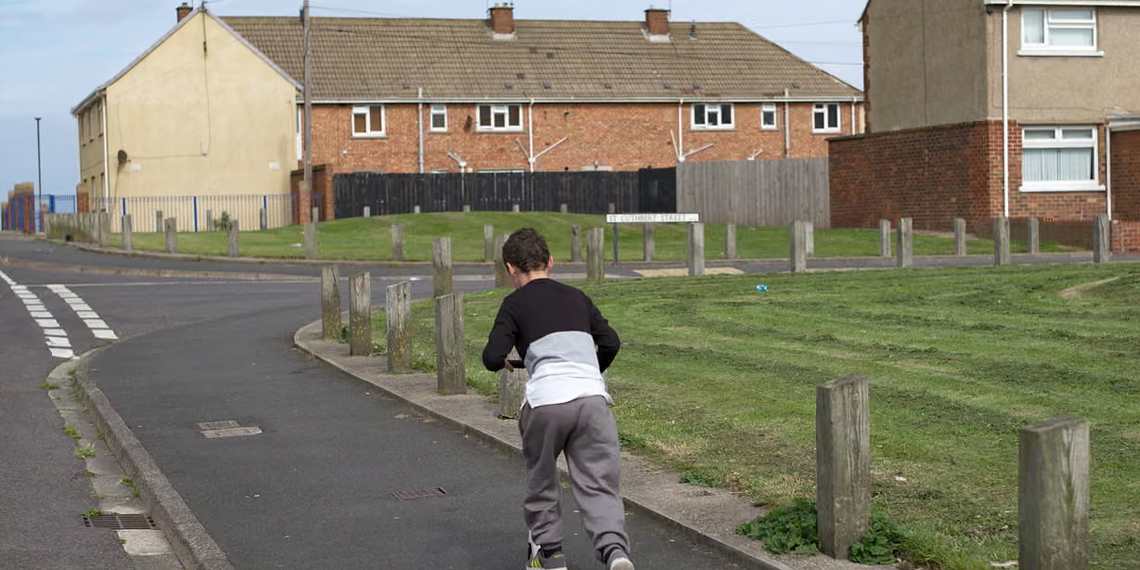
Millions of people living in England’s most deprived communities could see their access to nature worsen under proposed planning reforms, according to a new report commissioned by environmental and wildlife organisations.
The study found that more than 7.4 million people in England live in neighbourhoods with virtually no immediate access to biodiversity, including around 1.42 million children under the age of 15.
Researchers argue that the problem is driven less by the urban-rural divide and more by significant environmental inequalities within towns and cities. They warn that proposed exemptions to biodiversity rules for housing developments could deepen those disparities.
The report focuses on Biodiversity Net Gain (BNG) regulations, introduced in 2024, which require most new developments in England to deliver at least a 10% improvement in biodiversity.
The policy was widely praised as a global benchmark for nature recovery and has since influenced similar initiatives in countries including Saudi Arabia, the Netherlands and India.
However, the government has proposed a number of exemptions as part of its plans to accelerate housebuilding and deliver 1.5 million new homes during the current Parliament.
These include exempting developments smaller than 0.2 hectares and a proposed exemption for brownfield sites up to 2.5 hectares.
Environmental groups argue that these changes will disproportionately affect poorer communities, where smaller developments are far more common.
According to the report, 82% of planning applications in England’s most deprived areas involve sites smaller than 0.2 hectares. Over a single year, the exemption could result in biodiversity losses equivalent to nearly 11,000 mature trees or around 400 football pitches of wildflower meadow.
The report also found that potential brownfield housing sites are four times more concentrated in England’s poorest communities than in its wealthiest areas.
Richard Benwell said: “Nature should not be a luxury reserved for the wealthy.”
“England’s poorest communities are already being left with the worst access to nature, and biodiversity net gain loopholes are further exacerbating this problem.”
“If ministers are serious about tackling inequality and improving people’s health, they must stop weakening nature protections and make sure every community benefits from greener, healthier places to live.”
Campaigners are calling on ministers to abandon the proposed brownfield exemption and introduce stronger legal protections to prevent future weakening of biodiversity requirements.
Jason Reeves said: “This report shows the government’s proposed brownfield exemptions double down on that inequality.”
“Our members see every day how nature-integrated development reduces flood risks, protects property values and brings positive health outcomes.”
The report highlights stark inequalities across England, with residents in the most deprived fifth of neighbourhoods almost three times more likely to have severely restricted access to biodiversity than those living in the wealthiest areas.
In Croydon, researchers identified one of the largest gaps in access to nature. The borough’s most affluent neighbourhoods recorded biodiversity access levels of 73%, compared with just 24% in its most deprived communities.
Carl Bunnage warned that weakening the regulations would undermine a policy once viewed as world-leading.
“It is time for the government to stop dismantling what should have been a world-leading policy, especially as those in society already missing out will be hit hardest,” he said.
“The biodiversity net gain system must be restored so it delivers nature on everyone’s doorsteps as originally intended.”
The government has not yet responded publicly to the report’s findings.
