
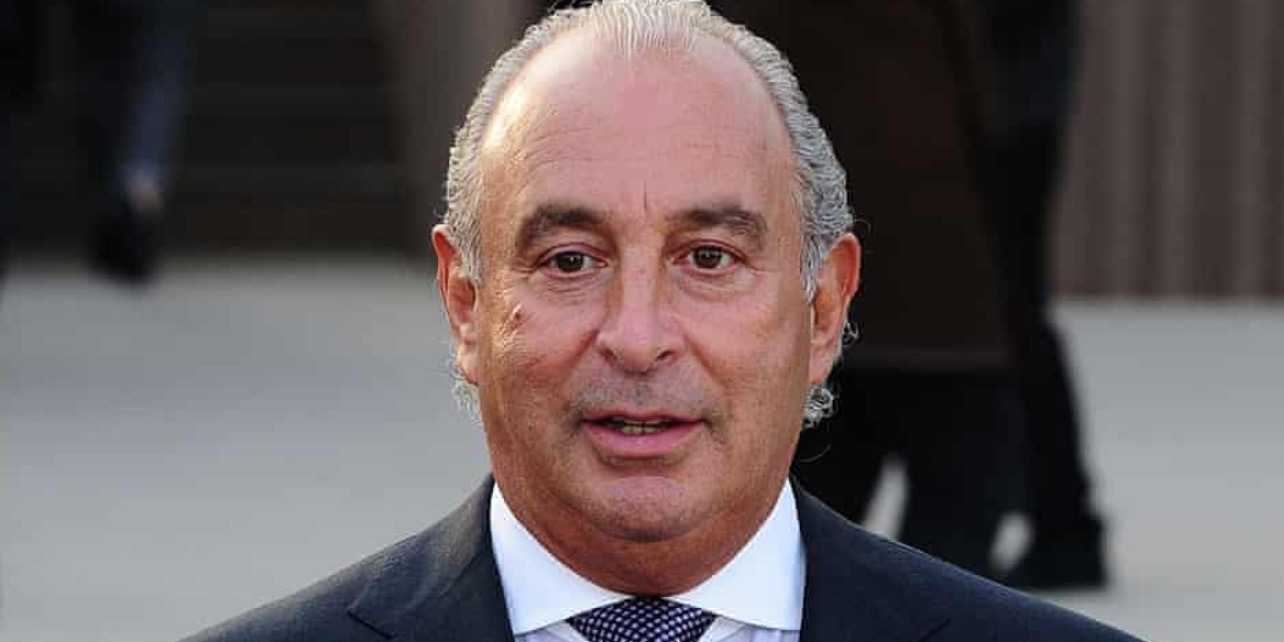
In a major legal setback, the Philip Green ECHR ruling has confirmed that the UK retail tycoon lost his challenge against being named in Parliament during a misconduct scandal.
The European Court of Human Rights (ECHR) ruled on Tuesday that Green’s right to privacy had not been violated when Lord Hain used parliamentary privilege to identify him in 2018, despite an injunction preventing media outlets from doing so.
Sir Philip Green, the former chair of fashion empire Arcadia and once dubbed the “king of the high street,” had argued that the UK government failed to regulate parliamentary privilege in a way that protected his rights under European law.
Green Challenged Use of Parliamentary Privilege
Green’s legal team claimed that Hain’s comments in the House of Lords—revealing Green as the businessman behind a court injunction—rendered his breach of confidence case against The Telegraph ineffective. They argued this interfered with his rights to privacy and a fair trial under the European Convention on Human Rights.
Parliamentary privilege allows MPs and peers to speak freely without the risk of legal consequences, a principle that has long protected open speech in the UK legislature.
Strasbourg Court Sides with UK on Privilege Autonomy
The Strasbourg court rejected Green’s claim, stating that national parliaments have autonomy in regulating privilege. “To find otherwise would run contrary to the principle of the autonomy of parliament,” the court said in its ruling, adding that it was up to UK lawmakers—not international courts—to determine any limits on parliamentary speech.
This judgment followed a high-profile moment in 2018, when The Telegraph published a front-page story referencing a “mystery businessman” whose identity it could not reveal due to a court injunction. The next day, Lord Hain used parliamentary privilege to name Green, triggering a media firestorm.
Allegations and Denials
After being named, The Telegraph reported claims that Green had allegedly groped a female executive and made racist remarks to a Black employee. Green has “categorically and wholly” denied all allegations of “unlawful sexual or racist behaviour” and accused the paper of waging a “vendetta.”
Tuesday’s ruling was a chamber judgment, meaning either side may request a review by the ECHR’s Grand Chamber within three months.
From Retail Icon to Controversial Figure
Sir Philip Green was once seen as a retail icon, having led Arcadia Group brands like Topshop and Miss Selfridge. But his reputation deteriorated after selling BHS for £1 in 2015 to a man with no retail experience. The chain collapsed a year later, costing 11,000 jobs and exposing a £571 million pension deficit. Green eventually paid £353 million to help fund the pension scheme amid growing public and political backlash.
In 2020, Arcadia Group entered administration, marking the end of Green’s decades-long high street reign. Following the Philip Green ECHR ruling, Lord Hain welcomed the decision, saying it upheld the essential role of parliamentary privilege.