
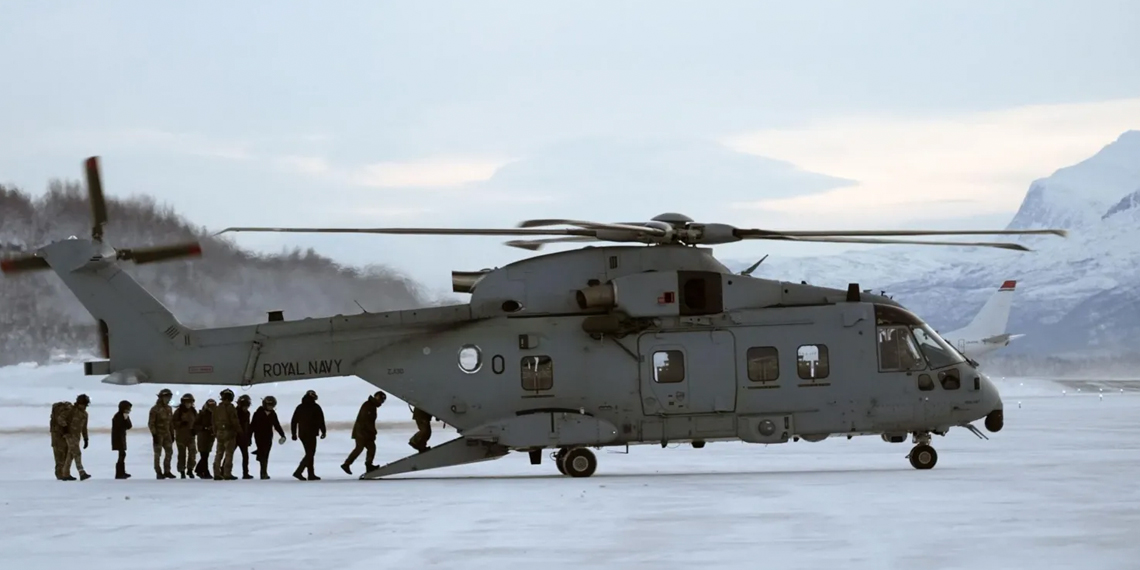
The United Kingdom will double the number of British troops stationed in Norway over the next three years, in a major reinforcement of UK Arctic defence as Nato allies respond to rising Russian military activity in the High North. Defence Secretary John Healey confirmed that the UK presence will increase from around 1,000 personnel to approximately 2,000, signalling a long-term commitment to Arctic deterrence and collective security.
Speaking ahead of talks with allies at Nato headquarters in Brussels, Healey said demands on defence were intensifying as Moscow expands its footprint across the Arctic region. He warned that Russia now poses the most serious threat to Arctic and High North security since the Cold War, citing the reopening of former Soviet-era bases and a sharp increase in military deployments north of the Arctic Circle.
Nato Coordination and the Arctic Sentry Plan
The troop expansion forms part of a broader Nato effort to strengthen surveillance and readiness in northern Europe. UK ministers are backing a proposed “Arctic Sentry” framework designed to mirror existing Nato initiatives such as Baltic Sentry and Eastern Sentry, which focus on intelligence-sharing, rapid response and protection of critical infrastructure.
The Arctic Sentry proposal reflects growing concern among Nato members that Russia is using the region’s melting ice and new shipping routes to expand its strategic reach. With the Arctic becoming increasingly accessible, allied governments fear the area could become a key front in future geopolitical confrontation.
Royal Marines to Lead Arctic Training Exercises
As part of the expanded UK presence, 1,500 Royal Marine Commandos will deploy to Norway in March to participate in Nato’s major winter drill, Exercise Cold Response. The exercise, spanning Norway, Finland and Sweden, is designed to test allied forces’ ability to operate in extreme cold, mountainous terrain and remote Arctic environments.
The Royal Marines have developed a reputation as one of Nato’s leading cold-weather fighting forces, regularly training in northern Norway to maintain specialist skills in Arctic warfare, survival and logistics. The exercise will involve land, sea and air components, reinforcing interoperability between allied forces operating in harsh conditions.
Lion Protector and Protection of Critical Infrastructure
Later in the year, the UK-led Joint Expeditionary Force will conduct a large-scale exercise known as Lion Protector. This operation will bring together air, land and naval forces from several European nations to rehearse the defence of vital infrastructure across Norway, Iceland and the Danish straits.
The focus on infrastructure protection reflects heightened concern over the vulnerability of undersea cables and energy pipelines, which carry data, electricity and gas between Europe and the wider world. Western intelligence agencies have repeatedly warned that these assets could be targeted through sabotage or covert operations.
Rising Russian Submarine Activity in the North Atlantic
The Ministry of Defence has reported a 30% rise in Russian submarine activity in UK waters over the past two years, with overall levels in the North Atlantic now comparable to those seen during the Cold War. Officials say this increase underlines the need for closer coordination with Nordic allies and enhanced maritime surveillance.
In response, the UK and Norway signed a bilateral defence pact last year aimed at protecting undersea infrastructure. The agreement allows the two navies to operate a combined fleet to monitor Russian submarine movements and share intelligence in real time.
Strategic Background and Long-Term Commitment
Russia’s full-scale invasion of Ukraine has reshaped Nato’s security priorities, pushing the alliance to reinforce its northern and eastern flanks. The Arctic, once viewed primarily as a zone of cooperation, is now seen as a critical theatre where military presence, deterrence and resilience are essential.
By doubling British troops in Norway, the UK is positioning itself as a key player in Arctic defence, signalling to allies and adversaries alike that it intends to remain fully engaged in safeguarding the High North. The move also reinforces the UK’s long-standing military partnership with Norway, a Nato member that sits on the frontline of Arctic security.