
Scotland has become the first country in the United Kingdom to legalise water cremation, marking a major shift in funeral law and reflecting growing demand for environmentally friendly funeral options.
The new regulations, approved by the Scottish Parliament on Monday, allow hydrolysis — also known as aquamation — to be used as a legal alternative to traditional burial or fire cremation. It is the most significant reform to funeral legislation since cremation was introduced in 1902.
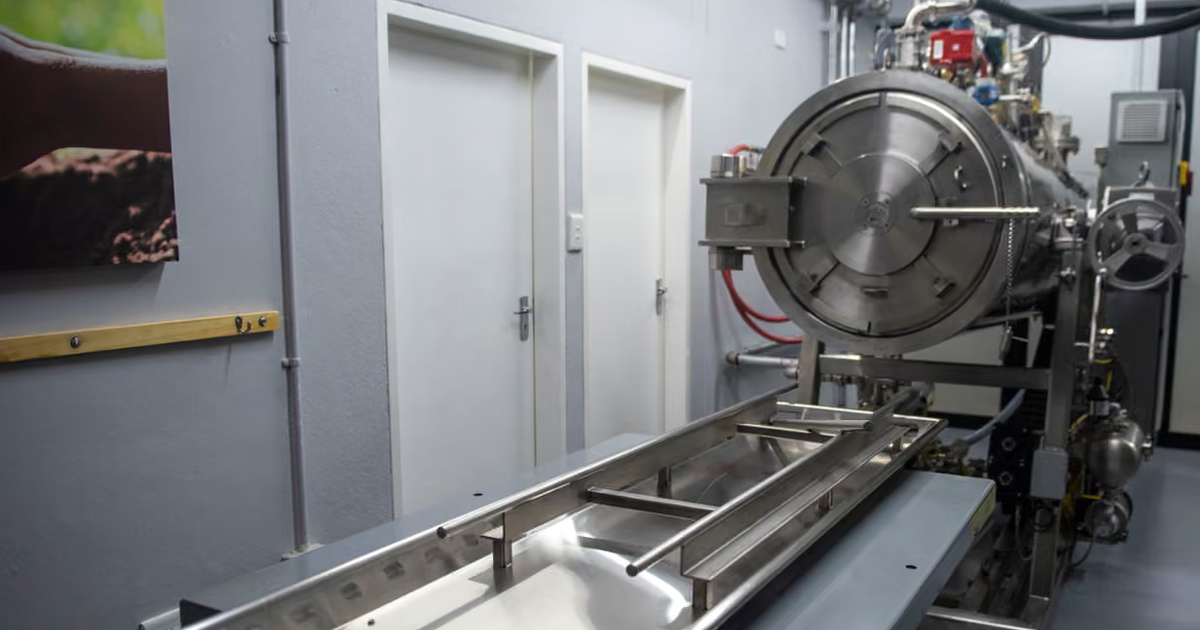
Hydrolysis replicates the natural decomposition process that occurs after burial but significantly accelerates it.
The body is placed in a pressurised metal chamber containing water and a 5% alkaline solution, such as potassium hydroxide, and heated to around 150°C for three to four hours. The process dissolves soft tissue, leaving only bones, which are then dried and reduced to a white powder. Families can keep, scatter or bury the remains in the same way as ashes from traditional cremation.
The method is already legal in several countries, including 28 US states, Canada, Ireland, South Africa, Australia and New Zealand. Archbishop Desmond Tutu chose water cremation for his funeral in 2022.
Scotland’s Public Health Minister, Jenni Minto, said the move reflects changing public attitudes towards sustainability and personal choice.
“The choices people make about their remains prior to death are deeply personal, shaped by individual values, beliefs and the wishes of their families.
“Hydrolysis offers a new, environmentally friendly alternative to burial or cremation, responding to significant public support for greater choice, and it will be the first new option available for over 120 years.”
Minto confirmed that hydrolysis would be subject to the same regulatory framework as existing funeral practices.
Kindly Earth, which holds exclusive rights to manufacture hydrolysis equipment in the UK, said it may take up to nine months before the first facility becomes operational. Funeral providers must obtain planning permission and approval from the local water authority.
Helen Chandler, general manager of Kindly Earth, described the reform as a historic development for Scotland’s funeral sector.
“We know that not everyone will choose hydrolysis – and that’s the point. It’s about giving families more choice. Each family has different values and priorities. Some people, particularly those planning ahead for their own funeral, are looking for options that feel more aligned to their own preferences.”
The company says families are increasingly drawn to hydrolysis because it produces no direct toxic air emissions and can reduce the need for single-use coffins.
William Purves Funeral Directors has been part of the advisory group working with the Scottish Government on the change.
Andrew Purves, chief operations officer at the firm, said families are showing greater interest in the environmental impact of funerals.
“We’re all aware of the environmental impact we have in our lives, and spend a lot of time choosing what we recycle and so on, so it’s only right that people should be able to consider that for their funeral too.”
He noted that cremation was once controversial when first introduced, but now accounts for almost 80% of UK funerals, according to the Cremation Society.
“With something different and new, people are always going to be sceptical and they may not even know what it is yet. But cremation has become very accepted in the UK and I expect the same thing will happen with hydrolysis as we accept it as a society.”
Elsewhere in the UK, the Law Commission is reviewing funeral law and considering regulatory frameworks for new methods, including hydrolysis and human composting.
Scotland’s decision positions it at the forefront of sustainable funeral reform in Britain, as environmental concerns increasingly influence end-of-life planning.