
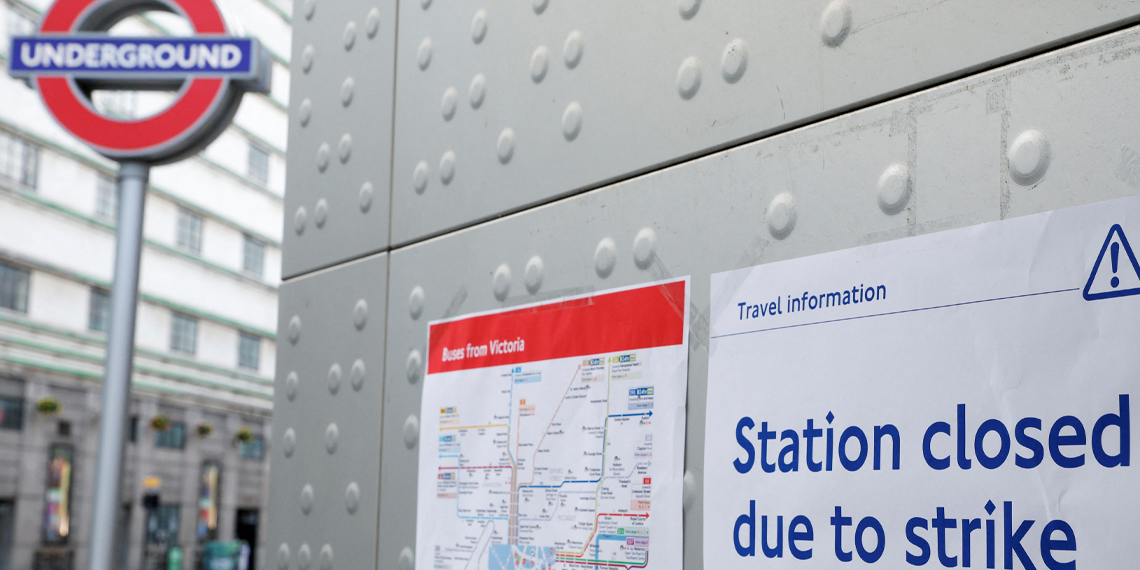
London Underground strikes are set to bring widespread travel disruption across the capital next week after the Rail, Maritime and Transport union (RMT) confirmed a series of walkouts by Tube drivers. The union announced that its members will strike for 24 hours from midday on Tuesday and again on Thursday, escalating a dispute with Transport for London (TfL) over proposed working conditions.
The planned industrial action is expected to severely affect commuters, businesses and visitors, with economic losses estimated at £210 million. The timing of the strikes, beginning at midday rather than early morning, is likely to catch passengers off guard during peak travel hours.
Dispute over four-day working week fuels strike action
At the centre of the dispute is a proposed four-day working week for Tube drivers. The RMT claims TfL is attempting to impose the changes without proper agreement, while TfL insists the scheme is voluntary and designed to modernise working patterns.
RMT general secretary Eddie Dempsey said negotiations had failed to deliver a compromise, accusing TfL of refusing to make concessions. He described the strikes as “inevitable” after talks broke down despite the union’s efforts to reach a settlement.
TfL, however, maintains that the proposal would reduce working hours to 34 per week, offer an additional day off, and improve operational flexibility without cutting pay or forcing staff to abandon existing five-day schedules.
Network-wide disruption expected across multiple lines
TfL has warned that the London Underground strikes will result in significant service reductions across the network. Several lines are expected to face severe disruption, while others may not operate at all during strike periods.
The Piccadilly and Circle lines are not expected to run, while parts of the Central and Metropolitan lines will also face closures. Other lines will operate on reduced timetables, leading to overcrowding and longer journey times.
Passengers have been advised to check travel updates before setting out, as the impact of the strikes will extend across multiple days due to the midday start and recovery period following each walkout.
Additional strike action adds to travel chaos
The disruption will be compounded by separate strike actions affecting bus services and other transport staff. Routes operated by Stagecoach are set to be impacted by a 24-hour strike later in the week, while members of another union will stage walkouts over roster changes and increased weekend work.
These overlapping strikes are expected to intensify pressure on London’s transport system, particularly as the city prepares for a busy weekend that includes the annual London Marathon, which draws hundreds of thousands of participants and spectators.
Calls for urgent talks as pressure mounts on both sides
London Mayor Sadiq Khan has urged both sides to return to negotiations in an effort to avoid disruption. City officials have warned that the strikes will have a serious impact on commuters and the wider economy.
Business leaders have also called for a resolution, highlighting the financial cost and inconvenience caused by repeated industrial action on the Underground network.
TfL chief operating officer Claire Mann reiterated that the proposed changes aim to align the Underground with other rail operators while improving service reliability. She stressed that the organisation remains open to further discussions and urged the union to suspend strike action.
Ongoing tensions over pay, conditions and reform
The latest London Underground strikes are part of a broader pattern of industrial disputes across the UK transport sector in recent years. Unions have increasingly clashed with employers over pay, working conditions and efforts to modernise services in response to financial pressures and changing travel patterns.
Since the pandemic, TfL has faced funding challenges due to reduced passenger numbers, prompting a push for cost-saving measures and operational reforms. These changes have often been met with resistance from unions concerned about job security and working conditions.
Industrial action on the Underground has become a recurring issue, with previous strikes disrupting millions of journeys and raising concerns about the long-term stability of London’s transport network. The current dispute highlights ongoing tensions between maintaining workforce satisfaction and delivering efficient, modern public transport services.
As negotiations remain stalled, commuters face another week of uncertainty, with further strike action already planned in the coming months if no agreement is reached.