
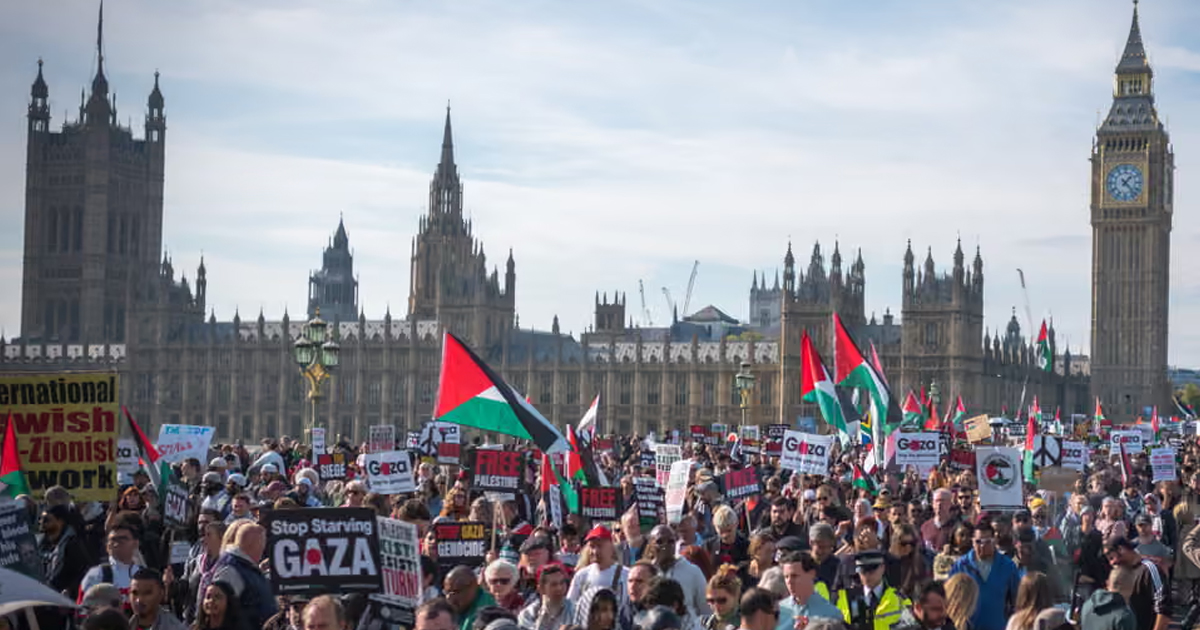
The UK government is considering stronger restrictions on certain pro-Palestinian protests, including the possibility of banning some demonstrations, amid growing concerns over antisemitic attacks and rising tensions affecting Jewish communities.
Prime Minister Keir Starmer signalled that tougher measures may be needed to address inflammatory language used during some marches, while senior police officials warned that threats facing British Jews have reached unprecedented levels.
Government Signals Tougher Action on Protests
Starmer said that while the right to peaceful protest must be protected, certain chants and expressions heard at demonstrations could justify stronger intervention by authorities.
He pointed to controversial slogans as examples of language that may cross the line into incitement or intimidation, adding that in some cases he would support stopping protests altogether if necessary.
The prime minister emphasised that discussions about tightening protest controls have been ongoing and are not solely a response to recent incidents.
Police Warn of Rising Threat to Jewish Communities
Mark Rowley, head of the Metropolitan Police, described the current situation as “dangerous and troubling,” highlighting a convergence of hate crime, extremism and external threats.
He warned that Jewish communities in the UK are facing hostility from multiple sources, including extremist ideologies across the political spectrum and potential influence from hostile states.
Rowley said the scale and nature of the threat has led many Jewish residents to alter their daily lives due to safety concerns.
Recent Attacks Intensify Concerns
The debate follows a series of incidents targeting Jewish sites and individuals across London in recent months.
These include arson attacks on community vehicles, attempted attacks on synagogues, and vandalism at memorial sites, as well as other reported acts of intimidation and violence.
Authorities are investigating these incidents and have increased security measures in affected areas, including higher police visibility and closer coordination with community organisations.
Balancing Protest Rights and Public Safety
The government faces the challenge of balancing the right to protest with the need to protect communities from hate speech and violence.
Starmer reiterated his commitment to freedom of speech and peaceful demonstration but stressed that participants in protests must also take responsibility for challenging harmful rhetoric within their ranks.
Calls have been made for a broader review of protest regulations, including the cumulative impact of repeated demonstrations on affected communities.
Political and Legal Debate Over Restrictions
The prospect of banning or restricting protests has sparked debate among legal experts, politicians and civil rights groups.
Supporters of stricter measures argue they are necessary to prevent escalation and protect vulnerable communities, while critics warn that excessive restrictions could undermine democratic freedoms.
The issue has also been raised by independent advisers and policymakers, who have suggested reviewing the frequency and conditions of large-scale demonstrations.
Rising Tensions and Hate Crime Concerns
The UK has seen a rise in reported antisemitic incidents in recent years, particularly during periods of heightened international conflict.
Law enforcement agencies have increased efforts to monitor and respond to hate crimes, while community groups continue to call for stronger protections and public awareness.
At the same time, pro-Palestinian protests have drawn large crowds across major cities, reflecting public concern over developments in the Middle East.
The intersection of these issues has created a complex environment for policymakers, who must address security concerns while upholding civil liberties.
As discussions continue, the government’s approach to protests and public safety is expected to remain a key issue in the UK’s political and social landscape.