
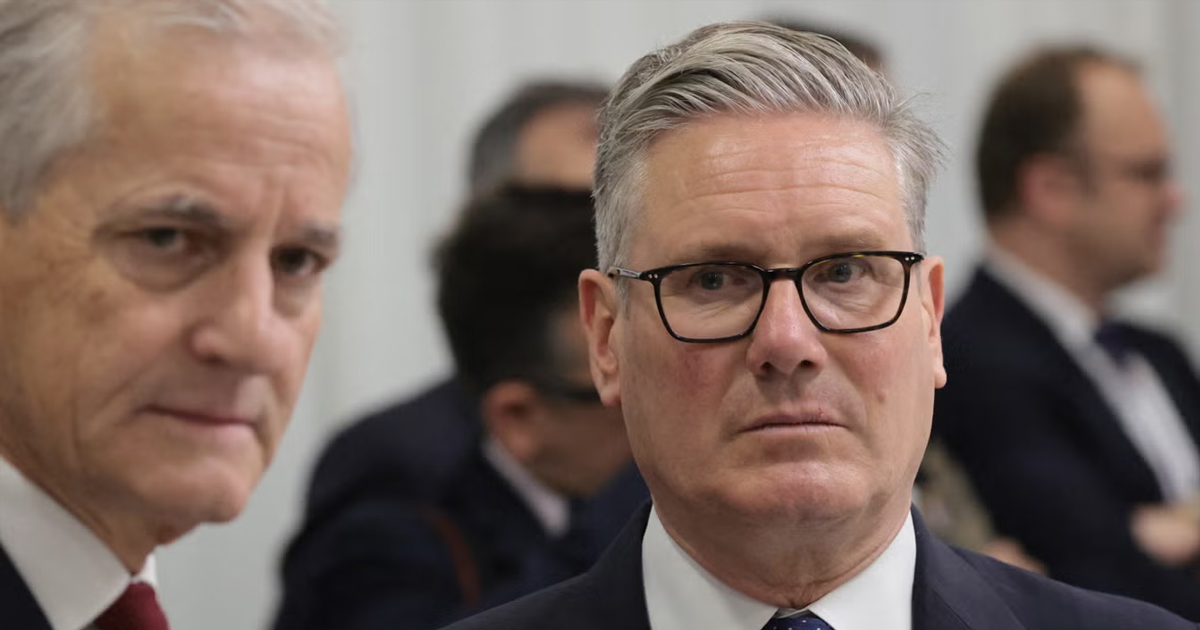
Sir Keir Starmer has come under fire amid claims that Britain could be required to make annual payments into European Union budgets for the first time since Brexit, as part of his proposed “reset” in relations with Brussels.
EU negotiators are reportedly insisting that contributions, potentially around £1bn per year, would be a condition for improved access to the EU single market. UK ministers, however, are said to view the figure as an opening negotiating position rather than an agreed requirement.
The issue has sparked a sharp political backlash, with critics accusing the Prime Minister of reversing Brexit gains.
Shadow Foreign Secretary Priti Patel said Sir Keir was “unpicking Brexit and planning another undemocratic hit job on British taxpayers by signing us up to a £1billion annual payment to the EU”.
The row emerged as the Prime Minister attended the European Political Community summit in Armenia, where he is expected to hold discussions with EU leaders on reshaping UK-EU relations a decade after the Brexit referendum.
Sir Keir has also used the summit to express interest in joining the EU’s €90bn (£78bn) loan programme for Ukraine, describing it as potentially beneficial for UK-EU relations and British job creation.
A European diplomat told The Times, which first reported the story: “If the UK wants further integration they must ‘pay to play’. That is not unusual.”
The Prime Minister has repeatedly called for closer economic ties with the EU, including “deeper economic integration” and alignment with parts of the single market “where that would work for both sides”.
In March, EU leaders agreed that any country seeking participation in elements of the single market may be required to contribute financially. The European Council has also suggested a “permanent mechanism” for an “appropriate financial contribution”, stating it should reflect the size of the UK economy and the level of market access granted.
Similar arrangements already exist elsewhere. Switzerland, whose economy is significantly smaller than the UK’s, pays around €375m annually into EU cohesion funds in exchange for preferential access to parts of the single market.
Writing in The Observer, Sir Keir defended his approach, arguing that Brexit has had a lasting economic impact. He said: “It has damaged our economy and there’s no doubt in my mind where the national interest lies. Britain must be at the heart of a stronger Europe on defence, on security, on energy, and on our economy.”
Despite his push for closer ties, Sir Keir has ruled out rejoining a customs union with the EU, citing existing trade agreements with countries such as the United States and India that would complicate any reversal. However, he has indicated that deeper alignment with the single market remains on the table.
The proposed EU-Ukraine loan initiative could also open opportunities for British defence companies to bid for contracts, with UK contributions reportedly expected to reach up to £400m, drawn from a £3bn ringfenced Ukraine support fund.
A government spokesperson declined to comment on ongoing negotiations.