
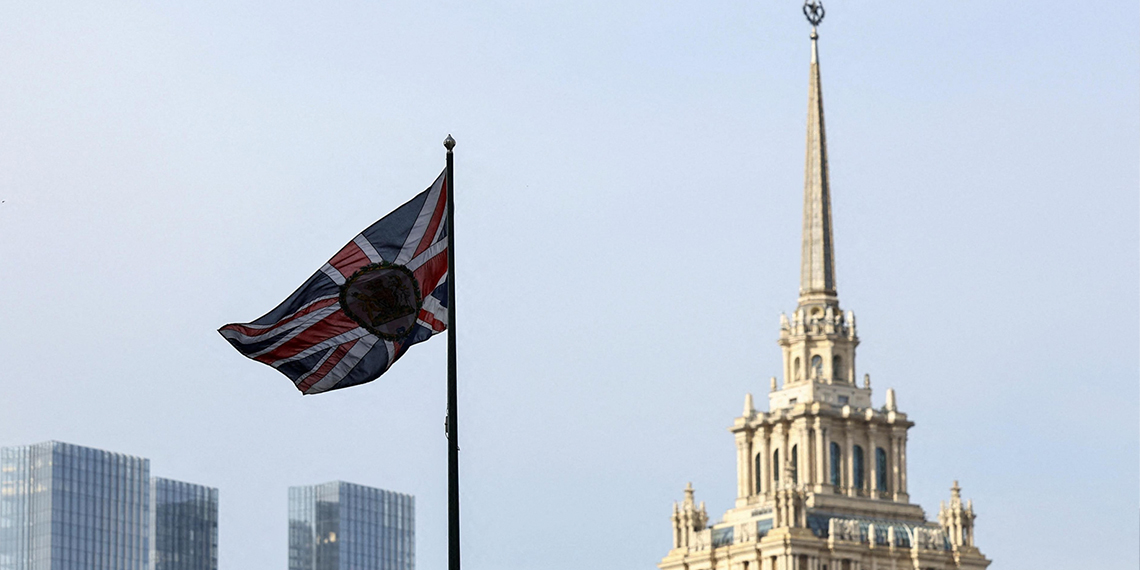
The United Kingdom has unveiled one of its toughest sanctions packages against Russia since the start of the war in Ukraine, targeting individuals and organisations accused of orchestrating the forced deportation and indoctrination of Ukrainian children, as well as conducting influence operations aimed at undermining democratic institutions in Europe.
In a major escalation of pressure on Moscow, the British government announced sanctions against 85 individuals and entities linked to what officials described as “hostile and heinous Russian activity” spanning information warfare, election interference, and the militarisation of Ukrainian children in occupied territories.
The latest measures, announced by the UK government on Monday, come as London intensifies efforts to counter Russian influence operations while reaffirming its long-term support for Ukraine amid the ongoing conflict.
UK Targets Russian Information Warfare Networks
The sanctions package focuses heavily on Russian information and propaganda operations allegedly directed by the Kremlin to weaken international support for Ukraine and destabilise democratic systems abroad.
Among those targeted are 49 individuals associated with the Social Design Agency, including writers, translators, media specialists and video producers accused of creating deceptive pro-Kremlin content.
British officials said the organisation had been tasked and funded directly by the Russian Presidential Administration to conduct influence campaigns designed to manipulate political narratives across Europe.
According to the UK government, the Social Design Agency was allegedly involved in efforts to establish pro-Russian political organisations in Armenia and influence the country’s domestic political landscape ahead of upcoming elections.
The UK also accused another sanctioned entity, ANO Dialog, of coordinating with Russian intelligence services to carry out foreign influence operations and interference campaigns.
British officials said ANO Dialog had worked alongside Russian intelligence to shape political narratives and support Kremlin-aligned interests in Armenia and elsewhere.
UK Condemns Deportation and Militarisation of Ukrainian Children
A central focus of the sanctions package involves Russia’s controversial policy concerning Ukrainian children transferred from occupied territories to Russia or Russian-controlled areas.
The UK government said 29 of the sanctions designations specifically target individuals and organisations connected to the forced deportation, ideological indoctrination and militarisation of Ukrainian minors.
British officials estimate that more than 20,000 Ukrainian children have been forcibly transferred or deported since the beginning of the conflict.
The sanctions include measures against the Centre for Military Sports Training and Patriotic Education of Youth, commonly referred to as the “Warrior Centre”.
The organisation operates military-style training facilities across Russia and occupied Ukrainian territories, where children are reportedly subjected to military exercises and pro-Kremlin ideological programmes.
Also sanctioned is Yulia Sergeevna Velichko for her alleged role in implementing state-led deportation and indoctrination programmes involving Ukrainian children.
British authorities accused Velichko of overseeing initiatives that exposed children from occupied territories to Russian nationalist ideology while facilitating the issuance of Russian passports.
UK Announces Additional Funding for Child Recovery Programmes
Alongside the sanctions package, the UK government announced an additional £1.2 million in funding aimed at helping identify and return deported Ukrainian children to their families and communities.
The funding will support verification and tracing initiatives coordinated with Ukrainian authorities and international partners.
British officials said £600,000 would go toward the Verification Centre, which has reportedly provided evidence to United Nations investigators examining allegations of crimes against humanity linked to child deportations.
Another £600,000 will support Ukrainian-led tracing programmes focused on locating thousands of children believed to have been transferred to Russia or Russian-controlled regions.
The funding announcement coincides with a high-level international meeting in Brussels dedicated to the return of Ukrainian children.
UK Foreign Secretary Vows Continued Action Against Kremlin
Yvette Cooper said the British government would continue exposing and disrupting Russian operations targeting democracies and Ukrainian civilians.
She accused Russian President Vladimir Putin of using propaganda and manipulation to weaken international opposition to Moscow’s actions in Ukraine.
Cooper said the sanctions were intended to expose the “depths Russia is willing to go” to interfere in democratic processes and erase Ukrainian identity through the forced relocation of children.
The foreign secretary also reaffirmed Britain’s commitment to working alongside allies to locate and return Ukrainian children taken from occupied areas.
Armenia Election Interference Allegations Raise Concerns
The UK government’s claims regarding Russian interference in Armenia have added a new dimension to growing concerns over Moscow’s influence operations in neighbouring states.
British officials allege Kremlin-linked organisations sought to establish pro-Russian groups inside Armenia and influence political outcomes ahead of future elections.
The accusations come at a sensitive time for Armenia, which has experienced increasing political tensions and geopolitical uncertainty following years of strained relations with Russia and regional instability in the South Caucasus.
Western governments have repeatedly accused Moscow of using online disinformation campaigns, covert funding networks and political influence operations to destabilise democratic systems in Europe and neighbouring regions.
Britain Expands Russia Sanctions Pressure
The latest measures further expand Britain’s already extensive sanctions programme against Russia.
According to the UK government, more than 3,300 Russian-linked individuals, businesses and organisations have now been sanctioned since the start of the war in Ukraine.
The sanctions campaign has targeted sectors ranging from military supply chains and financial services to cyber operations and disinformation networks.
British officials argue the measures are designed not only to weaken Russia’s war effort but also to expose activities they describe as threats to international stability and democratic institutions.
International Focus on Ukrainian Children Intensifies
The issue of Ukrainian children transferred from occupied territories has become an increasingly prominent part of the international response to the war.
International organisations, including the United Nations and the International Criminal Court, have raised concerns over allegations involving forced deportations and re-education programmes.
Human rights groups say some children have been placed in camps where they are subjected to military training and exposed to Russian nationalist propaganda aimed at erasing Ukrainian cultural identity.
The UK government said sanctions remain one of its key tools for responding to such actions while supporting international investigations into possible war crimes and crimes against humanity.
As the war in Ukraine continues, Britain and its allies are expected to maintain pressure on Moscow through additional sanctions, diplomatic measures and military support for Kyiv.