
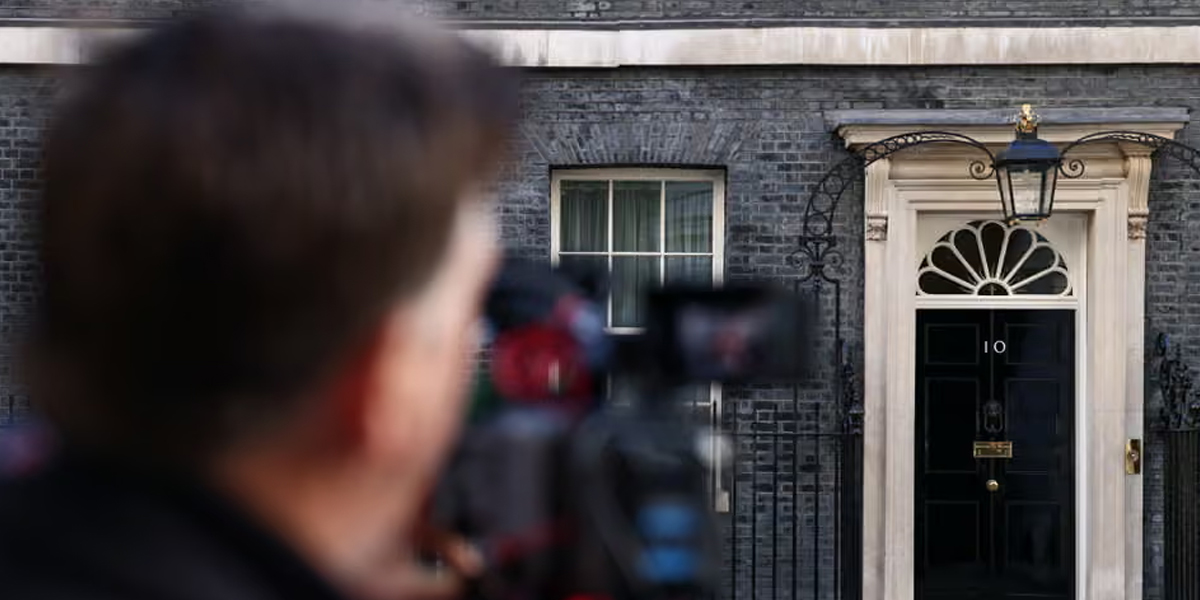
More than 100 Labour MPs have signed a statement opposing any immediate leadership challenge against Prime Minister Keir Starmer as divisions inside the governing party deepen following heavy local and devolved election losses.
The public show of support came after growing pressure on Starmer from critics within Labour, with more than 80 MPs and several ministers reportedly calling for him to step aside after the party suffered major setbacks across England, Scotland and Wales.
Despite mounting speculation about his future, Starmer told his cabinet he would not resign while no formal leadership challenge had been triggered under Labour Party rules.
The latest developments highlight the growing political uncertainty surrounding Labour’s leadership as the party faces internal tensions, falling poll ratings and increasing pressure from rivals including Reform UK and the Green Party.
Labour MPs Rally Behind Starmer
The statement backing Starmer was signed by 103 Labour MPs, including several parliamentary private secretaries and influential backbenchers.
Organisers insisted the initiative did not originate from Downing Street, although several MPs claimed the letter had been circulated by government whips in an effort to demonstrate party unity.
The statement warned against plunging Labour into a destabilising leadership contest at a time of economic uncertainty and geopolitical instability.
It said the party needed to focus on rebuilding public trust following what signatories described as a “devastatingly tough” set of election results.
The letter stressed that Labour’s priority should be delivering policies and governing effectively rather than becoming consumed by internal divisions.
Supporters of Starmer argued the backing from more than 100 MPs demonstrated that the prime minister still retained the confidence of a significant section of the parliamentary party.
Election Losses Trigger Labour Turmoil
The internal crisis follows a bruising round of local and devolved elections that saw Labour lose hundreds of council seats and suffer setbacks in Wales and Scotland.
The results intensified criticism of Starmer’s leadership strategy and raised concerns inside Labour over the party’s electoral direction ahead of the next general election.
Labour also lost ground to multiple political rivals, including Nigel Farage and the Green Party, reinforcing fears that Britain’s traditional two-party political system is becoming increasingly fragmented.
Several Labour MPs from traditionally safe constituencies reportedly fear losing support to Reform UK in working-class areas and to the Greens among younger progressive voters.
The election results have triggered growing debate within Labour about whether Starmer can still lead the party into the next national election.
Starmer Refuses to Step Down
During a cabinet meeting on Tuesday, Starmer reportedly made clear that he had no intention of resigning voluntarily.
He reminded ministers that Labour has a formal internal process for leadership challenges and insisted that threshold had not been reached.
His comments were widely interpreted as a direct challenge to potential rivals inside the party to formally move against him if they wished to replace him.
Starmer also stressed the need for government stability at a time when Britain faces economic pressures linked to inflation, rising energy prices and global geopolitical tensions.
The prime minister has repeatedly argued that Labour must focus on governing rather than engaging in prolonged internal disputes similar to those that damaged the Conservative Party during its final years in office.
Senior Ministers Publicly Support Prime Minister
Several senior cabinet ministers publicly rallied behind Starmer following the meeting.
Pat McFadden said nobody had openly challenged the prime minister during cabinet discussions and insisted the government should continue focusing on its agenda.
Liz Kendall also voiced strong support for Starmer, saying the government remained committed to addressing national challenges including the cost-of-living crisis and instability in the Middle East.
Other senior figures reportedly spoke privately with Starmer about the political fallout from the elections, including Shabana Mahmood, Yvette Cooper, David Lammy and Defence Secretary John Healey.
According to reports, some ministers suggested Starmer should consider overseeing an orderly leadership transition after the scale of Labour’s electoral losses.
Divisions Inside Labour Continue to Grow
Despite the statement of support, criticism of Starmer remains widespread inside Labour ranks.
Some MPs argued that securing signatures from just over 100 MPs still represented less than half of Labour’s backbench parliamentary party and exposed the extent of internal dissatisfaction.
One critical MP reportedly described the support effort as “pathetic,” saying Starmer could no longer effectively lead without broader backing across the party.
Others warned that continued leadership speculation risked damaging investor confidence and undermining public trust in the government.
John Slinger argued that a prolonged leadership battle could create economic instability at a sensitive time for Britain’s financial markets.
He said businesses were increasingly concerned about political uncertainty and its potential impact on investment and economic growth.
Meanwhile, Juliet Campbell warned Labour should avoid repeating the mistakes made by the Conservatives, whose repeated leadership contests contributed to voter frustration and political instability between 2016 and 2022.
Labour Faces Pressure From Multiple Political Fronts
Labour’s difficulties reflect broader changes in British politics as traditional party loyalties weaken and smaller parties gain support.
Reform UK has continued to expand its presence in many working-class areas previously dominated by Labour, while the Green Party has attracted progressive and younger voters dissatisfied with mainstream politics.
Political analysts say Starmer now faces the difficult challenge of holding together Labour’s broad coalition while responding to growing pressure from both the left and right.
Some Labour MPs believe the party has failed to clearly define its political identity since taking office, while others argue Starmer has become too cautious and disconnected from voters.
The prime minister’s critics also accuse him of frequent policy reversals and an inability to effectively counter the rise of populist politics.
Economic Concerns Add to Political Pressure
The Labour leadership crisis is unfolding against a backdrop of wider economic uncertainty in the UK.
Financial markets have already reacted nervously to speculation about political instability, with government borrowing costs recently climbing to their highest levels since the late 1990s.
Investors are closely monitoring Labour’s internal divisions amid concerns that prolonged uncertainty could weaken confidence in Britain’s fiscal outlook.
At the same time, rising energy prices linked to Middle East tensions and persistent inflation continue to place pressure on households and businesses.
Political observers say Labour’s ability to restore unity and reassure both voters and markets may prove crucial in determining the government’s long-term stability.
For now, Starmer remains in office with the backing of key cabinet ministers, but pressure inside Labour appears unlikely to disappear quickly.