
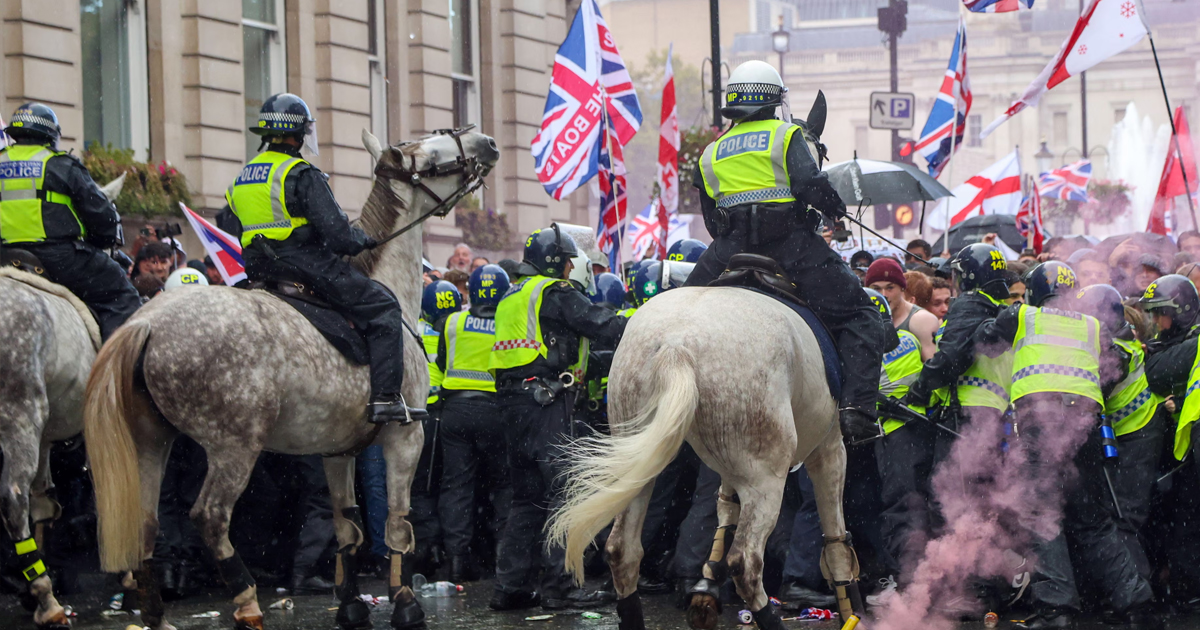
Eleven foreign far-right activists have been banned from entering the UK ahead of a major rally linked to supporters of Tommy Robinson, as Prime Minister Keir Starmer accused organisers of spreading hatred and division.
The Unite the Kingdom demonstration, promoted by Robinson, whose real name is Stephen Yaxley-Lennon, is expected to draw large crowds to central London on Saturday. The event comes alongside major pro-Palestinian marches marking Nakba Day and coincides with the FA Cup final, making it one of the busiest policing operations of the year in the capital.
Downing Street confirmed that several overseas far-right figures had been refused entry into the UK as part of efforts to prevent unrest and hate-related activity during the demonstrations.
Those barred from entering include US anti-Islam influencer Valentina Gomez, Dutch political commentator Eva Vlaardingerbroek and Polish MEP Dominik Tarczyński.
Speaking after meeting senior Metropolitan Police officers ahead of the demonstrations, Starmer said Britain was facing a wider battle over its values and social cohesion.
He accused the organisers of the Unite the Kingdom march of promoting division and hatred, while warning that anyone attempting to intimidate communities or provoke violence would face strong legal consequences.
However, Downing Street also stressed that the majority of people expected to attend the protest were law-abiding citizens intending to demonstrate peacefully. The Prime Minister urged all protesters to act respectfully and responsibly.
In a separate social media video, Starmer described some organisers linked to the rally as convicted extremists and racists, arguing that the event reflected wider tensions surrounding political extremism in Britain.
The march is expected to feature several figures connected to Britain’s far-right and Christian nationalist movements and marks a growing attempt by Robinson to encourage supporters to become more politically active through campaigning and voting.
One of the announced speakers is Siobhan Whyte, whose daughter Rhiannon Whyte was fatally stabbed by an asylum seeker staying at the hotel where she worked.
Participants in the Unite the Kingdom rally are expected to march along the Strand, pass through Trafalgar Square and finish in Parliament Square. Anti-racism counter-protests are also planned across central London.
Police are preparing extensive security measures for the demonstrations, including the use of live facial recognition technology for the first time during a protest policing operation. Public Order Act restrictions have also been imposed on both the far-right march and the large pro-Palestinian demonstrations taking place the same day.
Faith leaders across the UK also spoke out ahead of the protests, calling for unity and social cohesion amid growing tensions.
Sarah Mullally backed A Million Acts of Hope Week, a nationwide campaign promoting community solidarity and interfaith cooperation in response to what organisers described as rising hatred and division in Britain.
The initiative is supported by religious organisations including the Muslim Council of Britain, the UK Muslim Network and senior Jewish faith leaders.
Mullally said recent events may leave people feeling that Britain is becoming increasingly divided, but argued that acts of kindness and community support happening across the country offer reasons for optimism.
Rabbi Jonathan Wittenberg, a leading figure in interfaith dialogue, also highlighted examples of solidarity between Jewish, Muslim and Christian communities following recent antisemitic incidents in London.
He said acts of kindness and support between communities reflect the true character of Britain and should not be overshadowed by extremist rhetoric or public hostility.
Downing Street said the government was taking firm action to protect communities from hate-driven extremism while continuing to support the right to peaceful protest.
Home Secretary Shabana Mahmood said police had been given robust powers and specialist resources to maintain public safety throughout Saturday’s demonstrations.
She said peaceful protest remains a fundamental part of British democracy, but warned that anyone spreading hate or engaging in violence would face the full force of the law.