
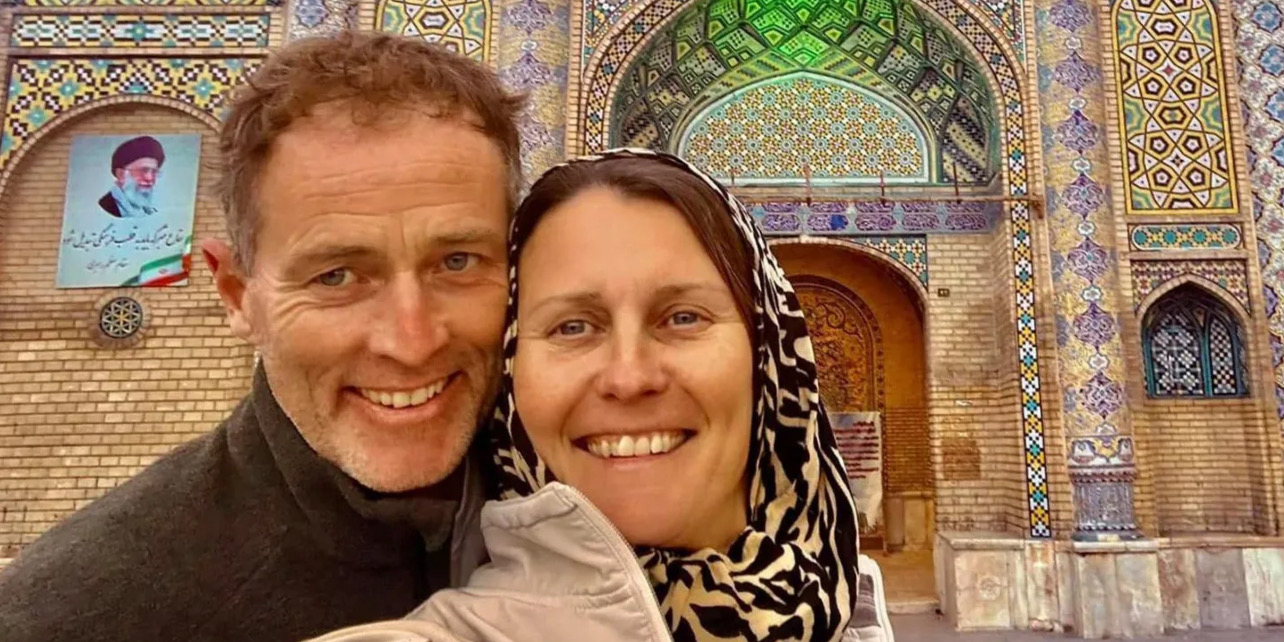
A British couple imprisoned in Iran on espionage charges they strongly deny have launched a new hunger strike in protest against their detention, according to family members who warn the situation is rapidly becoming a medical emergency.
Lindsay Foreman and Craig Foreman, a couple from East Sussex, were arrested while travelling through Iran during a global motorbike journey last year. The pair were later sentenced to 10 years in prison after being accused of spying, allegations both have consistently rejected.
Relatives say the couple began refusing food after Iranian authorities cut off their phone access earlier this month, deepening fears over their physical and mental wellbeing inside Tehran’s notorious Evin Prison.
The case has intensified diplomatic pressure on the British government, with supporters, MPs and campaigners urging ministers to intervene more aggressively to secure the couple’s release.
Family Warns of “Medical Emergency”
According to relatives, Craig Foreman has now spent nearly two weeks on hunger strike after communication with family members was suspended.
Sources close to the family said Lindsay Foreman briefly paused her own hunger strike after being told she would regain contact with relatives, but later resumed after communication problems continued.
Lindsay’s son, Joe Bennett, described the situation as extremely dangerous and accused British authorities of moving too slowly.
He warned that the couple’s deteriorating health could soon become life-threatening.
“This is a medical emergency in the making,” Bennett said.
He also urged the British government to prioritise the case despite ongoing political tensions in Westminster.
“I understand British politics is in an extraordinary moment,” he said. “But my mum and Craig cannot wait for Westminster to resolve its own crisis.”
Bennett specifically called on Foreign Secretary Yvette Cooper to intervene personally.
“This cannot be delayed. This cannot be deprioritised. Two lives are at stake,” he added.
Couple Deny Espionage Allegations
The Foremans were arrested in January last year while travelling through Iran as part of a long-distance motorcycle journey across multiple countries.
Iranian authorities later accused them of espionage and sentenced both to 10 years in prison earlier this year.
The couple have consistently denied the allegations and insist they were ordinary tourists travelling legally through the country.
Before their communication privileges were suspended, the pair spoke publicly from Evin Prison and expressed fears they could remain detained for years.
“We are innocent people. We have committed no offence,” Craig Foreman said in one of the final interviews before phone access was removed.
He also described feelings of hopelessness inside prison.
“I just feel that we’re wasting our lives in here and rotting away,” he said.
Their detention has become part of growing international criticism of Iran’s treatment of foreign nationals accused of security-related offences.
UK Government Calls Detention “Unjustified”
The Foreign, Commonwealth and Development Office has repeatedly described the couple’s imprisonment as unjustified.
British officials say they continue working to secure the pair’s release and safe return to the UK.
The government has not publicly detailed ongoing diplomatic efforts, but ministers have increasingly raised concerns over Iran’s detention of foreign citizens and dual nationals.
In April, Foreign Office minister Hamish Falconer addressed Parliament and referred to the Foremans as “innocent tourists”.
He described the case as “an injustice” and reiterated the government’s support for the couple and their relatives.
However, campaigners argue stronger political pressure is needed as the health situation worsens.
Support Campaign Grows Across Britain
Public support for the Foremans has expanded significantly in recent months.
This week, members of Britain’s adventure motorbike community organised a symbolic ride from Kensington Palace to Parliament Square to mark 500 days since the couple’s detention.
Supporters carried banners and photographs calling for immediate diplomatic action.
Friends, relatives and campaign groups are also preparing to deliver a petition to 10 Downing Street demanding urgent government intervention.
Campaigners say the case reflects wider concerns over the detention of Western nationals in Iran, particularly those accused of espionage or national security offences.
Human rights organisations have repeatedly criticised Iran over what some governments describe as “hostage diplomacy” — the detention of foreign nationals allegedly used as leverage during international disputes.
Iran has consistently denied such accusations.
Evin Prison Under International Scrutiny
The Foremans are believed to be held in Evin Prison, one of Iran’s most heavily scrutinised detention facilities.
Located in northern Tehran, the prison has long been associated with political prisoners, foreign detainees and individuals accused of national security crimes.
Human rights organisations including Amnesty International have previously raised concerns over prison conditions, solitary confinement, restricted communications and medical treatment inside the facility.
Several foreign nationals detained there in past years have described severe psychological pressure and lengthy periods without contact with families.
The prison has become internationally known through a series of high-profile cases involving dual nationals and Western citizens.
Rising Tensions Between Iran and Western Governments
The Foremans’ case comes during a period of strained relations between Iran and several Western countries.
Diplomatic tensions have intensified in recent years over regional conflicts, sanctions, nuclear negotiations and the detention of foreign citizens.
British-Iranian detainees and other foreign nationals have frequently become the focus of political and diplomatic disputes between Tehran and Western governments.
Analysts say cases involving hunger strikes often place additional urgency on negotiations because of the potential for rapid health deterioration.
Medical experts warn prolonged food refusal can quickly lead to organ damage, weakened immunity and life-threatening complications, particularly in prison environments.
Campaigners fear the Foremans’ condition could worsen rapidly if communication restrictions and prison conditions continue unchanged.
Growing Calls for Diplomatic Intervention
Pressure is now mounting on the British government to escalate diplomatic efforts.
Supporters argue the case requires direct ministerial involvement and stronger public pressure on Iranian authorities.
Some MPs have also urged ministers to prioritise the case amid wider concerns over the treatment of British citizens abroad.
The Foreign Office continues to maintain that securing the couple’s safe return remains a priority.
For the Foremans’ relatives, however, time is becoming increasingly critical as the hunger strike continues inside one of Iran’s most controversial prisons.