
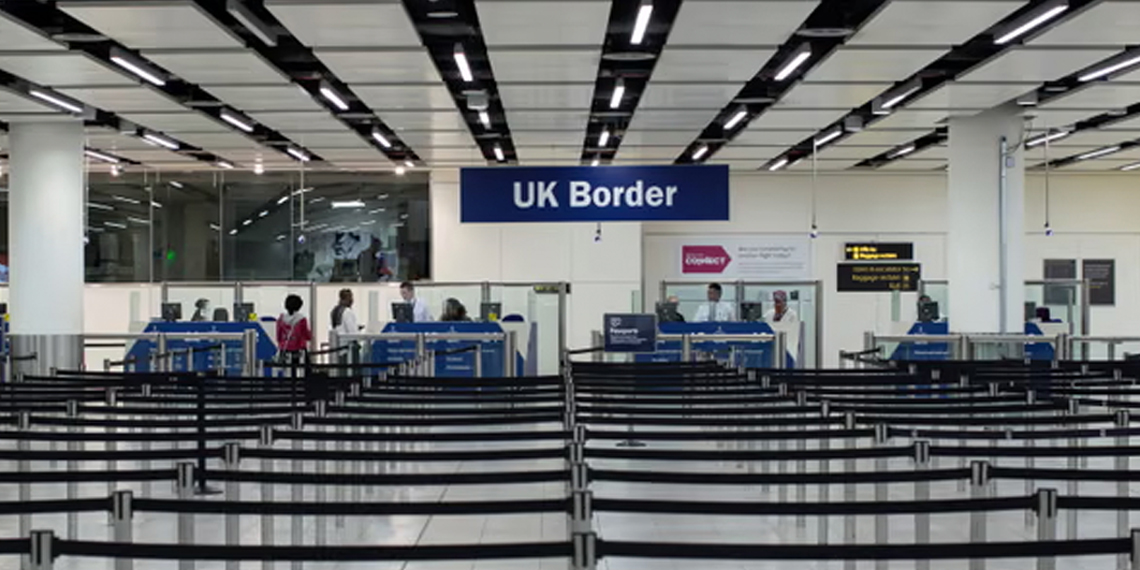
Many people across Britain wrongly believe net migration is continuing to rise despite official figures showing a significant decline, according to new research from the thinktank British Future.
The study, published ahead of the latest government migration statistics, highlights a major gap between public perception and the reality of immigration levels in the UK.
Official figures show net migration fell dramatically from a peak of 944,000 in the year to March 2023 to 204,000 in the year to June 2025 — the lowest level recorded in several years. Further reductions are expected in the latest figures due to be released by the government.
Despite this sharp decline, the research found many voters still believe immigration levels are increasing.
According to the survey, 67% of people with more sceptical views on immigration believe net migration rose during 2025. Even among those who support lower immigration levels, six in 10 said they believed numbers were still increasing.
Only 15% of those surveyed expected net migration to fall further over the next year.
The research also revealed widespread misconceptions about the makeup of immigration into Britain. Participants estimated that asylum seekers accounted for around one-third of all immigration, when the actual figure is closer to 9%.
At the same time, many underestimated the role of international students, who account for more than half of immigration arrivals to the UK but were believed to represent only around 24%.
Sunder Katwala said the disconnect between public opinion and official data is shaping not only the immigration debate but wider British politics.
He argued that constant political discussion about reducing immigration may have contributed to the belief that migration numbers are still climbing, despite evidence to the contrary.
Immigration has remained one of the most divisive political issues in Britain since the Brexit referendum, with debates around Channel crossings, asylum hotels and border security dominating headlines and political campaigns.
Although migration figures have fallen sharply, political rhetoric around immigration has become increasingly tough across both Labour and Conservative parties in recent years.
The research found concerns and mistrust surrounding immigration are now shared across supporters of multiple political parties.
Shabana Mahmood previously acknowledged the substantial fall in net migration but said the government intended to go further, arguing that rapid population growth had placed pressure on local communities and public services.
Meanwhile, Conservative figures have continued calling for stricter immigration controls, while Nigel Farage and Reform UK have pushed for “net zero” migration policies.
Researchers say public anxiety around immigration is often influenced less by official statistics and more by visible issues such as small boat crossings, asylum accommodation and wider concerns about social stability and public services.
Sophie Stowers said immigration debates have increasingly become a symbol of wider frustration about whether Britain’s political and economic systems are functioning properly.
She suggested that simply presenting lower migration figures is unlikely to change public attitudes unless broader concerns around security, housing, healthcare and economic stability are also addressed.
The research, carried out with polling group Number Cruncher Politics, surveyed more than 3,000 adults across Great Britain.
British Future warned that if migration trends continue to shift over the coming years, political parties could face a very different immigration debate ahead of the next UK general election campaign in 2029.