
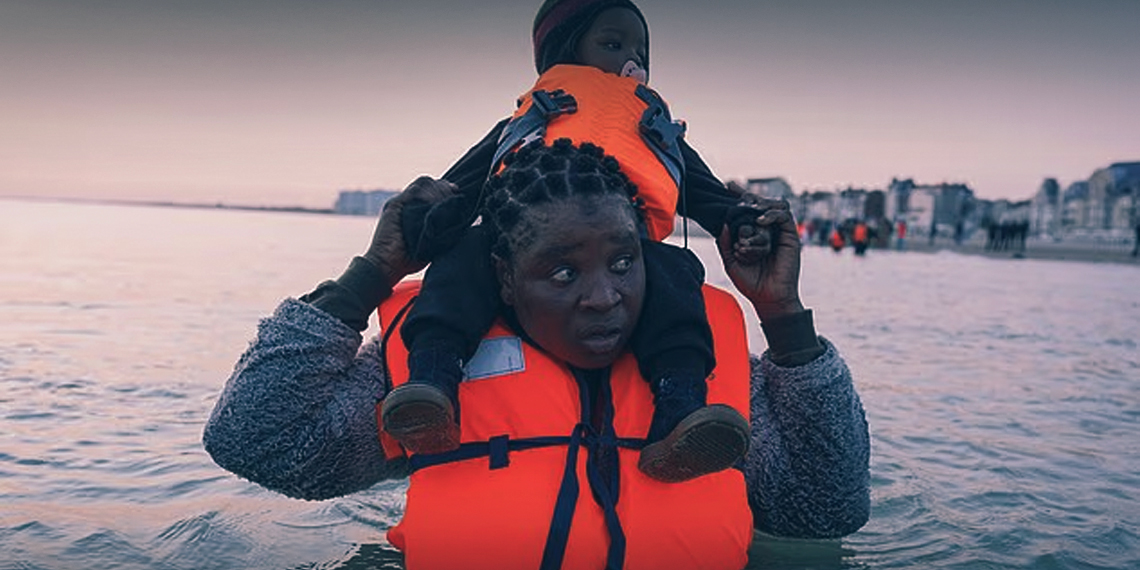
Nearly 400 migrants reached the UK in six small boats on Friday as people-smuggling gangs took advantage of calm seas and hot weather conditions across the English Channel.
Dramatic scenes on the French coast showed families carrying young children through shallow water near Dunkirk before boarding inflatable boats bound for Britain.
Other images captured older children struggling through the sea after missing attempts to board overcrowded dinghies.
A total of 394 migrants successfully crossed the Channel and arrived on the Kent coast, marking the first successful small-boat crossings in almost two weeks.
People wearing life jackets were later seen being escorted from a Border Security Command vessel after reaching Britain.
The latest crossings followed an improvement in weather conditions after a period of rough seas that had prevented most attempts earlier this month.
Temperatures are expected to remain high throughout the bank holiday weekend, raising concerns that further crossings could take place in the coming days.
Despite Friday’s arrivals, overall Channel crossings remain lower than previous years.
Government figures show arrivals are down 44% compared with the same period last year and 23% lower than in 2024.
Migration experts said several factors could be contributing to the decline, including weather conditions, disruption to small-boat supply chains, European migration trends and tougher government policies.
The crossings came shortly after new data from the Office for National Statistics revealed UK net migration dropped to an estimated 171,000 last year — the lowest level since the Covid-19 pandemic.
The figure represents a 48% fall compared with the previous year.
The latest numbers are likely to reignite political debate over immigration policy and border security in Britain.
In April, Home Secretary Shabana Mahmood signed a new three-year agreement with France worth £662 million aimed at reducing small-boat crossings.
The deal includes increased beach patrols, new maritime interception tactics and additional surveillance along the French coastline.
Under the agreement, British funding will help pay for specialist vessels, extra maritime officers, helicopters and a specially trained riot police unit designed to disperse large migrant groups gathering on beaches.
The Home Office said French officers would focus on “targeting and detaining” migrants attempting to board boats before they leave the coast.
It was also confirmed that France’s new interception strategy at sea will apply only to boats carrying fewer than 20 migrants.
Earlier this year, more than 100 migrants had to be rescued in the Channel after an overcrowded dinghy broke down during a crossing attempt.
French maritime authorities said several people got into difficulty during the rescue operation, including a woman who lost consciousness and required evacuation by helicopter.