
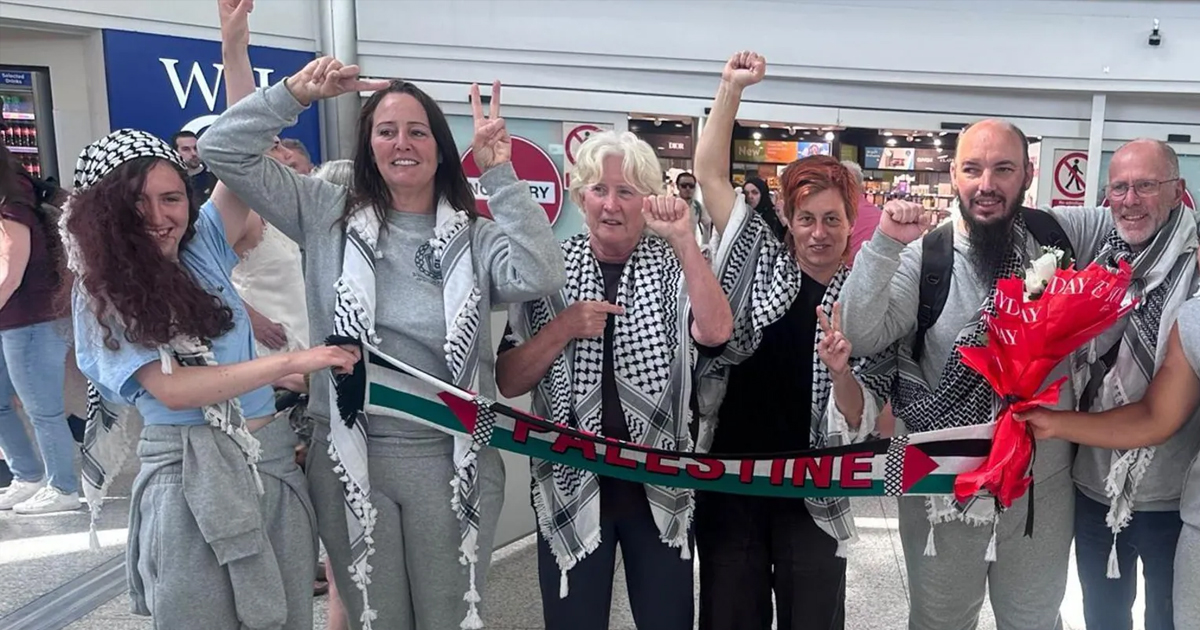
Seven British activists who were detained after Israeli forces intercepted a Gaza-bound aid flotilla in international waters have returned to the UK, with several alleging mistreatment and abuse during their detention.
The activists arrived at London Stansted Airport on Saturday after being deported through Turkey following several days in Israeli custody. They were part of the Global Sumud Flotilla, a multinational campaign aimed at challenging Israel’s maritime blockade of Gaza and delivering humanitarian aid to Palestinians.
The flotilla operation involved more than 50 vessels carrying symbolic quantities of food, medicine and humanitarian supplies. Organisers said the mission was intended to draw international attention to conditions inside Gaza and pressure governments to allow greater humanitarian access.
Israeli authorities intercepted the flotilla west of Cyprus earlier this week and detained more than 400 activists and crew members involved in the operation.
Several of the British participants have now accused Israeli forces and prison officials of physical abuse, intimidation and degrading treatment during their detention.
Israel has denied the allegations and said all detainees were treated in accordance with military procedures and international standards.
Activists Describe Conditions During Detention
Among those returning to Britain was Katy Davidson, a 49-year-old activist from Cornwall, who said detainees were handcuffed tightly and stripped of their belongings after being taken into custody.
Davidson arrived at Stansted Airport wearing what she described as prison-issued clothing after authorities allegedly discarded their personal possessions.
She claimed Israeli personnel ignored requests to loosen hand restraints despite visible injuries.
“These marks are from the handcuffs,” she said after arriving back in Britain. “When I asked them to loosen them they said they didn’t care.”
Another activist, Hannah Schafer, a sailing instructor aged 62, said the flotilla’s mission was intended to create a humanitarian corridor to Gaza amid growing international concern over shortages of food, medicine and fuel inside the territory.
Schafer alleged detainees were transferred to what she described as “two prison ships” before being moved to detention facilities in Israel.
She claimed activists experienced systematic abuse during their detention, allegations that Israeli authorities strongly deny.
Israel Rejects Abuse Allegations
The Israel Defense Forces said military personnel are required to treat detainees respectfully and appropriately.
In a statement responding to the allegations, the Israeli military said no known incidents had violated operational procedures.
“IDF orders require respectful and appropriate treatment of flotilla participants,” the statement said.
Israeli prison authorities also rejected claims of sexual assault and physical abuse made by some detainees and flotilla organisers.
The BBC reported it had not independently verified the allegations made by activists following their release.
Israeli officials have consistently defended the interception of the flotilla, describing the mission as politically motivated and accusing organisers of supporting narratives linked to Hamas.
The Israeli government dismissed the operation as a “PR stunt” rather than a genuine humanitarian mission.
Flotilla Organisers Defend Gaza Mission
Activists involved in the Global Sumud Flotilla rejected accusations that the mission was symbolic or politically staged.
Documentary filmmaker Dáša Raimanová, 44, said the flotilla aimed to raise awareness about the humanitarian situation in Gaza and mobilise international public opinion.
She said participants understood the risks involved but believed the operation was necessary because governments had failed to act.
“It’s not a PR stunt,” she said after arriving back in Britain. “It’s raising awareness and mobilising together that as civil society we have power to do something.”
Raimanová also said conditions faced by activists were minor compared with the suffering endured by Palestinians inside Gaza during the ongoing conflict.
Claims of Violence During Interception
Some activists also alleged violence occurred during the Israeli interception of the flotilla vessels.
Elliott Roberts, 34, who lives in Lincoln and Torquay, claimed soldiers physically assaulted him after he was removed from one of the boats.
Roberts alleged he was thrown to the ground during the arrest operation and later denied medical treatment for injuries he believes may include spinal damage.
Israeli authorities have not publicly addressed specific allegations made by individual detainees but reiterated that forces followed operational guidelines.
The flotilla interception has renewed international debate over Israel’s naval blockade of Gaza, which has been in place for years and tightened further during the current conflict.
Israel says the blockade is necessary to prevent weapons from reaching Hamas and other armed groups operating inside Gaza.
Human rights organisations and aid groups, however, argue that restrictions on access have contributed to a worsening humanitarian crisis affecting civilians.
Gaza Humanitarian Crisis Remains Central Issue
The flotilla mission took place amid continued international concern over humanitarian conditions inside Gaza.
Aid agencies and United Nations officials have repeatedly warned about shortages of food, medicine, fuel and medical supplies affecting the territory’s civilian population.
International pressure on Israel to allow increased aid access has intensified in recent months as humanitarian organisations report worsening conditions for displaced families.
Activist flotillas attempting to challenge the blockade have occurred periodically over the past two decades, often leading to confrontations with Israeli forces.
One of the most high-profile incidents occurred in 2010 when Israeli commandos boarded the Mavi Marmara aid ship, resulting in the deaths of several activists and triggering global condemnation.
The latest flotilla operation appears to have been organised partly in response to growing frustration among campaigners over what they see as insufficient international action on Gaza.
Political and Diplomatic Reactions Expected
The return of the British activists is likely to increase political pressure on the UK government to seek further clarification from Israeli authorities regarding the treatment of detainees.
Human rights groups are also expected to call for independent investigations into allegations of abuse during the interception and detention process.
At the same time, Israeli officials continue to argue that flotilla operations undermine security measures designed to prevent arms smuggling into Gaza.
The incident adds to rising international tensions surrounding the conflict and humanitarian access to the Palestinian territory.