
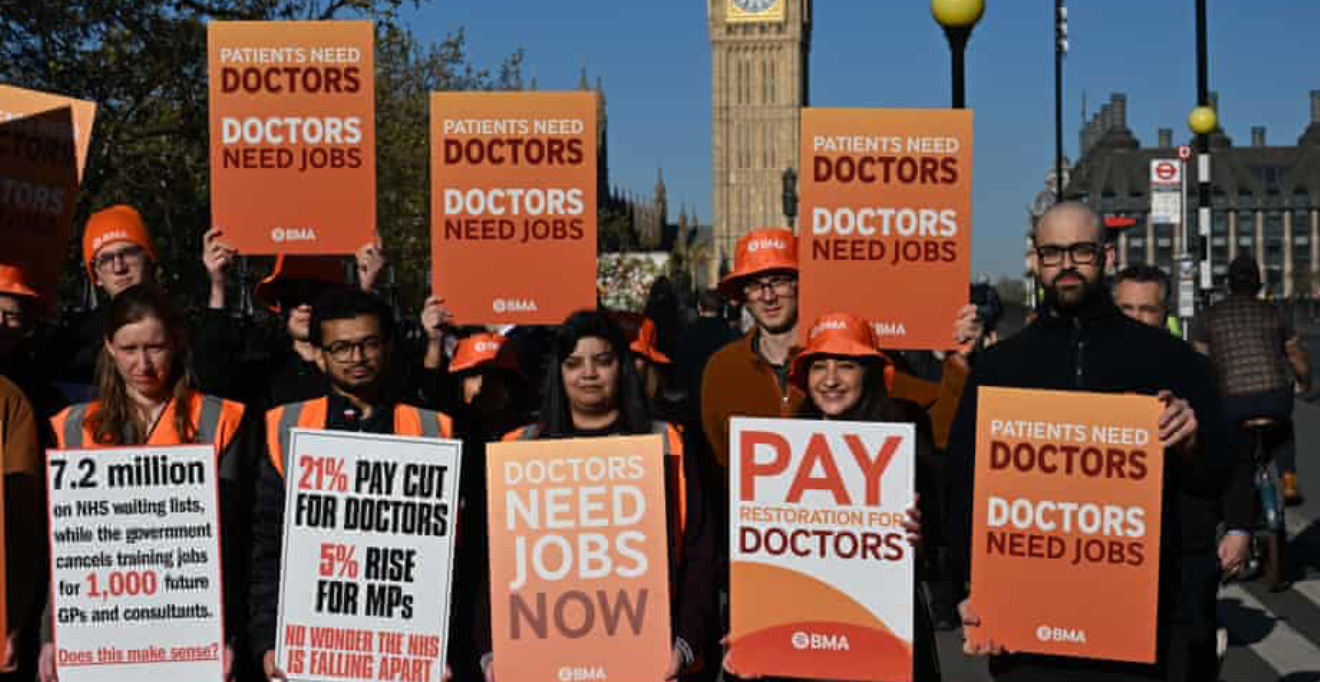
Resident doctors in England are set to launch another major strike next month, escalating a long-running dispute over pay, staffing pressures and medical training opportunities that continues to disrupt the National Health Service.
The British Medical Association (BMA) confirmed that resident doctors — formerly known as junior doctors — will walk out for four days from 7am on 15 June until 6:59am on 19 June. The industrial action will mark the 16th strike by resident doctors since March 2023 and is expected to cause significant disruption across hospitals and healthcare services throughout England.
The union warned that further strike action could take place in July unless the government offers what doctors describe as meaningful progress on pay restoration and career opportunities.
The announcement represents a major challenge for the government and the NHS, which is already struggling with long waiting lists, staffing shortages and growing pressure on emergency services.
BMA Accuses Government of Refusing Meaningful Negotiations
The dispute centres on claims by resident doctors that their salaries have suffered a substantial real-terms decline over the past 15 years.
The BMA argues that doctors’ pay has effectively fallen by around 26% since 2008-09 once inflation is taken into account. Union leaders say restoring pay levels is essential to retaining medical staff, improving morale and preventing further recruitment problems in the NHS.
The BMA is also demanding a major increase in specialist training opportunities for doctors who are struggling to progress into long-term medical careers.
According to the union, thousands of doctors face a growing “jobs bottleneck” that limits access to training posts and specialist career development.
Dr Jack Fletcher, chair of the BMA’s resident doctors committee, criticised the government’s approach and accused ministers of repeating the same position taken by previous leadership at the Department of Health and Social Care.
Fletcher said resident doctors had hoped for a more constructive relationship after changes in government leadership but claimed negotiations had failed to produce serious proposals on either pay or training expansion.
He argued that doctors had entered discussions in good faith only to be told that no further financial offer would be made.
Government Rejects Pay Demands as Unaffordable
The government insists that the demands being made by resident doctors are financially unrealistic.
Health Secretary James Murray said the government had already delivered significant salary increases for resident doctors in recent years and argued that further large rises would place unsustainable pressure on public finances.
Murray stated that resident doctors had received a 33.4% pay increase over the last four years, which he described as the highest rise awarded anywhere in the public sector.
He accused the BMA of refusing to continue discussions aimed at improving the existing deal and warned that further strikes would harm patients and increase pressure on NHS staff.
The health secretary said industrial action would force hospitals to cancel appointments, delay operations and divert resources away from patient care.
Government ministers also argue that repeated strikes are undermining NHS recovery efforts after years of disruption caused by the Covid-19 pandemic and ongoing workforce shortages.
NHS Braces for More Disruption
NHS leaders are preparing for another period of major disruption as hospitals attempt to maintain emergency care during the strike.
Previous walkouts by resident doctors have resulted in tens of thousands of cancelled appointments, postponed surgeries and delayed diagnostic tests.
Healthcare managers fear the latest industrial action could place additional strain on an already stretched system during a period of rising patient demand.
Hospitals are expected to prioritise urgent and emergency services while routine care is reduced throughout the four-day stoppage.
The NHS has been attempting to reduce treatment backlogs that grew significantly during the pandemic, but repeated industrial disputes involving doctors, nurses and other healthcare workers have complicated recovery efforts.
Patients waiting for operations or specialist treatment may face further delays as hospitals reorganise services around the strike action.
Pay and Staffing Pressures Continue Across NHS
The latest dispute reflects wider concerns about staffing, pay and morale across the NHS workforce.
Resident doctors play a central role in hospitals and frontline healthcare services, often working long hours under intense pressure while completing specialist training.
Medical organisations have repeatedly warned that growing workloads, burnout and dissatisfaction over pay are contributing to recruitment and retention problems.
Many doctors have also raised concerns about the increasing number of UK-trained medics considering careers abroad, where salaries and working conditions are often viewed as more attractive.
Countries such as Australia, New Zealand and Canada have become increasingly popular destinations for British-trained doctors seeking better pay and work-life balance.
The BMA argues that improving salaries and expanding training opportunities are necessary to prevent further workforce shortages in the NHS.
Long-Running Dispute Shows No Sign of Ending
The industrial dispute between resident doctors and the government has become one of the most prolonged conflicts in recent NHS history.
Since the first strike in March 2023, negotiations have repeatedly broken down despite temporary agreements and renewed talks.
The change from the term “junior doctor” to “resident doctor” was introduced as part of efforts to better reflect the responsibilities carried by early-career medics.
However, the rebranding has done little to ease tensions between doctors and ministers.
The dispute has also become politically sensitive as the government attempts to present itself as committed to rebuilding public services while maintaining tight control over spending.
Health unions argue that years of underinvestment and rising demand have left the NHS struggling to retain experienced staff.
Meanwhile, ministers insist that public sector pay settlements must remain affordable amid wider economic pressures and ongoing concerns about inflation.
Training Bottlenecks Add to Frustration
Beyond pay, one of the major issues raised by resident doctors is the shortage of training positions needed for career progression.
Many doctors complete medical school and early hospital placements only to face intense competition for specialist training posts.
The BMA says this creates uncertainty, delays careers and contributes to frustration among younger doctors.
Doctors unable to secure training posts often remain in temporary positions without long-term career stability.
Medical leaders warn that failing to expand training capacity could worsen staffing shortages in critical specialties including emergency medicine, surgery and general practice.
The union argues that without a long-term workforce strategy, the NHS risks losing talented doctors who may leave the profession or move overseas.
Pressure Builds Ahead of June Strike
The announcement of fresh industrial action increases pressure on ministers to find a resolution before the NHS faces another wave of disruption.
Public opinion on healthcare strikes has been mixed, with many patients expressing sympathy for NHS staff while also voicing frustration over cancelled treatment and delays.
The government says it remains willing to engage in discussions, but both sides currently appear far apart on key demands.
With the June strike now confirmed and the threat of further action in July, the dispute looks set to continue into another difficult summer for the NHS.