
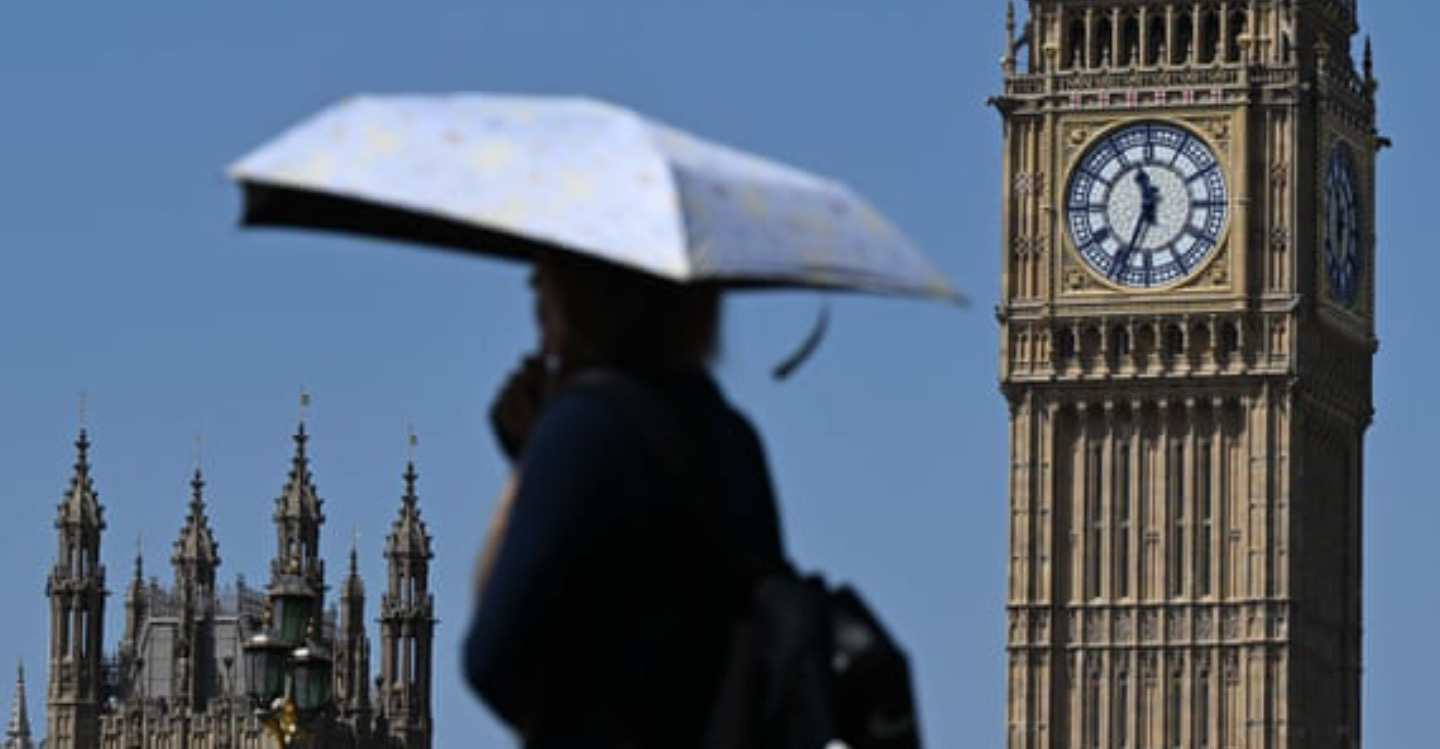
The United Kingdom is grappling with one of its most severe heatwaves in recent history, as soaring temperatures place unprecedented pressure on schools, hospitals, transport services and water infrastructure. With forecasters warning that parts of England could approach 39°C, public services across the country are implementing emergency measures to protect communities and maintain essential operations.
The escalating temperatures have prompted widespread disruption, reinforcing growing concerns that the nation’s infrastructure is increasingly ill-equipped to cope with the realities of a changing climate.
Record Temperatures Across the UK
According to the Met Office, temperatures reached 34.6°C in Wisley, Surrey, marking one of the hottest days recorded this year. Meteorologists expect conditions to intensify further, with southeastern England forecast to experience highs of 38°C on Wednesday and potentially 39°C on Thursday.
If those predictions materialise, the UK will surpass its previous June temperature record of 35.6°C, originally set in 1957 and matched again in 1976. The anticipated temperatures would also come dangerously close to the country’s all-time record of 40.3°C, established during the historic July 2022 heatwave.
The Met Office has issued a rare Red Weather Warning covering large parts of England, while health authorities have activated a Red Heat Health Alert, signalling a significant risk to public health, including for otherwise healthy individuals.
Schools, Hospitals and Rail Services Under Pressure
The prolonged spell of extreme heat is having a widespread impact on essential public services.
Rail operators have introduced reduced speeds and modified timetables to minimise the risk of tracks buckling under intense temperatures, while passengers have been advised to travel only when necessary.
Hospitals across England have cancelled selected appointments as emergency departments experience increased demand linked to heat-related illnesses and dehydration. Health leaders have warned that pressures on the National Health Service could intensify if temperatures continue to climb over the coming days.
Education has also been significantly affected. Hundreds of schools across southern England and Wales have either shortened teaching hours or closed temporarily, citing unsafe classroom conditions.
Many older school buildings, originally designed for Britain’s historically mild climate, have become increasingly difficult to ventilate, prompting renewed calls for investment in climate-resilient educational infrastructure.
Water Restrictions Introduced
The heatwave has also placed considerable strain on water supplies.
South East Water has implemented a hosepipe ban after demand surged during the exceptionally hot weather, while several other water companies have urged customers to reduce consumption to protect resources.
Retailers are witnessing changing consumer behaviour as households adapt to the extreme conditions. Sales of electric fans have more than doubled in recent weeks, while demand for ice, ice cream and frozen refreshments is expected to rise significantly throughout the heatwave.
Climate Experts Link Heatwave to Global Warming
Scientists argue that the current weather event reflects a broader pattern of increasingly frequent and intense heatwaves driven by climate change.
Recent analysis suggests that human-induced climate change has added between 2°C and 4°C to the current European heatwave, amplifying both its severity and duration.
The United Kingdom is experiencing these conditions alongside much of western Europe, where several countries have recorded exceptional temperatures.
France recently registered its hottest night and hottest day on record, with temperatures exceeding 44°C in some regions. Spain has also experienced temperatures above 40°C across numerous weather stations, prompting authorities to issue warnings of extraordinary danger.
Health Officials Issue Safety Advice
Medical professionals are urging the public to take precautions against heat-related illnesses, particularly older people, young children and individuals with underlying medical conditions.
Authorities recommend staying hydrated, avoiding prolonged exposure to direct sunlight, remaining in shaded or air-conditioned environments where possible, and regularly checking on vulnerable family members and neighbours.
Health experts warn that excessive heat places additional strain on the cardiovascular system and can significantly increase the risk of dehydration, heat exhaustion and heatstroke.
Calls for Long-Term Climate Adaptation
The current disruption has intensified debate over the UK’s preparedness for increasingly extreme weather events.
Climate specialists argue that much of Britain’s infrastructure—including schools, hospitals, transport networks and residential buildings—was designed for a cooler climate and now requires substantial adaptation.
Education leaders have called for investment in improved ventilation, shading systems and cooling technologies, while environmental organisations are urging ministers to introduce stronger protections for workers and vulnerable communities exposed to extreme temperatures.
Urban planning experts also advocate greater use of passive cooling measures, including natural shading, improved building design and expanded green spaces, warning that widespread reliance on air conditioning alone could increase energy demand and contribute to further warming.
Future Heatwaves Expected to Intensify
The latest projections suggest that extreme heat events could become considerably more severe in the coming decades.
Met Office modelling indicates that by the 2050s, the UK could experience heatwaves lasting up to 14 days, with temperatures exceeding 40°C for more than a week and peaking at around 45°C in parts of England.
As the current heatwave continues to disrupt daily life, experts say the challenges facing schools, hospitals, transport networks and public infrastructure demonstrate the urgent need for long-term investment and climate resilience measures, ensuring the UK is better prepared for increasingly frequent episodes of extreme weather.