
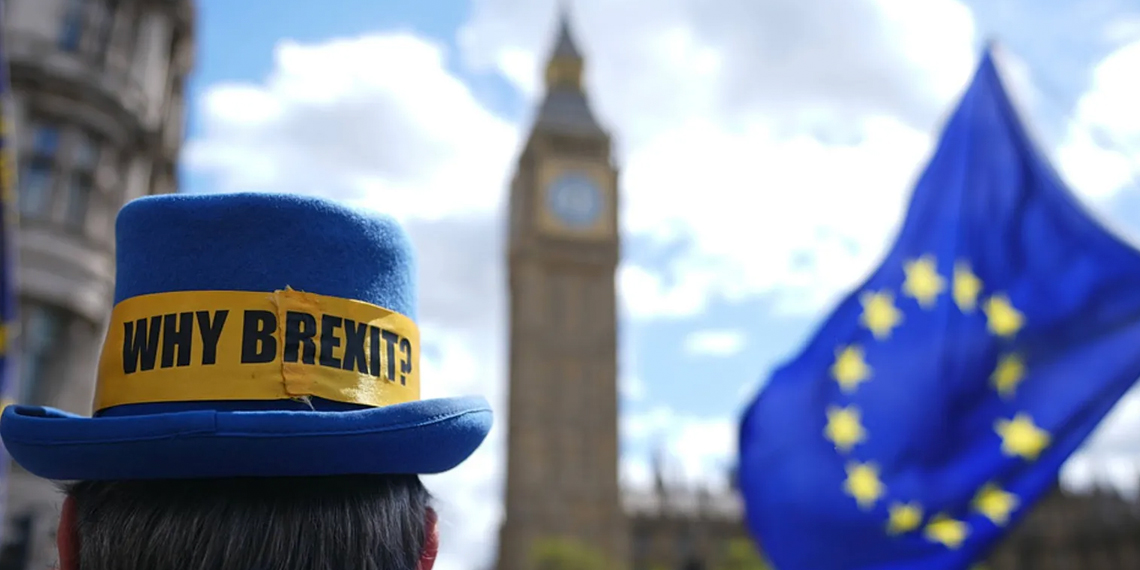
Leading economists, business figures and politicians have warned that the Government’s plans to reset relations with the European Union are unlikely to fully repair the economic damage caused by Brexit, ten years after the UK voted to leave the bloc.
Speaking at an event organised by the University of Sussex’s UK Trade Policy Observatory (UKTPO) in Westminster, experts discussed the future of UK-EU relations, economic growth and trade policy amid growing political and economic uncertainty.
The event coincided with significant political developments in Westminster and focused on how Britain can strengthen economic prosperity in an increasingly fragmented global economy. Panellists stressed the need for clearer policy objectives, highlighting defence, economic security, investment and productivity as key priorities.
Chair of the Business and Trade Select Committee, Liam Byrne, used the event to launch a new report examining UK-EU relations and argued that the Government’s current reset strategy would deliver only limited economic gains.
“The thing that strikes me hardest today is the gap between political rhetoric and economic reality,” Byrne said.
“Ministers have dialled up their words against Brexit, but the solutions being presented will give us less than a 1% uplift in GDP. So that’s a 1% solution to what is optimistically a 4% loss from Brexit.”
He added: “This is a national strategy moment, and we need a much bolder vision based on the world we’re in, that includes better cooperation with Europe.”
While participants broadly agreed that Brexit had damaged trade and complicated policymaking, there was little appetite among speakers for an immediate campaign to rejoin the EU.
Instead, experts focused on creating stable conditions that would encourage business confidence, investment and stronger trading relationships.
Professor L. Alan Winters, founding director of the UKTPO, said Brexit had created long-term political and economic challenges.
“In addition to its very real economic costs, Brexit has hugely disturbed UK politics and blocked rational discussions on challenges to trade,” he said.
“Ten years on there’s still no agreed post-Brexit vision. Until this materialises, policy is going to continue to be rather chaotic.”
He also argued that Britain should focus on domestic issues such as energy, skills and investment before considering any future return to the EU.
Trade specialist Allie Renison of SECNewgate questioned whether policymakers had clearly defined what they wanted from closer EU cooperation.
“We need to get to a position of stability and problem sharing with the EU that survives contact with as many political realities as possible,” she said.
“My slight scepticism with the EU Reset is we’re talking about how to cooperate, before finding out what we want to achieve.”
Professor Emily Lydgate, co-director of the UKTPO, said trade continues to play a central role in British political debates.
“Now we’re seeing a new round of market access restrictions in Europe, raising once again the question of whether the UK will fall outside of EU regulatory boundaries, and what this means for the government’s growth agenda,” she said.
Business leaders also highlighted the impact of uncertainty on investment and productivity.
Karan Bilimoria said businesses were focused on future opportunities rather than past political battles.
“Businesses are interested in the future not the past, and 74% now say uncertainty is a bigger challenge than tariffs,” he said.
“The EU is still our biggest and most important trading partner in spite of everything over the past 10 years.”
Meanwhile, trade expert Sam Lowe argued that Britain would eventually have to make difficult strategic choices regarding its future relationship with Europe and the United States.
“No one wants to have the hard conversations,” Lowe said.
“If we want to align more with the EU the cost of that is a serious conversation about freedom of movement.”
The debate highlighted growing concerns that while efforts to improve UK-EU relations may help ease some post-Brexit challenges, much larger economic and political questions remain unresolved a decade after the historic referendum.