
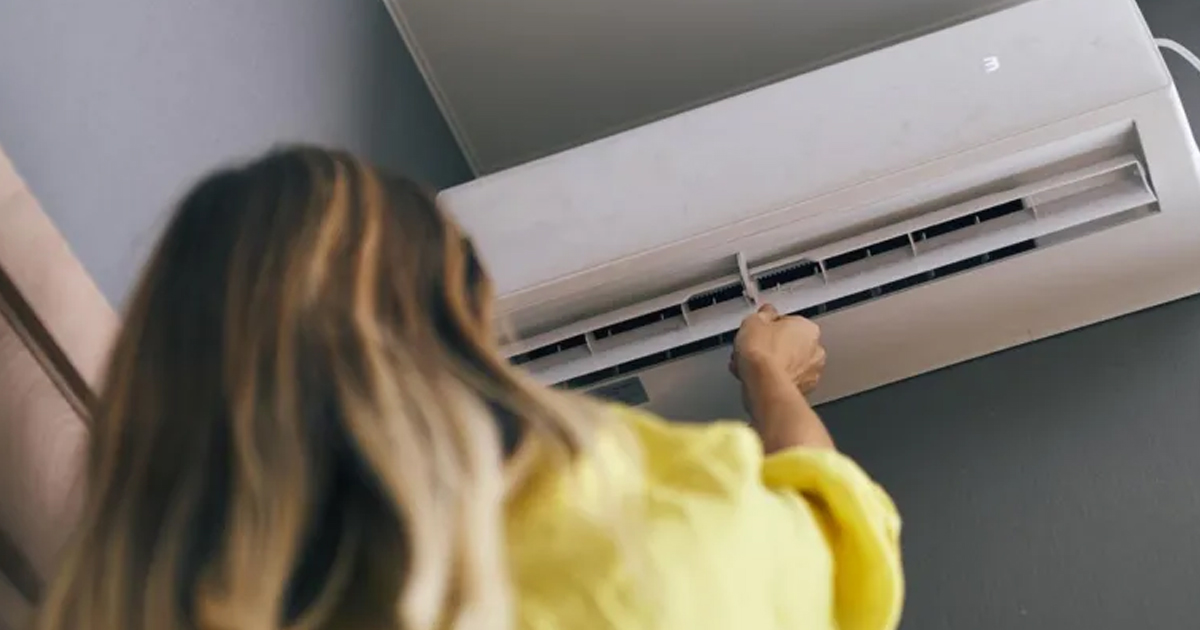
The United Kingdom could face mounting pressure on air conditioning supply chains in the coming weeks as demand accelerates sharply in response to increasingly intense summer heatwaves, according to industry experts.
An air conditioning engineer has warned that unprecedented levels of consumer demand, combined with already strained distribution networks, may lead to shortages of cooling units across parts of the country. The warning comes after a period of extreme temperatures that has intensified public concern over the UK’s preparedness for hotter climates.
Nick Burton, who operates an air conditioning installation business in Ely, Cambridgeshire, reported a dramatic surge in enquiries following the recent heatwave, describing current demand as unlike anything he has experienced in his professional career. He suggested that the market may be approaching a critical point in supply availability.
“Within a few weeks, I think we’re going to see something like we’ve never seen before,” Burton said. “I don’t think there will be many units left in the UK.”
He added that the rapid escalation in demand reflects a structural shift in how households and businesses perceive cooling systems, arguing that air conditioning is no longer viewed as a discretionary comfort but as a functional necessity in increasingly hot summers.
“[Air conditioning] is not just a luxury anymore. I think it’s become a necessity,” he noted in an interview with BBC Radio Cambridgeshire.
Burton also highlighted the scale of the recent spike in consumer interest, stating that his company had received more than 900 enquiries for installations within a single week. Under normal summer conditions, he said, the business would typically expect no more than around 30 enquiries over a similar period.
This surge represents a demand increase of almost thirty times the seasonal average, placing considerable strain on both installation capacity and supply logistics. However, Burton noted that despite heightened demand, suppliers have not yet adjusted pricing significantly, suggesting that the pressure is currently manifesting more in availability than in cost inflation.
The situation reflects broader climate trends in the UK, where extreme summer temperatures have become more frequent and more severe in recent years. Meteorological data has shown that heatwaves are no longer isolated events but part of an emerging pattern of higher baseline temperatures and prolonged periods of heat.
Industry voices suggest that this shift is also changing consumer behaviour, particularly in residential housing and automotive expectations.
Dean Franklin, an air conditioning entrepreneur and former winner of the television programme The Apprentice, said he expects air conditioning to become a standard feature in UK homes in the same way it has become commonplace in vehicles.
“Nowadays, you wouldn’t dream of buying a car without air conditioning. It pretty much comes as standard,” he told BBC Newsbeat. “I think that’s going to be the case going forward in people’s homes.”
Franklin’s comments reflect a growing consensus within parts of the industry that the UK is entering a long-term transition phase, in which climate adaptation will increasingly influence domestic infrastructure and housing design.
The recent heatwave that triggered the surge in demand also saw record-breaking temperatures. The UK recorded its highest ever June temperature on 26 June, reaching 37.7C (99.9F), significantly exceeding the previous June record of 35.6C (96F), which had stood since 1957.
Climate scientists have repeatedly warned that such extremes are likely to become more frequent as global temperatures rise, increasing pressure on infrastructure that was originally designed for a temperate climate. This includes not only housing insulation and cooling systems but also energy grids, healthcare services, and urban planning frameworks.
As demand for air conditioning continues to rise, questions remain over whether supply chains, installation capacity, and national energy infrastructure are prepared for a sustained shift in consumption patterns. For now, industry professionals are watching closely, with some warning that the UK may soon face not only heightened demand but genuine constraints in access to cooling systems during peak summer periods.