
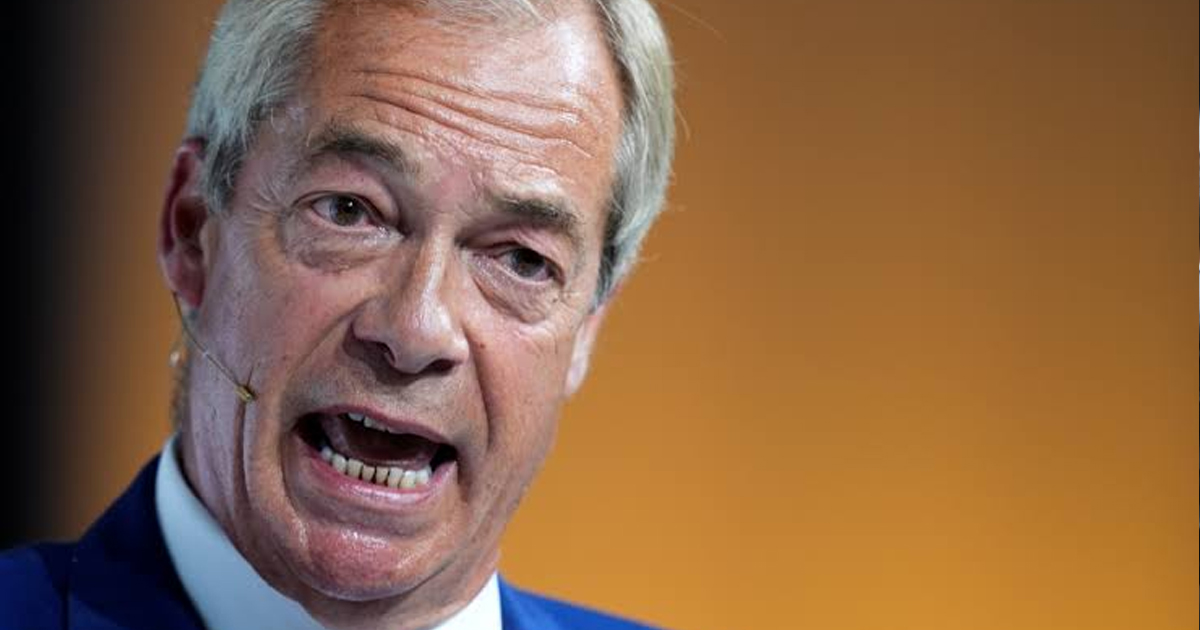
Reform UK leader Nigel Farage has announced his resignation as Member of Parliament for Clacton, triggering a by-election that he intends to contest immediately. The move comes as the veteran politician faces growing scrutiny over his financial declarations, including a second investigation by Parliament’s standards watchdog concerning alleged undeclared gifts and financial support.
Presenting the decision as a direct challenge to Britain’s political establishment, Farage argued that returning to voters would allow the public—not political institutions or the media—to determine whether he should continue representing the Essex constituency. The announcement introduces fresh uncertainty into the UK political landscape while intensifying debate over transparency, parliamentary accountability, and campaign financing.
Farage Seeks Fresh Electoral Mandate
In a strongly worded public statement, Farage said he had chosen to resign voluntarily in order to seek a renewed mandate from Clacton voters. He characterized the upcoming contest as a referendum on his political future, insisting that the electorate should decide whether he remains in Parliament despite the ongoing investigations.
According to Farage, the by-election represents an opportunity for voters to challenge what he described as an entrenched political establishment. He denied speculation that his resignation was linked to business interests or ambitions outside British politics, emphasizing instead that he intended to continue leading Reform UK and advancing the party’s political agenda.
Farage maintained that he was determined to continue what he described as Reform UK’s broader political movement and pledged to campaign vigorously to retain his parliamentary seat.
Financial Investigations Place Leader Under Pressure
The resignation follows increasing scrutiny over Farage’s financial disclosures.
The Reform UK leader has already been the subject of a parliamentary standards investigation after reports alleged that he failed to declare a substantial £5 million gift from billionaire cryptocurrency investor Christopher Harborne before the 2024 general election.
During his announcement, Farage disclosed that he is now facing a second investigation concerning allegations of financial support from George Cottrell, a close associate with a controversial background that includes a criminal fraud conviction.
Although Farage rejected suggestions of wrongdoing, the investigations have intensified public debate surrounding compliance with parliamentary transparency rules and the disclosure requirements imposed on Members of Parliament.
Political observers note that standards investigations are designed to ensure elected representatives properly declare financial interests that could potentially influence public responsibilities or create conflicts of interest.
Resignation May Affect Parliamentary Standards Process
Farage’s decision to vacate his parliamentary seat introduces procedural complications for the ongoing investigations.
Because he is no longer serving as an MP, the parliamentary standards inquiries may be temporarily suspended until the outcome of the by-election is known. Should Farage regain his seat, investigators could potentially resume their examinations if they determine it remains appropriate to do so.
If future investigations ultimately resulted in disciplinary action, including suspension from Parliament, the possibility could arise of yet another by-election, extending political uncertainty within the constituency.
The unusual sequence of events has drawn significant attention from constitutional experts, who note that resigning before the completion of an investigation is relatively uncommon in modern British parliamentary politics.
Defiant Response to Media and Political Critics
Farage used his resignation announcement to criticize both political opponents and sections of the British media.
He argued that sustained media attention surrounding his finances amounted to an organized campaign intended to undermine Reform UK’s growing political momentum. He also claimed that members of his family had been subjected to unnecessary public attention as scrutiny intensified.
Rejecting suggestions that external pressure had forced his decision, Farage insisted he preferred to place his political future directly in the hands of voters rather than continue responding to allegations through media coverage or parliamentary procedures.
His remarks reinforced the anti-establishment messaging that has long formed a central component of Reform UK’s political strategy.
Clacton By-Election Expected to Draw National Attention
The forthcoming Clacton by-election is expected to become one of the UK’s most closely watched electoral contests.
Farage secured the seat during the 2024 general election with a majority of approximately 8,400 votes, defeating Conservative and Labour candidates. Since then, Reform UK has continued attempting to establish itself as a major force within British politics.
However, analysts suggest the by-election may prove significantly more competitive than the previous general election.
Opposition parties could encourage tactical voting in an effort to consolidate support behind the strongest challenger, potentially reducing Farage’s electoral advantage.
At the same time, Farage may also face competition from parties positioned further to the political right. Rupert Lowe, a former Reform UK MP who now leads the Restore Britain movement, could attract portions of the party’s traditional support base, adding another layer of uncertainty to the contest.
Wider Political Implications
The by-election arrives during a period of continued volatility across UK politics, with questions surrounding party leadership, electoral realignment, and public trust remaining central themes.
For Reform UK, the contest represents both an opportunity and a significant political risk. A decisive victory would strengthen Farage’s claim that public support remains resilient despite ongoing investigations and reinforce the party’s national ambitions ahead of future elections.
Conversely, a reduced majority—or an unexpected defeat—could weaken Reform UK’s political momentum and raise broader questions about the impact of financial scrutiny on public confidence.
The outcome is therefore likely to extend well beyond the boundaries of Clacton, serving as an important indicator of voter attitudes toward political accountability, transparency, and the growing influence of Reform UK within Britain’s evolving political landscape.
As the parliamentary investigations continue and campaigning begins, the Clacton by-election is expected to become a defining political test for Nigel Farage, with implications for both his personal leadership and the future direction of Reform UK.