
Britain’s long-standing regional income inequality remains one of the country’s most persistent economic challenges, with a new report revealing that little meaningful progress has been made over the past three decades despite repeated government commitments to reduce disparities between wealthier and less prosperous regions. The findings present a significant policy challenge for Prime Minister-designate Andy Burnham, who has pledged to rebalance economic opportunity through greater devolution, infrastructure investment, and regional development.
According to new analysis published by the Resolution Foundation, household income differences between the UK’s richest and poorest regions have remained largely unchanged since the late 1990s. Despite successive administrations introducing initiatives aimed at narrowing regional inequalities—including the previous government’s “levelling-up” agenda—the report concludes that economic prosperity continues to be heavily concentrated in London and a limited number of affluent local authorities.
The study argues that reversing decades of uneven economic growth will require substantially greater public investment than any recent UK government has committed, particularly in transport infrastructure, housing, urban regeneration, and regional economic development.
Regional Income Gap Shows Little Improvement
The Resolution Foundation’s research examined gross household disposable income per person across the United Kingdom between 1997 and 2023 and found that regional disparities remain deeply entrenched.
London continues to record the highest average household disposable income, reaching approximately £27,900 per person in 2023. By comparison, Northern Ireland reported disposable income of around £17,300 per person during the same period, leaving the capital approximately three-fifths wealthier than the UK’s lowest-income region.
The report emphasizes that these differences have remained remarkably consistent over nearly thirty years, highlighting the limited impact of successive economic policies designed to distribute growth more evenly across the country.
Researchers conclude that despite periodic improvements in employment levels and wage growth, overall household income inequality between regions has changed very little.
Local Wealth Inequality Remains Deeply Entrenched
Beyond regional comparisons, the report also highlights substantial disparities between individual local authorities.
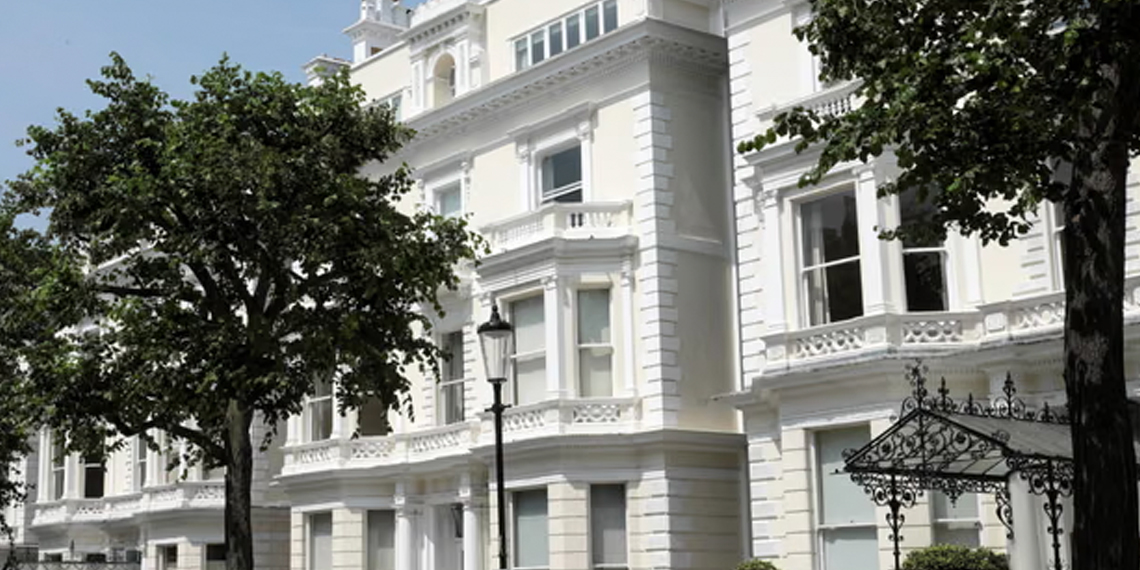
Kensington and Chelsea remains the wealthiest local authority in Britain, recording gross household disposable income of approximately £60,584 per person.
In contrast, Leicester recorded disposable income of only £13,398 per person, meaning residents in Britain’s richest local authority enjoy incomes approximately four and a half times greater than those living in one of its least affluent areas.
The research found these local income differences have remained broadly unchanged for almost three decades, suggesting structural economic inequalities continue to shape living standards across the country.
Perhaps more significantly, the report indicates that economic mobility between regions has been extremely limited.
Among the poorest fifth of local authorities identified in 1997, approximately 54% remained within that same lowest-income category by 2023. At the opposite end of the spectrum, around 82% of the richest local authorities retained their position over the same period.
These findings suggest that regional prosperity has become deeply embedded, with relatively few areas achieving significant movement up or down the national income rankings.
Government Efforts Have Delivered Limited Results
The report argues that multiple government initiatives introduced over recent decades have failed to fundamentally alter Britain’s uneven economic geography.
Policies intended to reduce regional disparities—including investment programmes, regional growth strategies, and Boris Johnson’s high-profile “levelling-up” agenda—have produced only modest improvements in narrowing income differences.
Between 2019 and 2023, researchers found that the income gap separating residents in the wealthiest tenth of local authorities from those in the poorest tenth remained virtually unchanged.
This suggests that while various programmes may have generated local improvements, they have not succeeded in transforming the broader pattern of regional economic inequality.
The Resolution Foundation concludes that tackling Britain’s geographic wealth divide requires sustained long-term investment rather than isolated funding initiatives.
Areas Of Progress Offer Some Encouragement
Despite the overall findings, the report identifies several areas where meaningful improvements have been achieved since the late 1990s.
Employment growth has been particularly strong in areas that historically experienced lower levels of workforce participation, helping reduce regional differences in employment rates.
Similarly, wage inequality at the local level has narrowed somewhat, largely due to successive increases in the National Minimum Wage, which have lifted earnings for lower-paid workers across many parts of the country.
The report also highlights improvements in productivity across several major regional cities, indicating that some local economies have strengthened despite broader national inequalities remaining largely intact.
These developments suggest that targeted policy interventions can deliver measurable economic improvements, even if overall household income gaps remain substantial.
Manchester Demonstrates Potential For Regional Renewal
Among the report’s strongest examples of regional economic progress is Manchester.
Between 1997 and 2023, gross household disposable income per person in Manchester increased by approximately 40% in real terms, reflecting sustained investment, urban regeneration, and expanding economic activity over recent decades.
Nevertheless, Manchester’s average disposable income currently stands at approximately £16,500 per person, remaining significantly below London’s income levels and trailing several other major northern cities, including Sheffield, Newcastle, and Liverpool.
While the city’s economic transformation has attracted widespread recognition, the findings suggest that substantial work remains before it can fully close the gap with Britain’s highest-performing regions.
Burnham’s Economic Vision Faces Major Test
The report arrives as Andy Burnham prepares to assume national leadership with regional economic rebalancing positioned prominently within his policy agenda.
Burnham has consistently argued that economic opportunity should not depend on geography and has pledged to deliver “good growth in every postcode” through a programme focused on devolving greater powers away from Westminster.
His vision includes expanded investment in transport infrastructure, affordable housing, regional regeneration, and greater public influence over essential utilities.
Drawing on Greater Manchester’s economic revival, Burnham has promoted what he describes as “Manchesterism”—an approach centred on local decision-making, long-term investment, and regional empowerment—as a potential model for national economic renewal.
However, economists caution that implementing such ambitions will require significant financial resources at a time when public finances remain under considerable pressure.
International Comparison Highlights Scale Of Investment Needed
The Resolution Foundation argues that previous UK investment programmes have fallen well short of the scale required to address decades of regional inequality.
The report compares Britain’s approach with Germany’s long-term investment following reunification.
According to the analysis, Germany committed approximately £70 billion annually over a 25-year period to support economic integration and reduce regional disparities after the Cold War.
By comparison, UK spending associated with levelling-up initiatives amounted to approximately £4 billion during 2022.
Researchers suggest this contrast illustrates why Britain’s regional income divide has proven so resistant to change.
Long-Term Investment Seen As Essential
Resolution Foundation Chief Executive Ruth Curtice acknowledged that Manchester demonstrates regional decline is not inevitable, but stressed that broader transformation will require far greater political commitment than has previously been demonstrated.
She argued that reducing Britain’s longstanding geographic inequalities will depend on sustained investment across transport, housing, skills, regeneration, and wider economic development over many years.
Without such commitment, the report warns, regional income disparities are likely to persist, carrying continued economic consequences through reduced productivity and social impacts associated with unequal access to opportunity.
As the incoming government prepares to shape its economic agenda, the findings underscore that addressing Britain’s regional income divide remains one of the country’s most significant long-term policy challenges. While isolated success stories illustrate that progress is achievable, the report concludes that only comprehensive and sustained investment can produce the structural changes necessary to deliver more balanced prosperity across the United Kingdom.