
Several of the United Kingdom’s leading scientific research laboratories are set to scale back major projects following a review of government spending plans, despite overall public investment in research and development reaching record levels. The funding adjustments are expected to affect a wide range of scientific programmes, including cancer research, advanced battery technologies, particle physics, astronomy, and studies aimed at understanding the fundamental structure of the universe.
While the government has increased national research and development (R&D) funding to historic highs, rising project costs have compelled UK Research and Innovation (UKRI) to implement savings exceeding £160 million over the next four years. The decision has sparked concern across the scientific community, with researchers warning that reduced investment in key facilities could weaken the UK’s long-term research capabilities, innovation pipeline, and international competitiveness.
Although earlier proposals suggested significantly deeper reductions to internationally renowned research programmes, subsequent consultations and lobbying efforts helped limit some of the most severe cuts. Nevertheless, several national laboratories and multidisciplinary research centres will still experience notable reductions in operational funding.
Record Investment Meets Rising Research Costs
The UK government has committed to increasing annual spending on research and development to approximately £22.6 billion by the 2029–30 financial year, marking the highest level of scientific investment in the country’s history.
UK Research and Innovation, the government’s principal public research funding agency, will also receive an increased allocation, with its annual budget rising from roughly £9 billion to nearly £10 billion during the same period.
However, UKRI has explained that escalating research costs, inflationary pressures, and higher operational expenses have significantly altered long-term financial forecasts, making it necessary to revise planned spending.
Professor Sir Ian Chapman, Chief Executive of UKRI, said the organisation must prioritise investments that deliver the greatest scientific, technological, and economic impact.
According to Chapman, the revised funding strategy aims to maximise research outcomes while ensuring long-term financial sustainability. He added that UKRI intends to strengthen collaboration with industry and commercial partners to diversify funding sources and reduce reliance on public expenditure.
Government Prioritises Strategic Technologies
Despite reductions affecting some scientific disciplines, the government continues to prioritise investment in emerging technologies considered essential for future economic growth.
Artificial intelligence has been identified as one of the principal beneficiaries, with approximately £1.6 billion allocated to support AI research and innovation.
Quantum technologies are also expected to receive around £1 billion in funding, while an additional £750 million has been earmarked for the construction of a national supercomputer designed to strengthen Britain’s advanced computing capabilities.
These strategic investments reflect the government’s broader objective of positioning the UK as a global leader in next-generation technologies while encouraging closer collaboration between academia and industry.
National Research Laboratories Face Significant Budget Reductions
The deepest spending reductions are expected to affect Britain’s national laboratories, which operate many of the country’s largest scientific facilities and specialised research infrastructure.
Although overall budgets for laboratory estates remain relatively stable due to increased spending on maintenance and infrastructure repairs, funding available for scientific research activities will decline substantially.
Many research facilities are also facing growing maintenance costs associated with ageing buildings and specialised equipment, reducing the proportion of funding available for scientific programmes.
Sue Ferns, Senior Deputy General Secretary of the Prospect trade union, described the funding reductions as a significant setback for British science.
She argued that national research facilities serve as vital centres for scientific innovation, regional economic development, workforce training, and collaboration with businesses, warning that sustained reductions could weaken these contributions over time.
Particle Physics And Computing Programmes Affected
Among the facilities experiencing funding reductions is the Accelerator Science and Technology Centre at Daresbury Laboratory in Cheshire, which develops advanced particle accelerator technologies used across numerous scientific disciplines.
The centre’s annual budget is expected to decline by approximately £8 million by 2029.
Similarly, the Scientific Computing Department, which operates across both Daresbury Laboratory and the Rutherford Appleton Laboratory in Oxfordshire, will see annual funding reduced by approximately £10 million.
The department currently processes around one-quarter of the enormous volumes of data generated by the Large Hadron Collider at CERN, the world’s largest particle physics laboratory.
Reduced funding is expected to limit computing capacity available to researchers participating in international scientific collaborations.
Meanwhile, Boulby Underground Laboratory in North Yorkshire, which conducts internationally recognised experiments searching for dark matter, will experience a budget reduction of approximately 40%.
Dark matter remains one of the greatest unresolved questions in modern physics, with scientists believing it constitutes most of the universe’s mass despite remaining invisible to current detection methods.
International Scientific Partnerships Maintained
Despite domestic spending reductions, the UK has confirmed it will maintain participation in several flagship international scientific collaborations.
Britain will continue as the second-largest contributor to CERN, with its subscription increasing by 19% over the next four years.
The government also confirmed that UK researchers will remain involved in major international dark matter research initiatives, preserving access to globally significant scientific experiments.
These commitments are intended to safeguard Britain’s influence within international scientific research while maintaining opportunities for collaboration with leading institutions worldwide.
Multidisciplinary Research Facilities Face Operational Changes
Several multidisciplinary research facilities supporting scientists from universities and research institutions across the country will also experience budget reductions averaging around 15%.
To ease the transition, the government has established a £100 million fund designed to help these facilities identify alternative commercial funding opportunities.
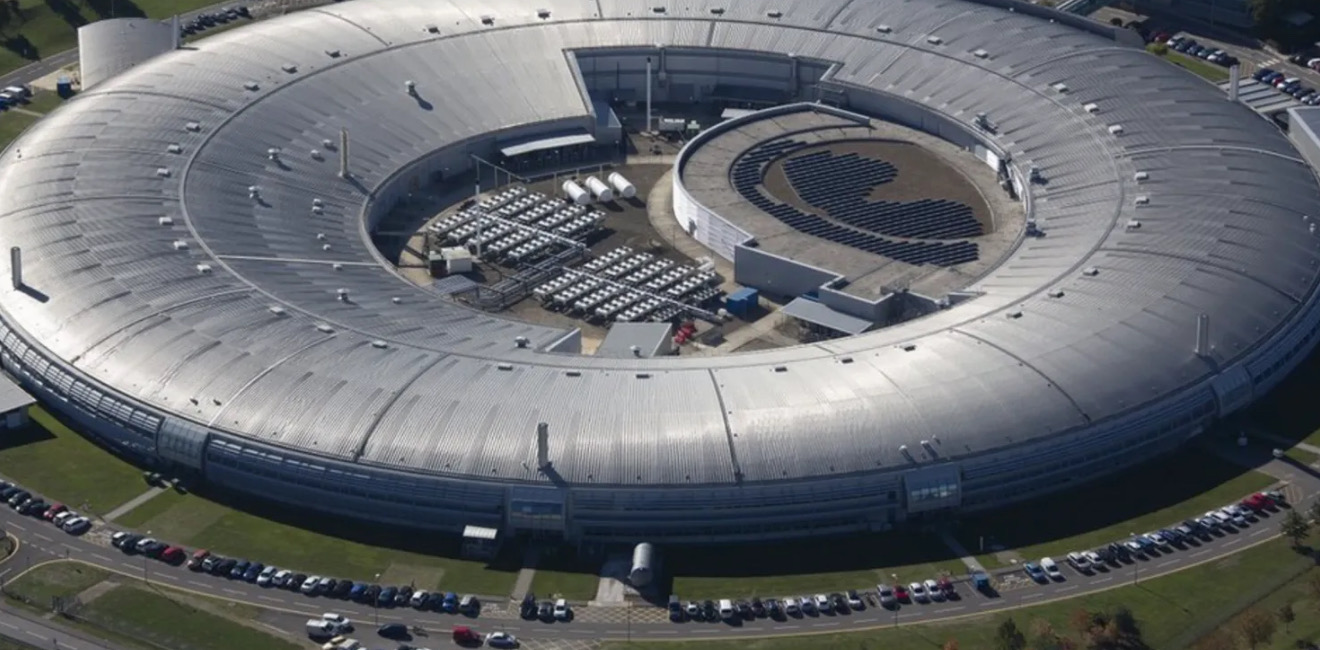
Among the facilities affected is the Diamond Light Source in Oxfordshire, one of the world’s most advanced synchrotron facilities, which produces exceptionally powerful X-rays used in medicine, engineering, chemistry, biology, and materials science.
Reduced funding could lower the amount of beam time available to researchers, while a major planned upgrade now faces uncertainty.
The ISIS Neutron and Muon Source, another internationally recognised research facility, will operate for fewer hours under the revised funding model. Several scientific instruments are expected to close, including specialised muon research programmes used to investigate materials at the atomic level.
The Central Laser Facility, home to some of the world’s most powerful research lasers, also faces significant changes. Its biology and chemistry research division may close unless alternative funding arrangements can be secured.
Scientists Warn Of Long-Term Economic Consequences
The proposed funding reductions have prompted concern among scientific organisations, which argue that short-term savings could undermine long-term economic growth and innovation.
Daniel Rathbone, Deputy Executive Director of the Campaign for Science and Engineering, warned that reducing research capacity could weaken Britain’s future competitiveness and make it difficult to rebuild lost expertise.
He noted that scientific capability, once diminished, often requires many years and substantial investment to restore.
Researchers also highlighted that earlier proposals suggested cuts of up to 30% for particle physics and astronomy programmes. Following extensive consultation with the scientific community, those reductions have reportedly been reduced to approximately 2.7%.
However, rising operational costs mean many research programmes may still scale back activities despite the smaller percentage reductions.
Balancing Fiscal Discipline With Scientific Leadership
The latest funding review illustrates the growing challenge of balancing fiscal responsibility with the need to maintain world-class scientific research.
Although record government investment demonstrates continued support for innovation, increasing costs and shifting strategic priorities are reshaping the UK’s research landscape.
As funding becomes more targeted toward technologies with direct economic applications, research institutions will face increasing pressure to secure commercial partnerships while preserving the fundamental scientific discoveries that underpin future technological breakthroughs.
The coming years are expected to determine how effectively the UK can maintain its position as a global scientific leader while adapting to evolving financial and policy priorities.
