
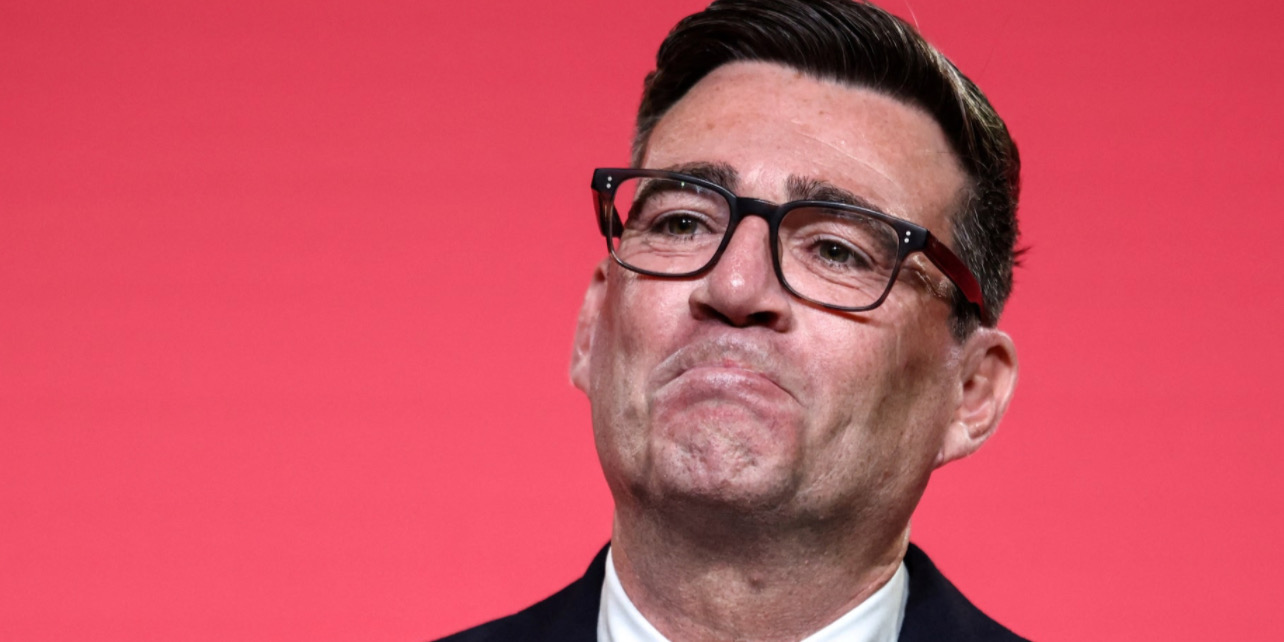
Andy Burnham has officially been confirmed as the new leader of the United Kingdom’s governing Labour Party, positioning him to become the country’s next Prime Minister following the resignation of Sir Keir Starmer. The leadership transition marks a significant political milestone for Britain, with Burnham set to become the seventh individual to occupy 10 Downing Street since the 2016 Brexit referendum.
Given Labour’s commanding parliamentary majority, Burnham’s confirmation as party leader automatically entitles him to form a new government without the need for a general election. The transition reflects the constitutional convention under the UK’s parliamentary system, whereby the leader of the governing party assumes the office of Prime Minister upon the resignation of their predecessor.
Burnham secured the leadership unopposed, concluding a political journey that included two unsuccessful bids for the Labour leadership in 2010 and 2015. His appointment is widely viewed as the culmination of years of experience in national politics and regional leadership, particularly during his tenure as Mayor of Greater Manchester.
Burnham Pledges to Build on Labour’s Achievements
Addressing Labour Party members following his confirmation, Burnham pledged to build upon the foundations established under Keir Starmer while setting a renewed direction for the country.
He praised Starmer’s administration for delivering progress across several policy areas, highlighting reductions in National Health Service waiting lists, the return of railway services to greater public ownership, and the restoration of Britain’s standing on the international stage.
Burnham emphasized that his leadership would focus on restoring optimism among communities that have experienced decades of economic decline and social inequality.
According to the new Labour leader, many regions across Britain have been left behind by previous economic models, and his government intends to deliver more balanced national development while strengthening opportunities beyond London and the South East.
Regional Growth and Economic Renewal at the Centre of Agenda
Economic reform featured prominently in Burnham’s first address as Labour leader.
He argued that Britain experienced a series of policy decisions during the 1980s that fundamentally reshaped the country’s economic structure by concentrating political authority while accelerating the privatization of essential industries.
Burnham suggested these changes contributed to widening regional disparities, particularly through the decline of traditional manufacturing industries across northern England, even as London’s financial sector expanded rapidly.
Looking ahead, he called for greater public influence over essential services, arguing that stronger oversight of critical sectors would help improve economic resilience while supporting efforts to control inflation and public expenditure.
Burnham questioned whether sustainable inflation management could be achieved without ensuring greater public oversight of essential goods and services that directly affect household living costs.
His remarks signal an intention to pursue a more interventionist economic approach while maintaining fiscal responsibility.
Commitment to Business and Investment
Despite advocating increased public involvement in key sectors, Burnham stressed that his administration would remain firmly supportive of business investment and private enterprise.
Drawing on his experience as Mayor of Greater Manchester, he described himself as a pro-business leader who believes economic transformation is best achieved through collaboration between government, local authorities and the private sector.
Burnham pointed to Greater Manchester’s economic performance during his mayoralty as evidence of this approach. Under his leadership, the city-region experienced sustained investment, employment growth and the successful introduction of the Bee Network, an integrated public transport system designed to improve regional connectivity.
He stated that the collaborative development model implemented in Greater Manchester could serve as a blueprint for national economic renewal.
According to Burnham, successful economic regeneration depends upon partnerships rather than confrontation between government and business.
Labour Unity a Key Leadership Priority
Burnham also addressed the internal dynamics of the Labour Party, stressing the importance of unity following the leadership transition.
He warned that political divisions within the party would only strengthen its opponents and undermine Labour’s ability to govern effectively.
The new leader committed to fostering a more inclusive internal culture, indicating that members holding differing political views would not face disciplinary action solely because of ideological disagreements.
Burnham suggested that constructive debate would strengthen rather than weaken the party, while confirming that decisions regarding his Cabinet appointments would be announced at a later stage.
His comments are likely intended to reassure different factions within Labour following several years of internal tensions.
Leadership Transition Follows Starmer’s Resignation
Burnham’s succession follows Keir Starmer’s resignation after mounting political pressure generated by declining public approval ratings and controversy surrounding several government decisions.
Among the issues contributing to political criticism was Starmer’s appointment of Peter Mandelson as the United Kingdom’s Ambassador to the United States, a move that attracted sustained public attention and intensified pressure on the Prime Minister.
Burnham had been widely viewed as the leading candidate to replace Starmer for several weeks before his formal confirmation.
His return to Westminster through a parliamentary by-election approximately one month earlier further strengthened expectations that he would assume the party leadership.
Starmer is expected to formally submit his resignation to King Charles III, after which the monarch will invite Burnham to form a new government under established constitutional procedures.
New Prime Minister Inherits Significant Domestic and International Challenges
As Burnham prepares to enter Downing Street, he inherits a broad range of complex policy challenges confronting the United Kingdom.
Domestically, the government continues to address inflationary pressures, pressures on public services, healthcare capacity, economic growth and regional inequality.
Internationally, Britain remains engaged with a rapidly evolving geopolitical environment shaped by Russia’s ongoing invasion of Ukraine, continued instability across the Middle East and shifting global economic conditions.
Relations with the United States also remain an important aspect of Britain’s foreign policy agenda, particularly amid previous disagreements over issues including energy policy and immigration.
These domestic and international pressures will define the early months of Burnham’s premiership and are expected to shape the government’s legislative priorities.
A New Chapter for Labour and British Politics
Andy Burnham’s confirmation as Labour leader represents the beginning of a new political chapter for both the governing party and the United Kingdom.
Having previously fallen short in two leadership contests, Burnham now assumes responsibility for guiding Britain through a period marked by economic uncertainty, public service reform and significant geopolitical challenges.
His emphasis on regional investment, economic renewal, public service improvement and party unity suggests a leadership focused on balancing social priorities with economic growth.
With Labour retaining a substantial parliamentary majority, Burnham begins his premiership with a strong legislative mandate. The effectiveness with which his government delivers on its promises of economic opportunity, national cohesion and public sector reform will determine both his political legacy and the future direction of British governance.