
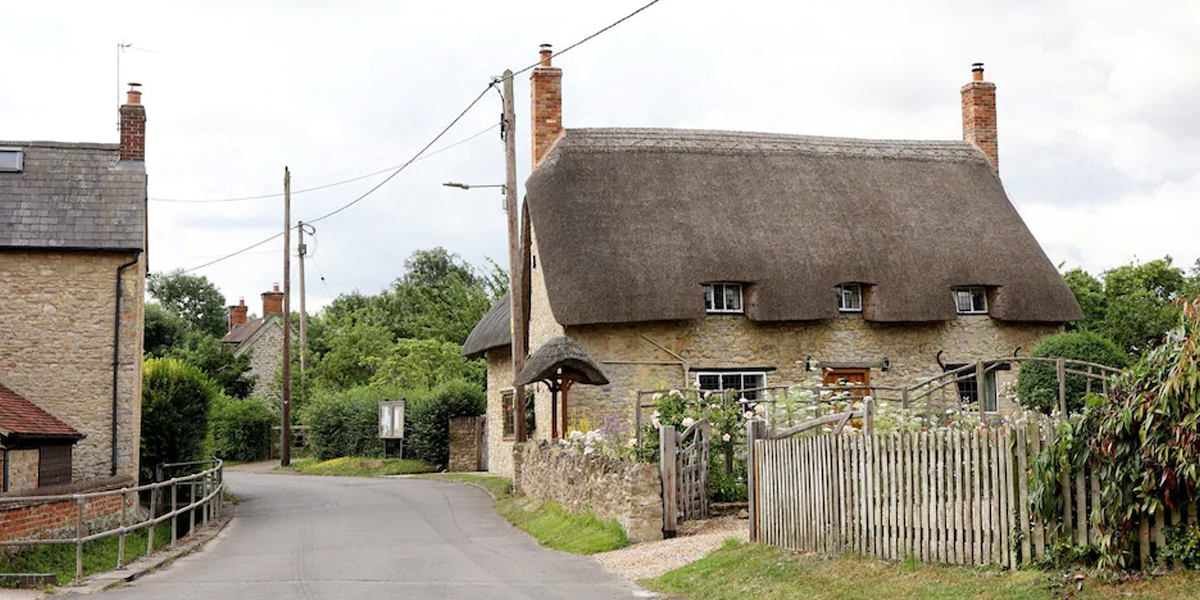
An Oxfordshire village is preparing to hold a symbolic referendum on declaring independence from the United Kingdom in an unprecedented protest against government proposals to accommodate more than 1,000 asylum seekers at a nearby former military base.
The proposed vote, which carries no legal authority, has emerged as a powerful expression of local dissatisfaction following the Home Office’s announcement that up to 1,250 single male asylum seekers could be housed at Bicester Garrison, a former Army barracks situated between the villages of Piddington and Upper Arncott.
Residents argue that the Government has failed to engage meaningfully with the local community before advancing the plans, prompting widespread concern over consultation, representation, public safety, and the long-term impact on the surrounding area.
Overwhelming Local Support for Independence Referendum
The decision to stage the referendum followed an overwhelming show of support from villagers. During a community vote held on July 4—chosen deliberately to coincide with the 250th anniversary of American independence—approximately 96 per cent of participants backed the proposal to organise a symbolic referendum on leaving the United Kingdom.
Although British constitutional law provides no legal pathway for an individual village, town, or city to unilaterally declare independence without the approval of Parliament and the Government, organisers maintain that the initiative is intended as a political statement rather than a constitutional challenge.
The referendum has become a focal point for residents seeking to draw national attention to what they describe as a lack of democratic engagement surrounding the Government’s asylum accommodation strategy.
Home Office Expands Military Sites for Asylum Accommodation
The proposed use of Bicester Garrison forms part of a broader Home Office programme designed to reduce reliance on hotels for housing asylum seekers before the end of the current Parliament.
In addition to the Oxfordshire site, ministers have identified former military facilities at RAF Linton-on-Ouse in North Yorkshire and RAF Barnham in Suffolk as potential accommodation centres. Together, the three sites could accommodate as many as 3,750 asylum seekers.
The Government has also announced plans to expand existing accommodation facilities at Ministry of Defence sites in Wethersfield, Essex, and Crowborough, Sussex. The leases for these locations are expected to be extended by as much as four additional years, allowing space for approximately 1,750 more asylum seekers.
The expansion represents a significant element of the Government’s wider immigration and asylum policy, aimed at ending the widespread use of hotels while managing the continued demand for accommodation.
Parish Council Raises Concerns Over Consultation Process
Tim McNally, chairman of Piddington Parish Council, has become one of the leading voices opposing the proposal.
According to Mr McNally, the principal concern extends beyond the accommodation plans themselves and centres on what residents view as an absence of meaningful consultation before the announcement.
He stated that the village had repeatedly sought information and clarification from authorities but had received little response. He also suggested that prior notification could have helped prepare residents for the announcement and reduced the level of public anxiety generated by the proposal.
Following the Government’s announcement in June, the parish convened an emergency public meeting, during which widespread opposition was expressed and the idea of holding a symbolic independence referendum was first proposed.
Residents Cite Representation and Community Impact
Many local residents insist that their opposition is not directed toward asylum seekers personally but instead reflects concerns about the scale of the proposed development and the decision-making process behind it.
Ian Darby, a financial adviser who has lived in Piddington for 16 years, supported the referendum, arguing that it provides villagers with an opportunity to express their views after what they perceive as inadequate consultation by central government.
He criticised the Government for allegedly failing to consult local elected representatives and councils before unveiling the plans, describing the process as lacking sufficient democratic accountability.
Residents have also voiced concerns regarding the possible implications for community safety, local infrastructure, public services, and property values should more than 1,200 asylum seekers be accommodated close to a relatively small rural settlement.
Security and Compensation Among Key Priorities
Mr McNally has stated that security remains one of the foremost concerns among villagers.
He noted that Piddington currently experiences very low levels of crime and that residents value the village’s peaceful character. While acknowledging that no evidence has been presented indicating increased criminal activity would result from the proposal, he argued that many residents remain apprehensive about the potential consequences of such a substantial increase in the local population.
In addition to public safety, parish leaders are seeking assurances regarding compensation for any adverse effects on the community, including potential reductions in property values.
Mr McNally has also called for the Government to establish clear performance measures for the asylum accommodation programme so that authorities can be held accountable if the scheme fails to achieve its stated objectives.
Drawing a comparison with the American Revolution of 1776, he remarked that he had begun drafting a constitution for the symbolic independent village, describing the initiative as a peaceful campaign intended to encourage political change rather than genuine secession.
Similar Opposition Emerges Across England
Resistance to the Government’s plans has not been confined to Oxfordshire.
Communities located near the proposed asylum accommodation sites at RAF Linton-on-Ouse in North Yorkshire and RAF Barnham in Suffolk have likewise expressed reservations regarding the scale of the developments and their potential effects on local services and communities.
The growing opposition illustrates the broader challenge facing ministers as they seek alternative accommodation solutions while balancing national immigration objectives with local concerns.
Government Defends Strategy to End Hotel Use
Responding to criticism of the proposals, Justice Minister Jake Richards acknowledged that local opposition was inevitable but defended the Government’s overall strategy.
He argued that former military sites provide large, contained facilities capable of accommodating asylum seekers more effectively than hotels. According to the Government, relocating asylum seekers to dedicated accommodation centres is essential to fulfilling its commitment to end the use of hotels, reduce public expenditure, strengthen border management, and reform the asylum system.
Ministers maintain that achieving these objectives will inevitably require difficult decisions, even where proposals prove unpopular within affected communities.
Hotel Numbers Continue to Decline
Government figures indicate that progress has already been made in reducing reliance on hotel accommodation.
As of the end of March 2026, approximately 20,885 asylum seekers remained housed across around 170 hotels throughout the United Kingdom. This represents a substantial reduction from the 2023 peak, when roughly 56,000 asylum seekers were accommodated in around 400 hotels.
The planned expansion of former military accommodation sites is intended to accelerate that downward trend, although the proposals continue to generate significant debate among local communities directly affected by the Government’s immigration policy.