
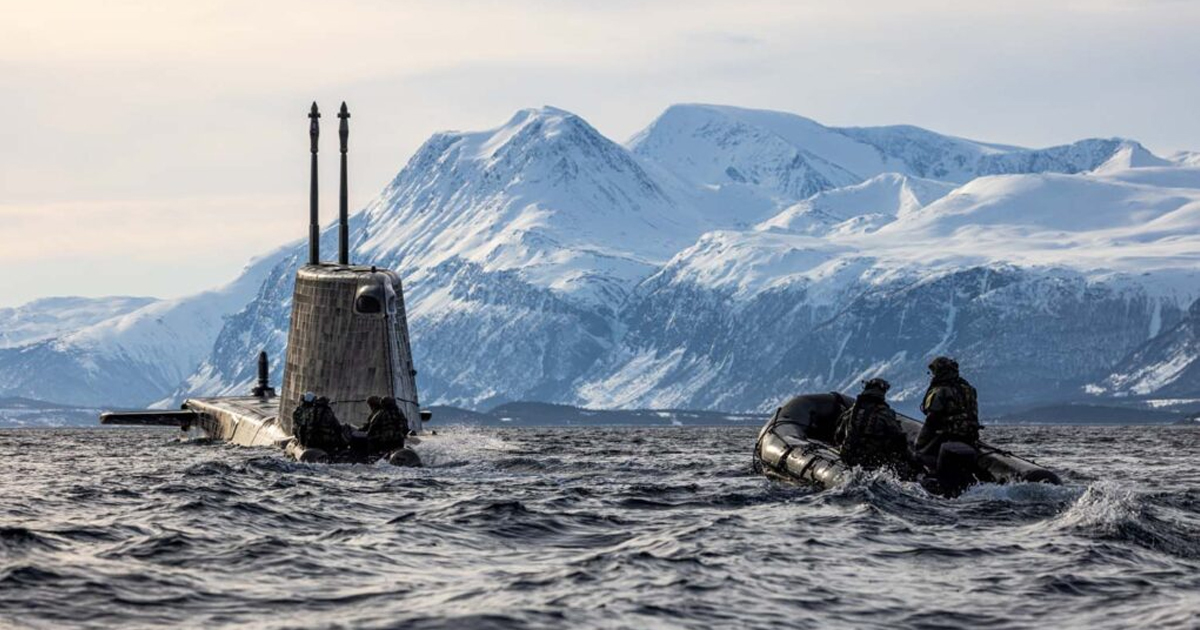
UK ministers and senior military leaders have warned that increased Russian operations and growing Chinese interest in the Arctic and High North are heightening security concerns for the UK and NATO.
During a Defence Committee session on 27 January, Defence Secretary John Healey confirmed that Russian military activity in UK waters and across the wider North Atlantic continues to rise. He also highlighted a growing pattern of hostile cyber operations linked to state actors.
Healey explained that while a previously cited 30 percent increase in Russian activity should be seen as a headline figure, the broader trend of aggression is clear. Indicators of a deteriorating security environment include heightened maritime activity, incursions into NATO airspace, threats to critical infrastructure, and the continued use of shadow shipping.
Cyber threats now form a major part of the UK’s security landscape. The Defence Secretary revealed that the UK experienced around 90,000 cyber attacks in the past year, most linked to Russia, China, or Iran.
When questioned about Russian submarine activity, Healey and the Vice Chief of the Defence Staff declined to provide operational details for security reasons. However, senior military leaders acknowledged a clear rise in threat levels.
General Dame Sharon Nesmith told MPs that while it would be inappropriate to break down surface and subsurface activity publicly, the overall trend is unmistakable. She confirmed that the UK must strengthen its capabilities in the High North in response to the escalating threat.
The military response forms part of a broader transformation within the Royal Navy, including accelerated capability delivery and the development of the Atlantic Bastion concept. This strategy is aimed at boosting deterrence and responsiveness across the North Atlantic and Arctic approaches.
Healey also pointed to the Northern Sea Route as a growing focal point for both Russian operations and Chinese interest, creating new strategic pressures in the region. He noted that climate change is opening the Arctic, increasing access to critical shipping lanes, while Russia’s closer alignment with key partners following the war in Ukraine is reshaping the regional security picture.