
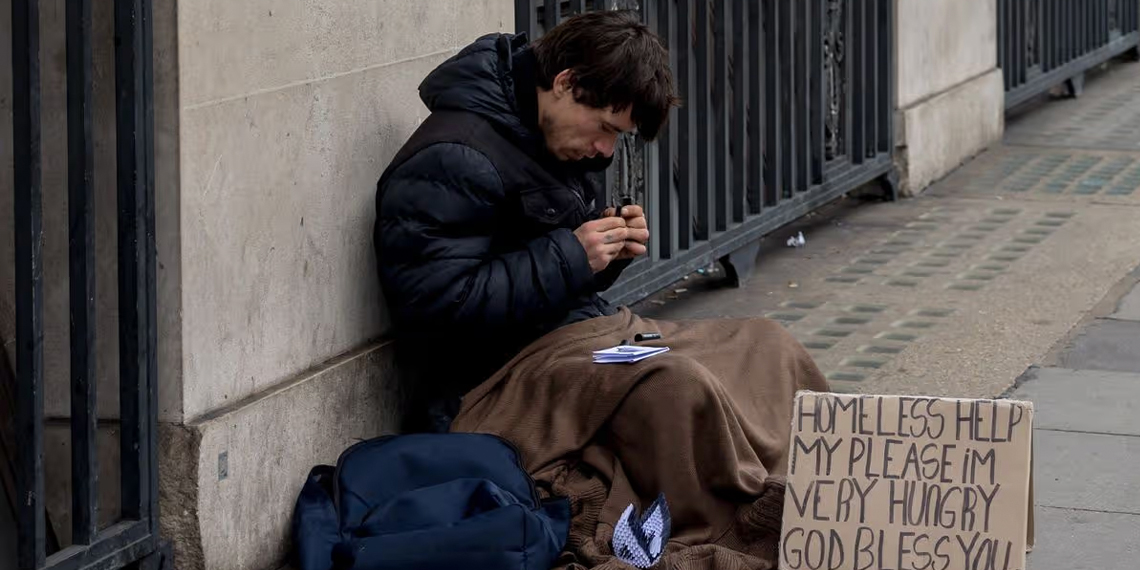
The number of refugees experiencing homelessness or at risk of losing their homes in England has surged in recent years, according to the latest government figures.
Data shows that homelessness among refugees rose sharply from 3,560 in 2021/22 to 19,310 in 2024/25, highlighting growing pressure on local authorities and support services. Charities point to government policy as a major factor, particularly the 28-day move-on period for newly recognised refugees.
Under current rules, asylum seekers must leave Home Office accommodation within 28 days of being granted refugee status. Charities argue this timeframe is insufficient for securing housing, finding employment, or applying for universal credit, leaving many refugees forced to sleep on the streets.
London and the North West – including Manchester and Liverpool – have the highest concentrations of refugees at risk of homelessness. Hillingdon in west London saw the steepest rise, with the number of homeless refugee households increasing from 71 in 2021/22 to 2,098 in 2024/25. Hillingdon hosts a large number of asylum seekers due to its proximity to Heathrow Airport.
In 2024, the Labour government briefly extended the move-on period to 56 days as part of a pilot scheme, but this ended in September 2025, reverting to 28 days. Charities criticised the decision, saying the temporary extension had a positive effect on the support services available to refugees.
Homeless Link, a leading charity, warned: “This decision will put even more pressure on overstretched local authorities and voluntary sector services and will ultimately result in more instances of rough sleeping and homelessness among new refugees. The change comes at a time of rising anti-migrant sentiment, which increases the risks faced by vulnerable people on the streets. We urge the government to reconsider and are ready to work with Home Office officials on genuine solutions.”
The government has retained the 56-day move-on period for families and single people classified as ‘vulnerable’ until the end of February 2026.
Latest Home Office figures show that 110,000 people claimed asylum in the year ending September 2025, a 13% increase on the previous year. At the same time, just under 109,000 people were in asylum accommodation, including more than 36,000 in hotels, with the majority in shared housing.
As homelessness among refugees continues to rise, charities and campaigners are calling for urgent reforms to the move-on period and greater support to prevent vulnerable individuals from being forced onto the streets.