
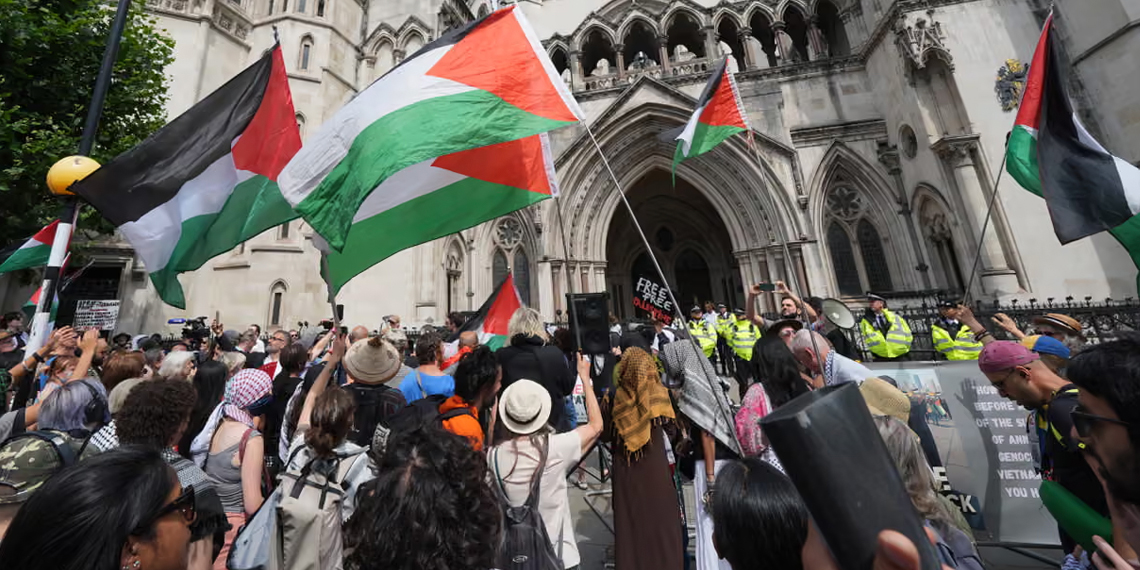
The UK government’s decision to ban Palestine Action under anti-terrorism legislation has been ruled unlawful by the High Court, in a significant legal setback for the Home Office.
The case was brought by Huda Ammori, co-founder of Palestine Action, who challenged the proscription order introduced by the home secretary. The ruling overturns a move that had placed the protest group in the same legal category as terrorist organizations including Islamic State.
The ban, which came into force on 5 July last year, made membership of – or public support for – Palestine Action a criminal offence punishable by up to 14 years in prison. The decision triggered widespread criticism from civil liberties groups and prompted a campaign of civil disobedience, during which more than 2,000 people were arrested.
Ammori’s legal challenge was heard at the High Court in London, with parts of the proceedings held in closed session. The trial concluded in December.
On Friday, three senior judges, led by Dame Victoria Sharp, president of the King’s Bench Division, ruled that the government’s decision to proscribe the group was unlawful.
The judgment marks the first time a direct action protest organization had been banned under UK anti-terrorism laws, a move that had drawn strong condemnation from campaigners and legal experts who argued it risked blurring the line between protest and terrorism legislation.
The Home Office is expected to consider its next steps following the court’s ruling.