
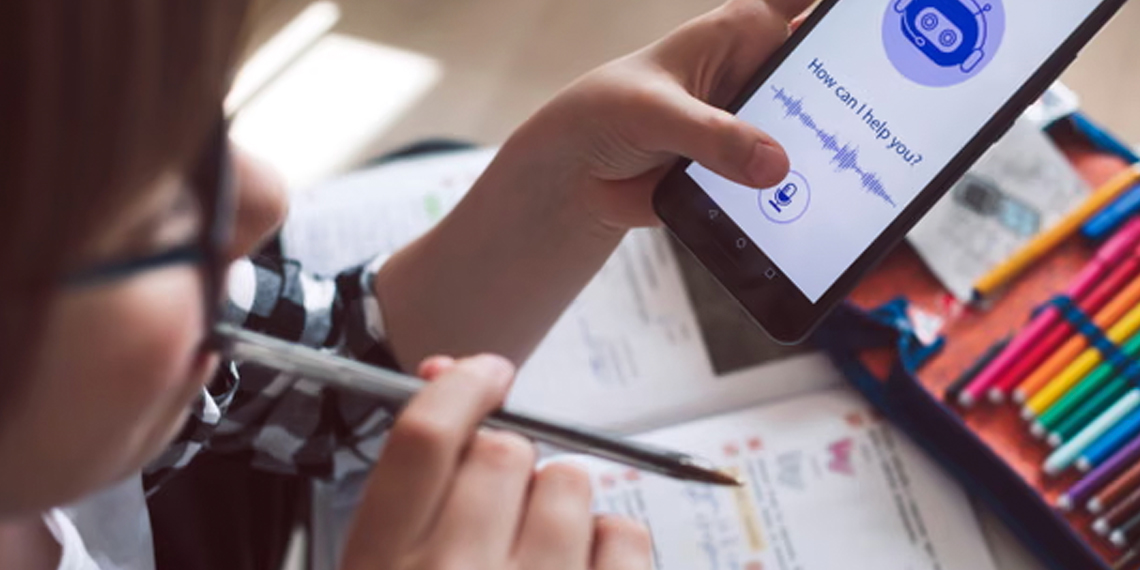
UK AI chatbot regulation is set to tighten significantly after Prime Minister Keir Starmer announced plans to close legal loopholes that allow artificial intelligence services to expose children to harmful and illegal content. Under the proposed changes, companies that develop or operate AI chatbots found to be putting children at risk could face fines worth billions of pounds or even see their services blocked entirely in the UK.
The move marks a major escalation in the government’s approach to regulating generative AI, following widespread concern about how chatbots are increasingly used by children for homework help, emotional support and mental health advice. Ministers say the reforms will ensure that AI chatbot providers are fully subject to the UK’s Online Safety Act and cannot evade responsibility for harmful content generated directly by their systems.
Closing Legal Gaps in AI Regulation
The government said it would act quickly to bring AI chatbots within the scope of the Online Safety Act, forcing providers to comply with duties that already apply to social media platforms and search services. Until now, a legal gap has meant that AI systems capable of generating text, images and videos without searching the internet often fell outside existing enforcement powers unless the material amounted to pornography.
The issue came into sharp focus last month when X was forced to stop its Grok chatbot from producing sexualised images of real people in the UK after public outrage. The online regulator Ofcom later admitted it lacked the authority to act decisively because of the loophole in current law.
Ministers now say that gap will be closed within weeks, despite it having been identified more than two years ago.
Heavy Penalties for Non-Compliant AI Firms
Under the proposed changes, AI chatbot providers that breach the Online Safety Act could face fines of up to 10% of their global revenue. In the most serious cases, regulators could apply to the courts to block platforms from operating in the UK altogether.
Starmer said the reforms would send a clear signal to the technology sector. “Technology is moving really fast, and the law has got to keep up,” he said, adding that no platform would be given a free pass where children’s safety was at stake.
While some AI services are already covered when they function as search engines or user-to-user platforms, ministers warned that chatbots can currently generate material encouraging self-harm, suicide or even child sexual abuse without facing sanctions. That is the behaviour the government says it intends to stop.
Rising Use of AI by Children Raises Alarm
The crackdown comes amid growing evidence that children and teenagers are turning to AI chatbots for advice well beyond homework support. Child protection groups warn that this trend carries serious risks when systems provide unverified or harmful responses.
Chris Sherwood, chief executive of the NSPCC, said young people were already contacting the charity’s helpline about harms linked to chatbot use. In one case, a 14-year-old girl seeking help for body image issues received inaccurate and potentially damaging information from an AI system.
In other cases, the NSPCC has seen children who self-harm being shown further content encouraging the behaviour. Sherwood warned that while social media had brought both benefits and harm, AI could amplify those risks “on steroids” if left unchecked.
Political Clash Over Speed and Scope of Reforms
Starmer is also planning to accelerate potential new restrictions on children’s access to social media, including measures such as limiting infinite scrolling or introducing a possible under-16 ban, if proposals are backed by MPs following a public consultation. If agreed, changes could come into force as early as this summer.
However, the Conservatives have accused the government of exaggerating the pace of action. Laura Trott, the shadow education secretary, said Labour’s claims of immediate action were not credible while the consultation had yet to begin, and reiterated her party’s support for blocking under-16s from social media platforms altogether.
Industry Response and Ongoing Safety Measures
Major AI developers, including OpenAI, which makes ChatGPT, and xAI, which produces Grok, were approached for comment.
OpenAI has already introduced parental controls and is rolling out age-prediction tools to restrict access to harmful material, following the death of US teenager Adam Raine. His family allege he received months of encouragement from an AI chatbot before taking his own life.
Wider Push to Protect Children Online
The government is also consulting on measures that would require social media platforms to technically prevent the sending or receiving of nude images of children, reinforcing existing laws that already make such activity illegal.
Technology Secretary Liz Kendall said the government would not delay action families needed, promising tighter rules on AI chatbots while preparing to move quickly on the outcome of consultations about children’s online use.
Campaigners cautiously welcomed the proposals. The Molly Rose Foundation, founded after the death of teenager Molly Russell, said the measures were a “welcome downpayment” but urged the government to go further by strengthening online safety laws and making children’s wellbeing a non-negotiable cost of doing business in the UK