
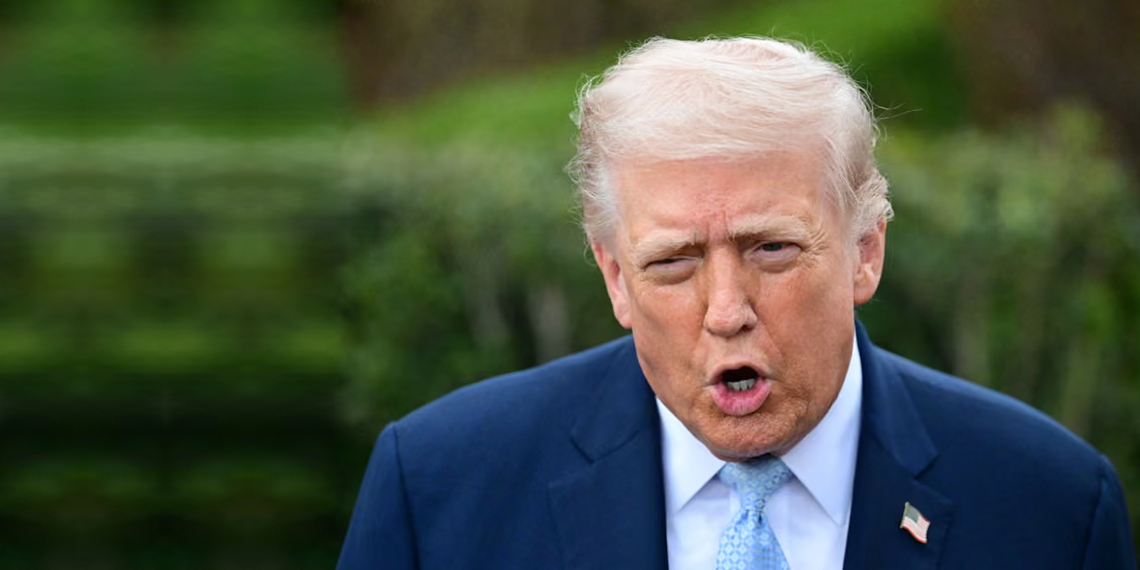
The Global Stock Market Drop intensified on Monday as investors reacted to escalating geopolitical tensions after US President Donald Trump warned he could “obliterate” Iran’s power infrastructure unless the Strait of Hormuz is reopened.
The Global Stock Market Drop reflects mounting fears of a prolonged energy crisis and rising inflation, as disruptions to one of the world’s most critical shipping routes threaten global supply chains and economic stability.
Asian markets lead sharp global sell-off
Stock markets across Asia recorded significant losses at the start of the week, highlighting the immediate impact of geopolitical uncertainty on investor confidence.
Japan’s Nikkei index fell by 3.4%, while China’s CSI 300 dropped 2.8%. South Korea’s Kospi saw the steepest decline, plunging 6.5% amid heightened concerns over regional instability and global trade disruptions.
Analysts said the sell-off was driven by fears that escalating tensions could disrupt energy supplies and slow global economic growth.
European markets follow downward trend
European markets also opened sharply lower, extending the Global Stock Market Drop across major financial centres.
Spain’s Ibex index fell 1.9%, Germany’s Dax dropped 1.9%, and France’s CAC 40 declined by 1.5%. In London, the FTSE 100 lost nearly 1.5% in early trading.
The widespread declines reflect investor concerns over energy price volatility and the potential knock-on effects on inflation, corporate earnings, and consumer spending.
Trump ultimatum raises stakes in global crisis
The sharp market reaction followed Trump’s announcement that Iran had 48 hours to reopen the Strait of Hormuz, a vital maritime corridor that carries approximately 20% of the world’s oil and liquefied natural gas supplies.
Iran responded by warning it could target critical infrastructure across the Middle East, including water systems, if US threats were carried out.
The escalating rhetoric has heightened fears of a broader regional conflict with significant global economic consequences.
Strait of Hormuz disruption triggers energy shock
The effective closure of the Strait of Hormuz has already triggered a major energy shock, with analysts comparing the situation to historic crises.
Fatih Birol, head of the International Energy Agency, described the disruption as comparable to the combined impact of the 1970s oil shocks and the fallout from Russia’s invasion of Ukraine.
The blockade has severely restricted the flow of oil and gas, creating uncertainty in global energy markets and pushing prices higher.
Oil and gas prices surge amid supply fears
Energy markets have reacted sharply to the crisis, with Brent crude rising to $113.34 per barrel on Monday, marking a continued upward trend despite remaining below recent peak levels.
Goldman Sachs has revised its forecast, predicting average oil prices of $85 per barrel this year, up from earlier expectations of $77.
Meanwhile, UK gas prices have surged, with month-ahead contracts rising 3.1% to 155p per therm—almost double pre-conflict levels.
The surge in energy costs is expected to feed into inflation and increase pressure on households and businesses.
Gold falls as rate hike expectations rise
In an unusual move during market volatility, gold prices declined sharply, falling 5.8% to $4,226.16 per ounce.
Typically considered a safe-haven asset, gold has come under pressure as investors anticipate higher interest rates to combat inflation.
Rising rates reduce the appeal of non-yielding assets like gold, prompting investors to shift their strategies.
UK government holds emergency Cobra meeting
In response to the escalating crisis, UK Prime Minister Keir Starmer convened an emergency Cobra meeting with senior ministers and Bank of England Governor Andrew Bailey.
Discussions focused on the economic implications of the conflict, including energy security, supply chain resilience, and potential government responses.
The Treasury confirmed that officials are closely monitoring developments and preparing contingency measures.
Pressure mounts over rising energy bills
The Global Stock Market Drop and rising energy prices are increasing pressure on the UK government to introduce support measures for households.
Energy bills are expected to rise by around 20% when the current price cap expires at the end of June, raising concerns over a renewed cost-of-living crisis.
Ministers are under growing pressure to intervene to mitigate the impact on consumers and businesses.
Bond markets signal rising borrowing costs
Investors are also closely watching bond markets, where yields have risen sharply.
The UK’s 10-year government bond yield reached 5% last week, its highest level since the 2008 financial crisis, reflecting expectations of higher borrowing costs.
The rise followed the Bank of England’s decision to hold interest rates at 3.75%, amid concerns that inflation could accelerate due to energy price increases.
Currency markets show limited safe-haven movement
The US dollar, traditionally seen as a safe-haven currency during periods of market turbulence, recorded only modest gains.
The dollar index rose 0.2%, suggesting cautious investor sentiment rather than a full flight to safety.
Energy shocks and global market volatility
The current Global Stock Market Drop echoes previous periods of market instability driven by geopolitical crises.
The 1970s oil shocks and the 2022 energy crisis following Russia’s invasion of Ukraine both triggered sharp increases in energy prices, inflation spikes, and market volatility.
Central banks responded with interest rate hikes, which in turn affected borrowing costs, housing markets, and economic growth.
The Strait of Hormuz has long been recognised as a critical chokepoint in global energy supply, making it highly sensitive to geopolitical tensions.
Outlook: Uncertainty dominates global markets
With tensions between the US and Iran continuing to escalate, markets remain highly volatile.
Investors are closely monitoring developments in the Middle East, particularly any changes in the status of the Strait of Hormuz and potential military escalation.
Economists warn that prolonged disruption could lead to sustained inflation, higher interest rates, and slower economic growth worldwide.
The coming days are expected to be critical in determining whether the Global Stock Market Drop deepens or stabilises.