
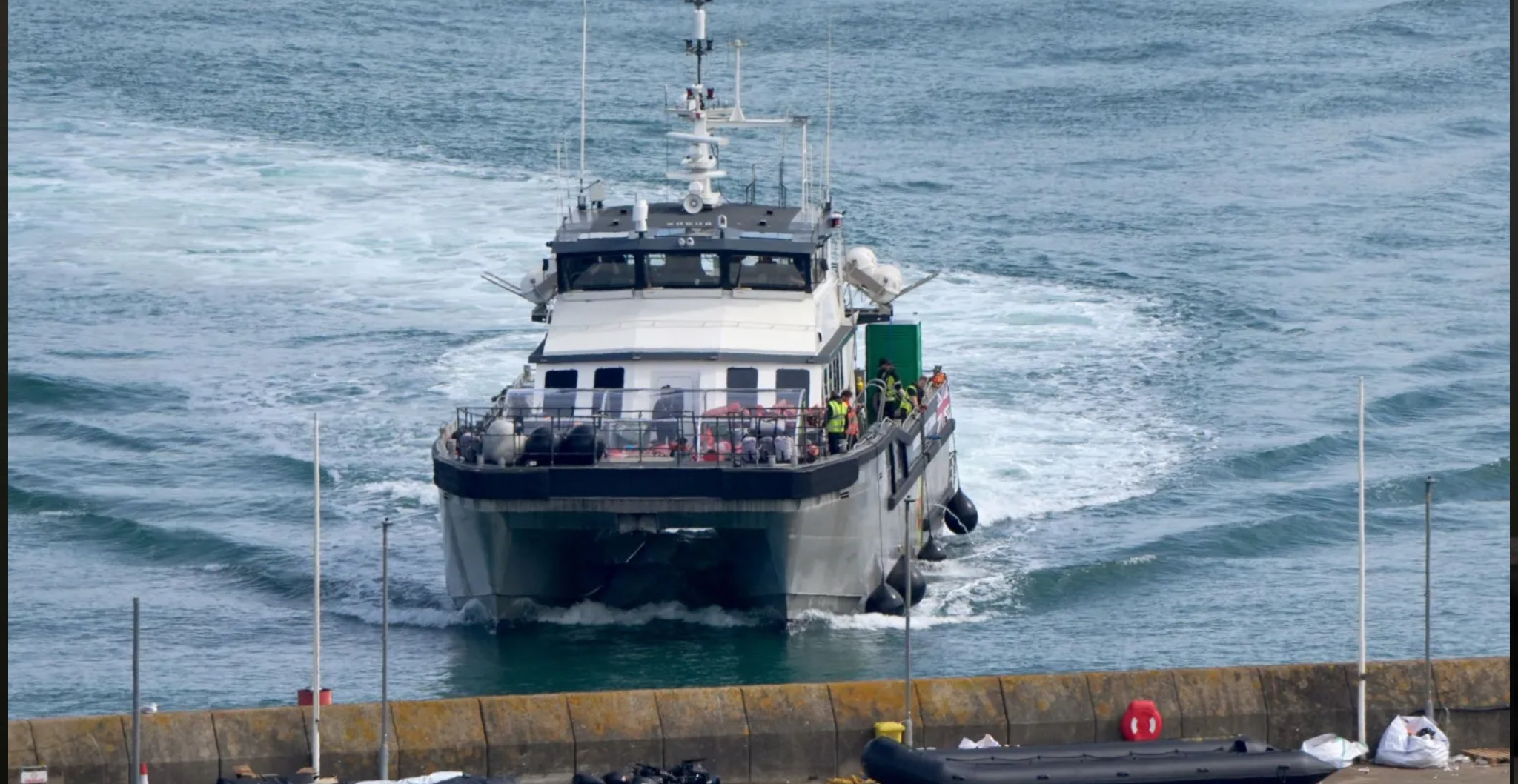
Channel migrant crossings have surged again after more than 600 people arrived in the UK on small boats in a single day, marking one of the busiest periods of the year so far. According to Home Office data, 602 migrants reached Dover on nine boats on Saturday, pushing the total number of arrivals in 2026 beyond 6,000.
The figure represents the second-highest daily total this year, just below the 605 arrivals recorded on 25 February. Officials say the continued rise highlights the ongoing challenge of tackling irregular migration across the English Channel.
Government response to rising Channel migrant crossings
The government has reiterated its commitment to reducing Channel migrant crossings, with the Home Office stating it is intensifying efforts to disrupt smuggling networks and prevent departures from northern France.
Authorities point to ongoing enforcement measures, including the deployment of additional officers, surveillance technology, and coordinated operations with French counterparts. A spokesperson said thousands of attempted crossings have been prevented and enforcement action has led to significant numbers of removals and deportations.
The UK has also emphasised its broader strategy to deter irregular migration by reducing incentives and strengthening border controls.
UK-France cooperation remains central to strategy
Efforts to curb Channel migrant crossings rely heavily on cooperation between the UK and France. In 2023, the two countries signed a three-year agreement worth £476 million aimed at increasing patrols along the French coastline and targeting people-smuggling gangs.
Although the agreement expired at the end of March, a temporary two-month extension has been secured while negotiations continue on a new long-term deal. The extension is costing the UK £16.2 million and ensures that joint operations remain in place.
Under the current arrangement, nearly 700 law enforcement personnel are deployed along key departure points, using drones, patrol vehicles, and beach monitoring to prevent migrants from launching small boats.
Continued rise in crossings despite enforcement efforts
Despite increased enforcement, Channel migrant crossings have continued to rise over recent years. Official figures show that more than 41,000 people crossed the Channel in 2025, reflecting a persistent upward trend.
The journey remains dangerous, with recent incidents underscoring the risks involved. Earlier this month, two migrants died while attempting the crossing, while others were rescued during search and rescue operations.
Experts say factors such as conflict, economic hardship, and organised smuggling networks continue to drive migration attempts, making the issue complex and difficult to resolve through enforcement alone.
Ongoing migration pressures and policy challenges
The issue of Channel migrant crossings has become a central political and humanitarian challenge for the UK. Successive governments have introduced measures aimed at reducing arrivals, including international agreements, stricter asylum policies, and increased border security.
At the same time, critics argue that long-term solutions require addressing the root causes of migration, as well as improving safe and legal routes for asylum seekers.
The Channel route remains one of the most closely monitored migration corridors in Europe, with authorities balancing border enforcement with search and rescue responsibilities to prevent loss of life.
Outlook as crossings remain a key concern
As Channel migrant crossings continue at a high pace in 2026, pressure is mounting on policymakers to deliver effective solutions. Ongoing negotiations with France and further enforcement measures are expected to play a key role in shaping the UK’s response.
Officials maintain that tackling smuggling networks and strengthening international cooperation remain priorities, while the humanitarian risks associated with the crossings continue to draw attention from advocacy groups and international organisations.