
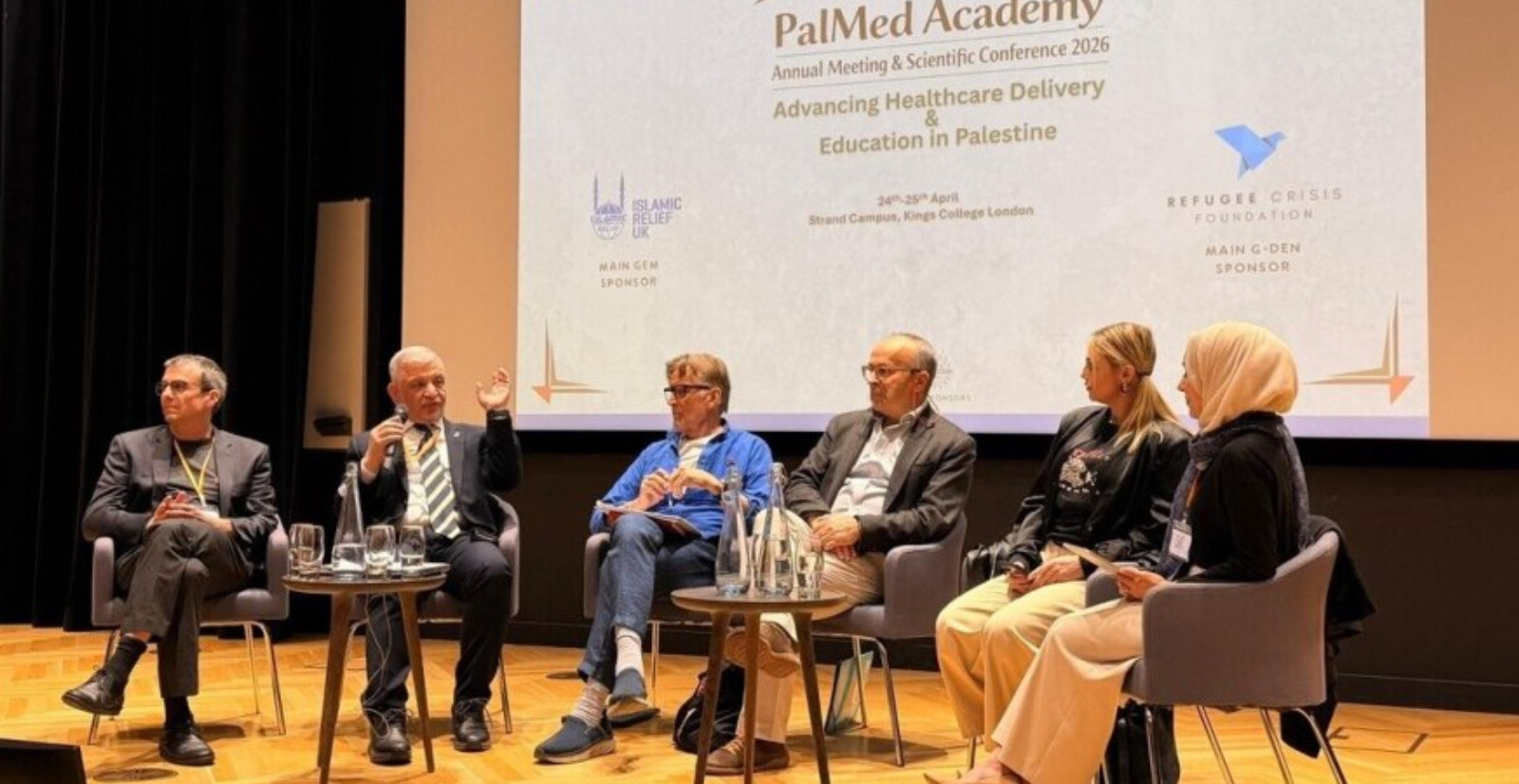
Leading clinicians, academics and policy experts gathered in London for an international conference focused on strengthening healthcare education and delivery in Palestine, with a particular emphasis on the ongoing humanitarian and medical crisis in Gaza.
The two-day event, titled “Advancing Health Care Education and Delivery in Palestine”, opened on Friday 24 with a keynote address from Husam Zomlot. He stressed the importance of international solidarity in sustaining Gaza’s healthcare system and called for increased investment in medical education and institutional partnerships.
He also warned that more than 18,500 critically ill patients are currently awaiting urgent medical assessment for life-saving or life-changing treatment, including around 4,000 children.
A major focus of the conference was the state of medical education in Gaza, where academic leaders described severe disruption to universities, training programmes and student progression. Senior figures including Dr Anwar Sheikh Khalil and Dr Mohamed Zughbur, deans of leading Gaza medical schools, provided first-hand accounts of the challenges facing the healthcare education system.
Additional contributions from Professor Omar Melad, Dr Nadine Abushaban and Mazen Abuqamar highlighted the resilience of local institutions while calling for sustained international academic support to prevent long-term damage to medical training in the region.
The conference also highlighted the International Alliance of Medical Schools for Gaza (AIMS-G), a global initiative designed to strengthen collaboration between universities and medical institutions. Contributors from institutions including University of Leicester, Trinity College Dublin and Utrecht University emphasised the importance of cross-border cooperation in supporting education continuity and knowledge exchange.
Ethics and international law in conflict zones formed another central theme. Experts including Professor Nick Maynard from Oxford University Hospitals, Professor Neve Gordon of Queen Mary University of London, and legal specialists examined protections for healthcare workers and the responsibilities of the international community under humanitarian law.
Dr Riyadh Masharqah of PalMed UK presented testimony and highlighted the significance of the Brussels Declaration by PalMed Europe, which calls for stronger protection of healthcare facilities and staff in conflict zones. The conference also featured remarks from academic and political commentators, including reflections on accountability and global advocacy.
Delegates concluded with a joint call for sustained international engagement to protect medical neutrality, rebuild healthcare education systems, and strengthen collaboration between global academic and medical institutions.
The London conference reinforced growing international concern over the state of healthcare in conflict-affected regions and underscored the urgent need for coordinated global action to support medical education and healthcare delivery in Palestine.