
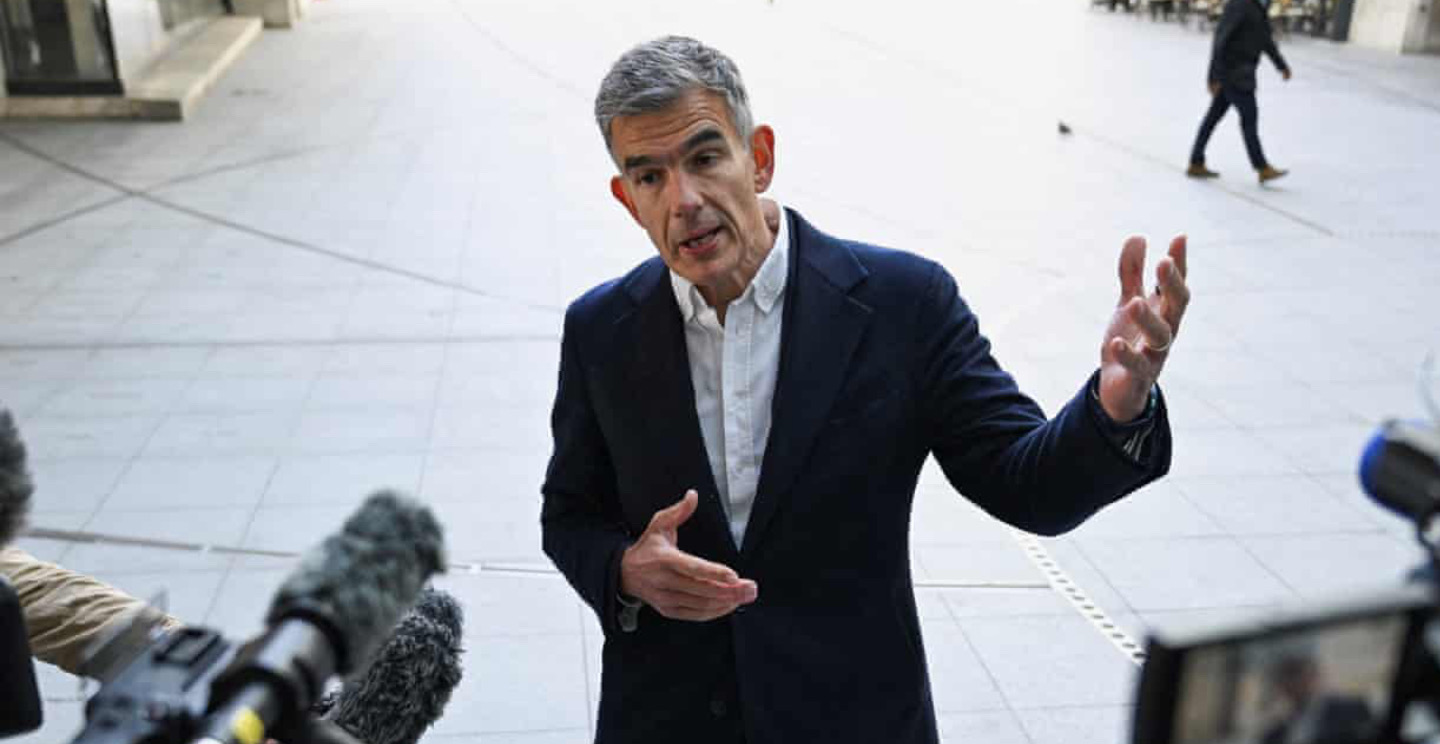
BBC staff staged strike action on the first day of new director general Matt Brittin, as he warned employees that “tough choices are unavoidable” amid major planned cost-cutting across the corporation.
Brittin, the former senior Google executive in Europe, officially began his role at the BBC while journalists from the World Service programme *Newshour* and Radio 4’s *The World Tonight* gathered outside New Broadcasting House in London to protest against proposed workload increases.
The strike is linked to a long-running dispute over shift patterns and forms part of a wider series of planned industrial actions by BBC journalists, who say staff morale is now “in the red”.
The industrial unrest is already being viewed internally as an early challenge for Brittin as he prepares to introduce sweeping reforms and budget reductions aimed at saving hundreds of millions of pounds.
BBC insiders said Brittin has spent recent weeks visiting departments across the organisation and has shown a particular focus on production costs as part of plans to reduce spending by around 10%.
In a message sent to staff, Brittin praised the broadcaster’s historic role but stressed that significant change would be necessary as audiences increasingly shift towards digital platforms such as YouTube and TikTok.
“The BBC has proved throughout its history how quickly it can reinvent itself to serve the needs of audiences – from restructuring for World War II to repurposing during Covid to spinning up services in conflict zones,” he said.
“We need, collectively, to call on that sense of urgency now. That means moving with velocity and clarity.”
Brittin added: “Excellence at the BBC has always been founded on great, creative storytelling and brilliant, independent journalism. Today it also means making sure we get the right stories in the right formats on the right platforms.”
He also acknowledged the scale of the changes ahead.
“I know change will not be easy. Tough choices are unavoidable as we make savings,” Brittin said.
“We should ask ourselves, honestly: if we were inventing the BBC today, what would we do? Then respond with clarity, pace and purpose.”
The dispute involving *Newshour* and *The World Tonight* affects more than 30 staff members.
Journalists claim management proposed adding 26 additional shortened shifts to workloads, despite concerns that teams are already overstretched.
Union members reportedly rejected a revised proposal during a recent vote, warning the changes could damage programme quality and place staff under greater pressure.
The strike comes at a sensitive moment for the BBC, as executives continue to promote the World Service as a vital part of Britain’s global influence amid growing concerns about misinformation and declining access to independent journalism worldwide.
A BBC spokesperson said: “We are disappointed that the [National Union of Journalists] is proceeding with industrial action.”
“The BBC faces huge financial challenges and we need to operate as efficiently as possible. Our priority remains ensuring our audiences continue to receive trusted news and information from the BBC.”
Brittin also takes over during renewed debate surrounding the BBC’s past editorial handling of transgender issues following criticism from former senior editor Rob Burley.
In an essay published by UnHerd, former BBC News director Fran Unsworth said “progressive madness” had affected how the corporation handled debate around trans issues.
“I would actually say it drove me out, just dealing with the progressive editorial issues and the bullying around them all,” Unsworth said.
“It was incredibly difficult.”