
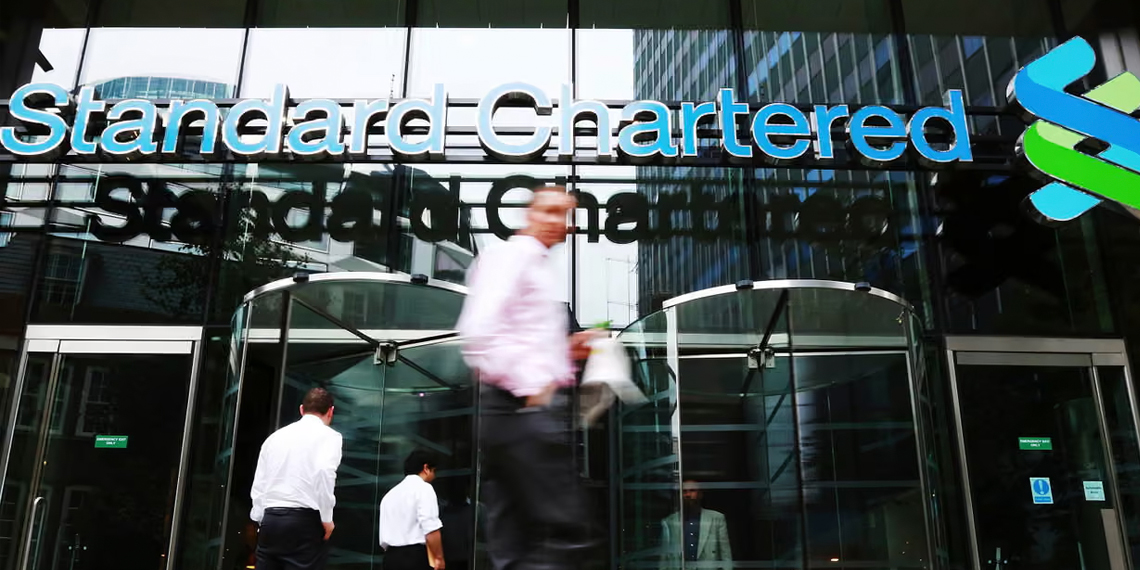
Standard Chartered has announced plans to cut more than 7,000 jobs over the next four years as the bank accelerates its use of artificial intelligence to streamline operations and improve profitability.
The London-based lender said it intends to reduce around 15% of its back-office workforce by 2030, affecting approximately 7,800 roles out of more than 52,000 employees working in operational support positions.
Standard Chartered employs nearly 82,000 people globally and is among the first major international banks to openly link large-scale job cuts to the growing use of AI technology.
Chief executive Bill Winters said automation and artificial intelligence would play a major role in reshaping the bank’s workforce, while some employees would be retrained for new roles.
The biggest impact is expected to fall on back-office centres located in Chennai, Bengaluru, Kuala Lumpur and Warsaw.
“It’s not cost-cutting. It’s replacing in some cases lower-value human capital with the financial capital and the investment capital we’re putting in,” Winters said.
The restructuring forms part of Standard Chartered’s broader strategy to improve shareholder returns and strengthen profitability after years of efforts to transform the bank’s business model.
The move also reflects a wider trend across the global banking industry, where firms are increasingly adopting AI tools to boost efficiency, automate processes and respond to growing competition and cybersecurity risks.
“Of course we’re using AI along the way and AI will be a huge facilitator and enabler of that,” Winters added while discussing the bank’s ongoing automation plans.
The announcement comes as concerns continue to grow about the impact artificial intelligence could have on employment across the financial sector.
Last year, Morgan Stanley estimated that more than 200,000 banking jobs across Europe could be at risk by 2030 due to AI, representing around 10% of the sector’s workforce.
While many financial institutions have already introduced AI technology to improve productivity, few have directly connected the technology to major workforce reductions.
Other firms have instead suggested AI may reduce future recruitment rather than immediately replace existing staff.
Swedish financial technology company Klarna previously revealed it had stopped hiring after AI systems began carrying out work previously completed by hundreds of employees.
Standard Chartered’s announcement is likely to intensify debate over how artificial intelligence will reshape jobs across Britain’s banking and financial services industries in the coming years.