
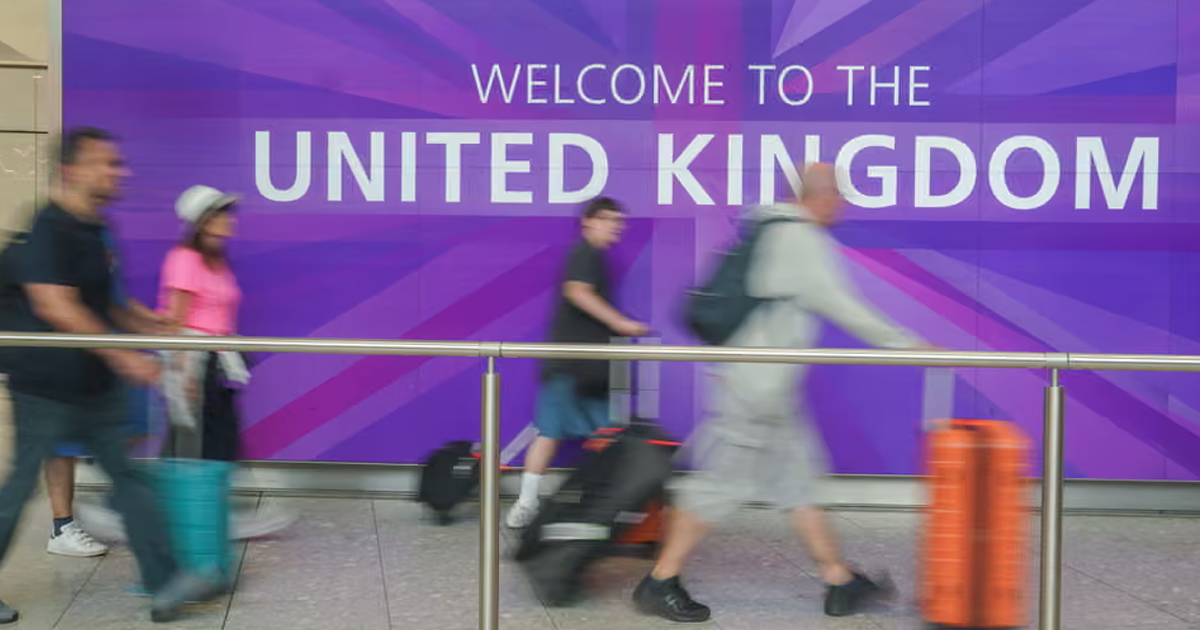
Net migration to the United Kingdom fell by almost half last year, according to newly released official figures, marking one of the sharpest declines in recent years and handing a significant political boost to Prime Minister Keir Starmer and his Labour government.
Data published by Office for National Statistics showed that net migration dropped to 171,000 in 2025, down 48% from 331,000 recorded in 2024. The figures represent the lowest level since 2021 and continue a dramatic downward trend after migration hit a record high of 944,000 in 2023.
The figures measure the difference between the number of people arriving in the UK and those leaving the country. According to the ONS, an estimated 813,000 people immigrated to Britain during the year, while 642,000 emigrated.
The sharp fall is expected to become a central talking point in Britain’s increasingly heated political debate over immigration, border control and asylum policy, particularly as Labour faces mounting pressure from the growing popularity of Nigel Farage and Reform UK.
Labour Government Claims Progress on Border Control
The Labour government quickly welcomed the figures as evidence that its immigration policies were beginning to deliver results.
Starmer said the decline demonstrated that his administration was fulfilling promises to regain control of Britain’s borders and reduce unsustainable levels of migration.
Home Office ministers have repeatedly pledged to lower immigration numbers while also reducing reliance on asylum hotels and temporary accommodation for migrants.
The latest Home Office statistics showed the number of asylum seekers housed in hotels had fallen by 35% year-on-year to 20,885 by the end of March 2026.
Officials said the reduction was partly driven by efforts to process asylum applications more quickly and reduce backlogs that built up in previous years.
Shabana Mahmood said the government still had “more work to do” but insisted Labour’s new skills-based migration system would further reduce Britain’s reliance on low-paid overseas labour.
She said future immigration policy would focus more heavily on economic contribution and workforce shortages rather than large-scale migration.
Work Visas and Student Dependants Behind Sharp Decline
The largest driver behind the fall in net migration was a major drop in arrivals from outside the European Union for work-related reasons.
ONS data showed non-EU work migration fell by 47% during 2025.
At the same time, there was an 87% collapse in the number of family members accompanying international students into the UK since 2023.
Restrictions targeting overseas students and dependant visas were initially introduced under former Conservative Prime Minister Rishi Sunak before being tightened further by Labour ministers after the 2024 general election.
The changes were designed to reduce pressure on housing, public services and local authorities, while responding to growing public concern over migration levels.
Migration analysts say the measures have dramatically altered Britain’s immigration profile in a relatively short period.
Asylum Numbers Remain Politically Sensitive
Although asylum claims also declined, the figures remain politically controversial.
Home Office statistics showed asylum applications fell by 12% in the year ending March 2026, reaching 94,000 claims.
Despite the decline, the number remains historically high compared with earlier decades.
The government also reduced the approval rate for initial asylum applications, with grant rates falling from 49% to 39% over the same period.
Labour ministers argue tougher enforcement and reforms are needed to discourage irregular migration and prevent abuse of the asylum system.
However, refugee charities and migrant support organisations warned the policies risked limiting legal routes for vulnerable people fleeing conflict and persecution.
Refugee Groups Warn Over Collapse in Safe Routes
Humanitarian organisations expressed concern that safe and legal migration routes into Britain had sharply contracted.
According to refugee charities, the number of people allowed into the UK through formal resettlement programmes has halved to around 3,600.
Jon Featonby warned that reducing legal pathways could push desperate families towards dangerous journeys, including small boat crossings across the English Channel.
He said many refugees fleeing war zones and humanitarian crises had few remaining legal options to reunite with relatives already living in Britain.
Advocacy groups have repeatedly argued that reducing legal migration opportunities without broader international coordination could unintentionally increase irregular migration pressures.
Oxford Researchers Highlight Economic Questions
Migration researchers cautioned that the headline fall in numbers did not automatically reveal the broader economic impact.
Migration Observatory researcher Ben Brindle said the government now faced a complicated policy dilemma.
He noted that categories of migration with broadly positive or neutral economic effects — such as skilled workers and student dependants — were declining faster than asylum-related migration.
Brindle argued that immigration debates should focus not only on overall numbers but also on who was arriving, what sectors they worked in and how migration affected Britain’s labour market and public finances.
Britain continues to face staff shortages in several sectors, including healthcare, social care, engineering, logistics and hospitality.
Business groups have warned that tighter immigration controls could worsen labour shortages and slow economic growth if employers cannot recruit enough workers domestically.
Public Perception Still Diverges From Official Data
Separate research published ahead of the migration figures suggested many Britons still incorrectly believe immigration is increasing.
A study by thinktank British Future found a significant gap between public perception and official migration data.
Researchers said large sections of the public remained unaware that net migration had already begun falling sharply from its 2023 peak.
The issue remains one of the most politically sensitive topics in Britain, with both Labour and the Conservatives facing electoral pressure from Reform UK’s growing popularity.
Farage has repeatedly accused both major parties of failing to control immigration and has made border policy central to his political campaign.
Conservatives Demand Tougher Action
The opposition Conservative Party argued the government still needed to go much further.
Chris Philp claimed non-EU immigration levels remained too high despite the latest reductions.
He also pointed to the number of British citizens leaving the country, arguing the broader migration picture remained concerning.
Immigration is expected to remain a dominant issue in British politics ahead of future elections, particularly as Labour attempts to balance economic growth, public service pressures and voter demands for tighter border controls.