
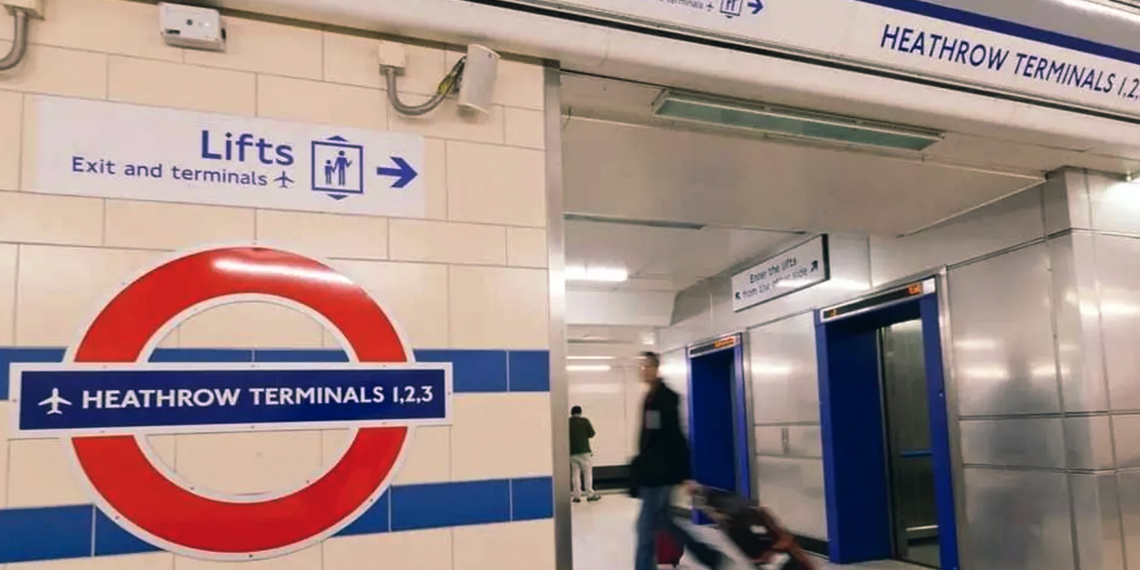
Passengers travelling to and from Heathrow Airport faced major disruption after a burst water main caused flooding at a key airport railway station, forcing the suspension of multiple rail services and creating significant delays for travellers.
Transport operators confirmed that no train services were running in or out of Heathrow Airport following flooding that affected signalling equipment at Heathrow Terminals 2 and 3 station. The disruption impacted thousands of passengers heading to one of the world’s busiest international airports, prompting urgent advice for travellers to allow extra time for their journeys and seek alternative transport options.
The incident once again highlighted the vulnerability of critical transport infrastructure to unexpected utility failures and raised concerns about the resilience of rail services serving major transport hubs.
Flooding Causes Major Signal Failure at Heathrow
The disruption began after a burst water main led to flooding near Heathrow’s rail infrastructure, affecting signalling systems essential for the safe operation of trains.
According to transport authorities, the flooding damaged signalling equipment at Heathrow Terminals 2 and 3, resulting in an immediate suspension of services while engineers assessed the extent of the problem.
Rail signalling systems play a vital role in managing train movements, ensuring safe distances between services and coordinating traffic across busy sections of the railway network. Any failure in these systems can result in widespread service suspensions as a safety precaution.
Passengers arriving at Heathrow or attempting to reach the airport by train were advised to expect significant delays throughout the day.
Heathrow Express Services Suspended
Among the most heavily affected routes was the Heathrow Express, the dedicated airport rail service connecting Heathrow Airport with London Paddington.
The Heathrow Express normally operates every 15 minutes and is widely used by both international visitors and business travellers seeking a fast connection between central London and the airport.
Following the flooding incident, Heathrow Express services were suspended in both directions because of the signalling fault.
The disruption left many travellers searching for alternative routes to reach the airport, particularly those with scheduled international departures.
Airport officials urged passengers to check service updates regularly before travelling and to allow additional time for their journeys.
Elizabeth Line Also Hit by Disruption
The flooding also caused major disruption to services on the Elizabeth line, one of London’s most important transport routes.
Transport authorities confirmed that Elizabeth line services between Hayes & Harlington and Heathrow Airport were suspended due to the signal failure caused by flooding at Heathrow Terminals 2 and 3 station.
The Elizabeth line has become a key transport link since its opening, carrying millions of passengers each year and providing direct connections between Heathrow Airport, central London and destinations across the capital.
The suspension affected both airport passengers and daily commuters who rely on the route for travel into London.
Transport officials worked to identify replacement travel options where possible, but warned that journey times would be significantly longer than normal.
Additional Impact from Planned Underground Works
Compounding the travel difficulties, the London Underground’s Piccadilly line was already closed between Heathrow Airport and Acton Town because of previously scheduled engineering works.
The simultaneous disruption across multiple transport services created a particularly challenging situation for passengers travelling to or from Heathrow.
Normally, travellers can switch between the Heathrow Express, Elizabeth line and Piccadilly line when one service is unavailable. However, with all three routes affected, transport alternatives became far more limited.
Some passengers turned to buses, taxis and private vehicles, while others faced extended waiting times and congestion on surrounding transport networks.
Heathrow Airport Issues Apology
Heathrow Airport apologised to passengers affected by the disruption and advised travellers to monitor transport updates before setting off.
Airport officials acknowledged the inconvenience caused by the suspension of rail services and said they were working closely with transport operators to minimise disruption.
Travellers were encouraged to plan ahead and consider alternative routes while repairs were carried out.
The airport also advised passengers to check directly with airlines regarding any concerns about missed flights or delayed arrivals.
While flight operations at Heathrow continued normally, access to the airport became significantly more difficult because of the rail disruptions.
Importance of Heathrow’s Transport Network
Heathrow Airport serves as the UK’s largest airport and one of the busiest aviation hubs in Europe.
Millions of passengers pass through Heathrow every month, making reliable transport links essential for both domestic and international travel.
Rail services play a particularly important role in reducing road congestion and providing fast connections between the airport and central London.
The Heathrow Express and Elizabeth line together transport large numbers of passengers daily, helping to reduce reliance on private vehicles and supporting the airport’s wider sustainability objectives.
Transport experts note that disruptions affecting Heathrow’s rail connections can quickly have wider economic consequences because of the airport’s importance to business travel, tourism and international trade.
Growing Concerns Over Infrastructure Resilience
The latest incident has also renewed discussion about the resilience of Britain’s transport infrastructure.
Extreme weather events, ageing utility networks and unexpected infrastructure failures have increasingly affected transport services across the UK in recent years.
Industry analysts say greater investment in infrastructure protection and modernisation may be needed to reduce the risk of similar disruptions in the future.
Burst water mains, signalling failures and flooding incidents have caused repeated disruption to transport networks across Britain, highlighting the interconnected nature of utilities and public transport systems.
Experts argue that improving infrastructure resilience will become increasingly important as passenger demand continues to grow and transport systems face greater pressure.
Repairs Continue as Passengers Seek Alternatives
Engineering teams were working to restore signalling systems and safely resume rail operations serving Heathrow Airport.
Transport operators said services would only restart once safety checks had been completed and signalling equipment was fully operational.
Passengers were advised to continue monitoring official travel updates and prepare for ongoing delays until normal operations resume.
For many travellers, the disruption served as a reminder of the importance of allowing extra travel time when heading to major airports, particularly during periods of unexpected transport disruption.
As repair work continues, transport authorities will remain focused on restoring normal service levels and ensuring reliable access to one of Britain’s most important transport hubs.