
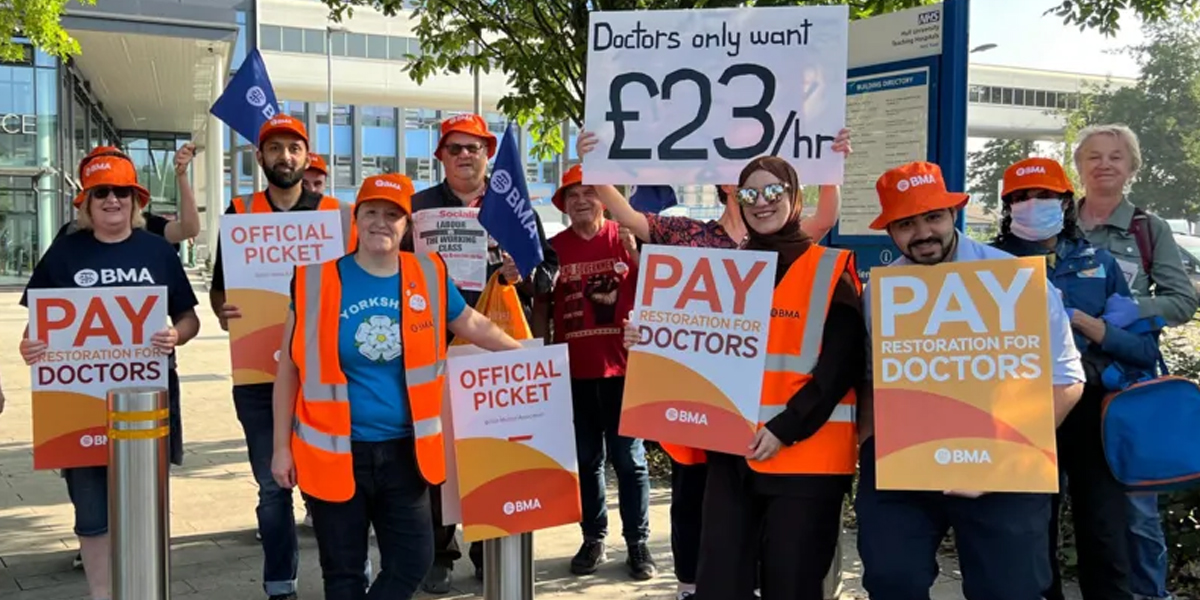
The National Health Service (NHS) is preparing for significant operational pressures as resident doctors across England begin a fresh round of industrial action, prompting warnings that some hospital appointments, elective procedures, and non-urgent services may be postponed. Health leaders have cautioned that disruptions are unavoidable as hospitals implement contingency plans designed to protect emergency, cancer, and critical care services during the latest phase of the long-running dispute over doctors’ pay.
The strike, organised by the British Medical Association (BMA), marks the 16th round of industrial action undertaken by resident doctors amid ongoing disagreements with the government regarding pay restoration and working conditions. The walkout is scheduled to begin at 07:00 BST on 15 June and continue until 06:59 BST on 19 June, placing additional strain on healthcare providers already managing high patient demand and extensive treatment backlogs.
NHS Hospitals Activate Contingency Measures
Healthcare organisations across the country have spent weeks preparing for the industrial action, with hospital trusts implementing detailed operational plans aimed at minimising disruption wherever possible. Among those preparing for the strike is the NHS Humber Health Partnership (HHP), which oversees major hospitals serving communities across Hull, East Yorkshire, North Lincolnshire, and North East Lincolnshire.
The partnership has confirmed that comprehensive arrangements have been established to maintain essential services throughout the strike period. While hospital leaders emphasise that patient safety remains the overriding priority, they acknowledge that some routine care activities will inevitably be affected as resources are redirected toward urgent and emergency medical needs.
Healthcare administrators have stressed that the primary objective is to ensure patients requiring immediate medical intervention continue to receive timely care. As a result, emergency departments, critical care units, maternity services, trauma care, and cancer treatment pathways will receive priority staffing and operational support throughout the industrial action.
Appointment Cancellations Expected Across Several Hospitals
Patients receiving care through hospitals operated by the NHS Humber Health Partnership have been warned that some appointments and procedures may be rescheduled during the strike period. The affected facilities include Castle Hill Hospital in Cottingham, Hull Royal Infirmary, Diana, Princess of Wales Hospital in Grimsby, as well as hospitals located in Scunthorpe and Goole.
Hospital officials have advised patients not to assume their appointments have been cancelled unless they are contacted directly by healthcare teams. Individuals with scheduled consultations, diagnostic tests, surgeries, or treatment sessions are being encouraged to attend as planned unless notified otherwise.
However, health leaders have acknowledged that certain non-urgent procedures may need to be deferred to ensure sufficient staffing levels are available for critical services. The decision reflects broader NHS efforts to balance patient safety with service continuity during periods of industrial action.
Patient Safety Remains the Top Priority
Senior NHS executives have repeatedly emphasised that safeguarding patients remains central to all operational decisions made during the strike period. Healthcare leaders recognise that repeated disruptions can be frustrating for patients, particularly those who have already experienced delays due to previous rounds of industrial action or broader NHS capacity challenges.
Officials have expressed regret regarding the anticipated cancellations but maintain that prioritising emergency and life-saving care is essential during periods of reduced staffing availability. Hospitals are expected to work closely with clinical teams to identify which services can safely continue and which must be postponed temporarily.
Patients whose appointments are affected will be contacted directly and offered alternative dates as soon as operational conditions allow. Hospital administrators have indicated that every effort will be made to reschedule postponed appointments quickly in order to minimise further delays to treatment pathways.
Alternative Healthcare Services Available
In anticipation of increased pressure on hospitals, healthcare providers are encouraging members of the public to make appropriate use of alternative NHS services where possible. Patients are being advised to order repeat prescriptions in advance to avoid disruptions and to seek assistance from community pharmacies for minor illnesses and health concerns.
General practitioner (GP) surgeries, walk-in centres, urgent treatment centres, and NHS telephone services are also expected to play an important role in managing patient demand during the strike period. Health officials have urged the public to reserve emergency departments for genuinely urgent or life-threatening conditions, helping hospitals maintain capacity for those most in need.
The guidance forms part of a broader NHS strategy designed to reduce avoidable pressures on emergency care services while ensuring patients continue to receive access to appropriate medical support throughout the industrial action.
Ongoing Pay Dispute Continues to Impact NHS Operations
The latest strike represents another chapter in the prolonged dispute between resident doctors and government officials over pay levels and workforce conditions. Medical professionals argue that years of below-inflation pay settlements have significantly reduced the real value of doctors’ earnings, while ministers continue to balance workforce demands against wider public spending constraints.
The repeated industrial action has contributed to mounting pressures on healthcare services, with NHS trusts required to repeatedly activate emergency staffing plans and postpone routine care. Healthcare analysts warn that continued disruption could further complicate efforts to reduce waiting lists and improve patient access to treatment.
Despite these challenges, NHS leaders remain focused on maintaining essential services and safeguarding patient welfare throughout the strike period. Hospitals across affected regions are continuing to monitor operational conditions closely and will provide updates to patients as necessary.
As resident doctors commence their latest walkout, healthcare providers are urging patients to remain informed, attend scheduled appointments unless advised otherwise, and utilise alternative NHS services appropriately. While disruption is expected, health authorities insist that extensive planning is in place to ensure urgent and critical care services continue operating safely throughout the industrial action.